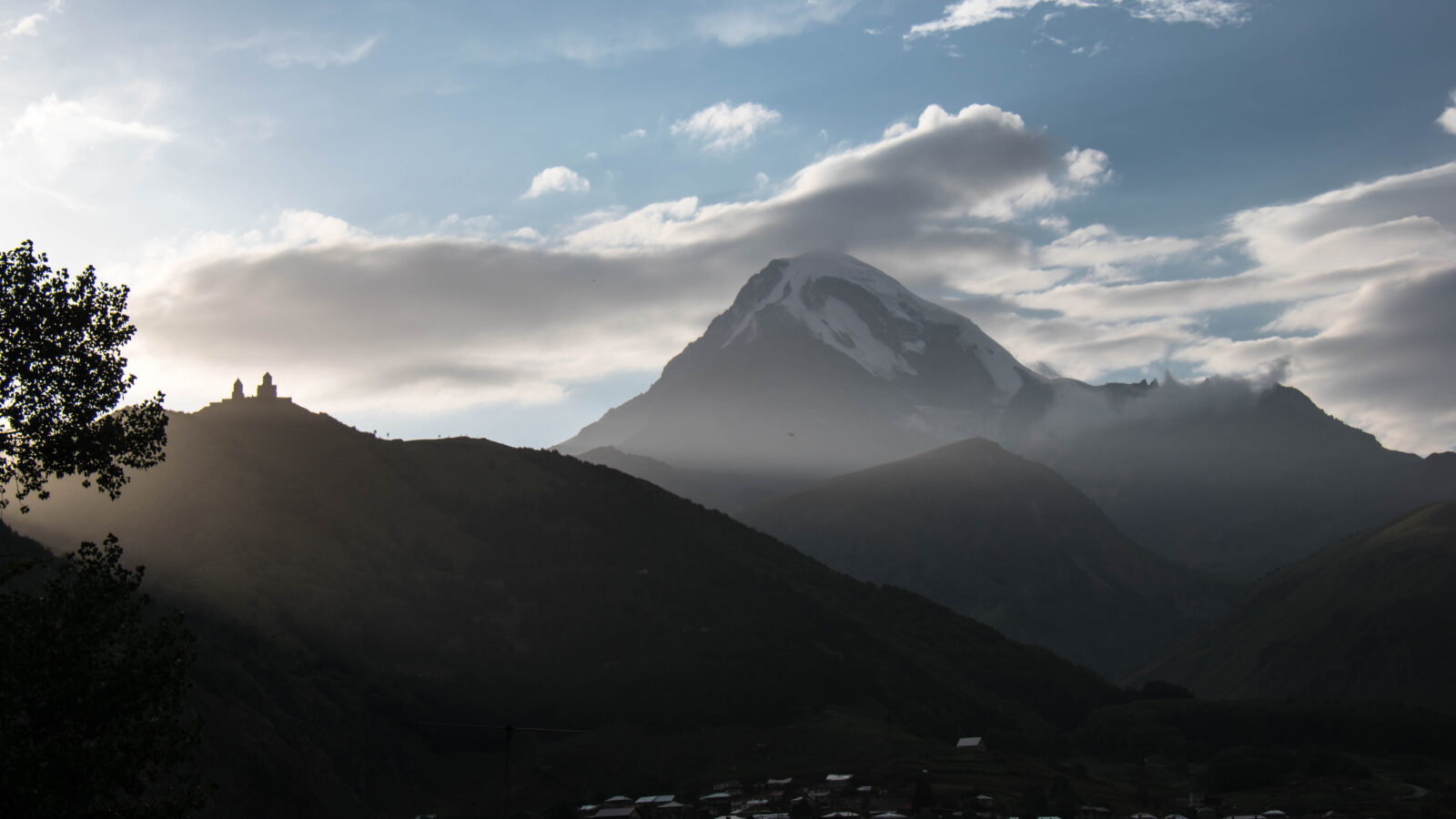
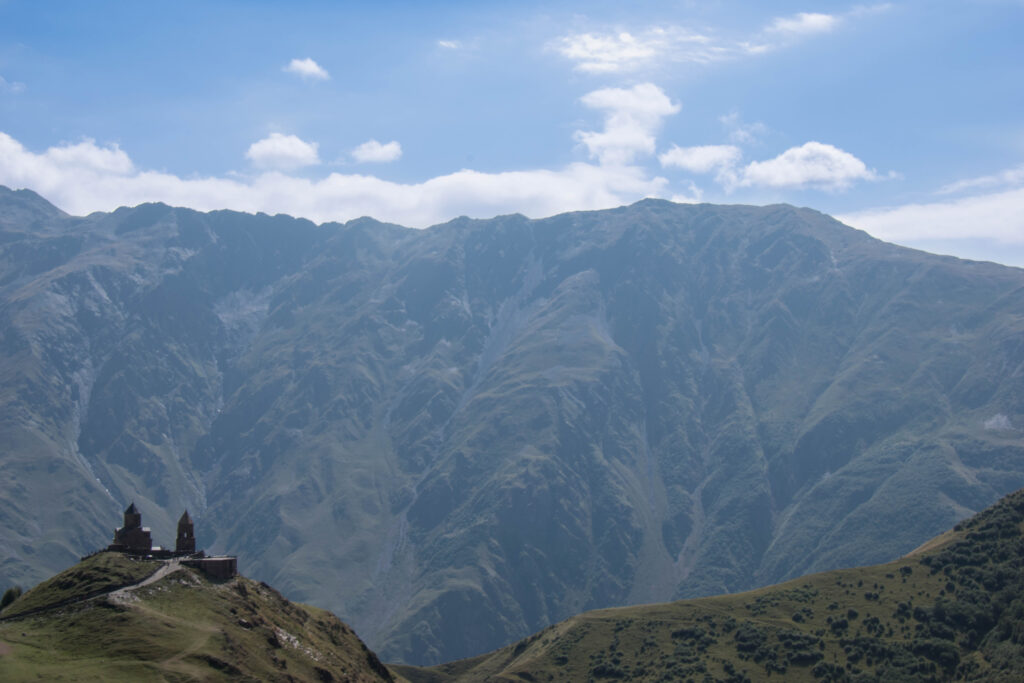
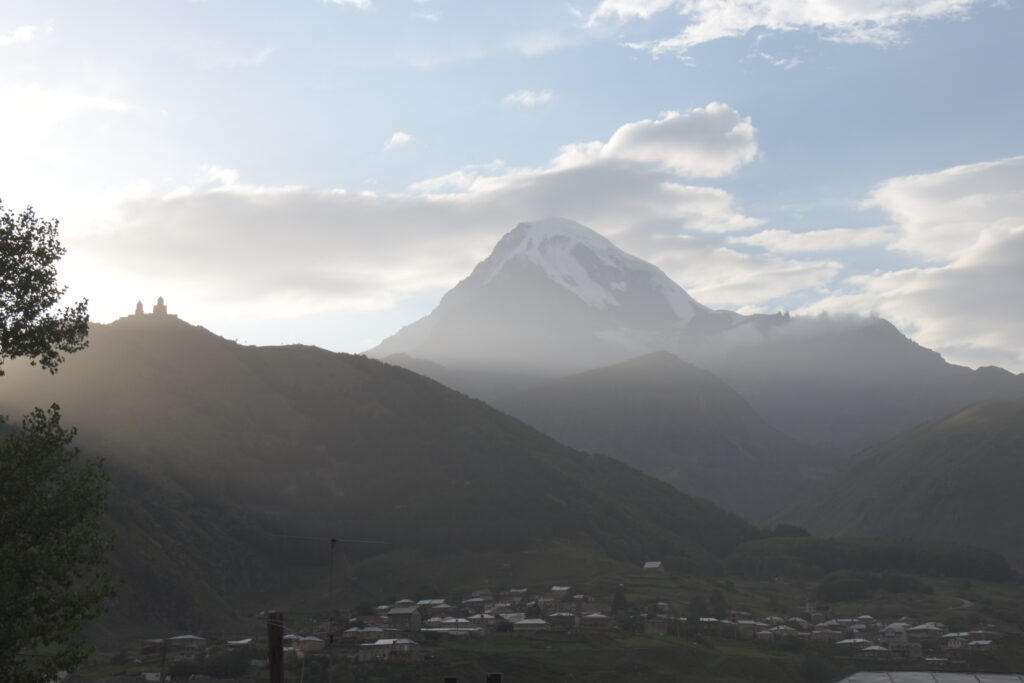
From the village of Stepantsminda, you spot it straight away: the little Gergeti Trinity Church, alone on its hill, with Mount Kazbek and its 16,400-plus feet (5,000+ m) rising behind it. Most visitors walk or drive up to the church, take the photo and head back down. But the trail keeps going, all the way to the foot of the Gergeti Glacier, among climbers setting off for the summit of Kazbek. Allow about 12.5 miles (20 km) round trip and more than 4,900 feet (1,500 m) of climbing from the village: a long day on your feet (a little over 8 hours for me, breaks included), with no technical sections up to the foot of the glacier, which is where you stop if you don’t have crampons. I did it solo in September 2018, setting off at noon, and climbed back up to the church a year later as a couple. Here are my real timings, the stages, and what you need to know before you go.
At a glance
START
The village of Stepantsminda (Kazbegi), at about 5,700 feet (1,740 m)
END
The foot of the Gergeti Glacier, at about 10,700 feet (3,265 m)
DISTANCE AND ELEVATION GAIN
About 12.5 miles (20 km) round trip and more than 4,900 feet (1,500 m) of climbing from the village (my 2018 figures). About 8.7 miles (14 km) round trip if you drive up to the church car park
TIME
A little over 8 hours for me, breaks included (left around 12 pm, glacier at 4:30 pm, back above the church at 7:30 pm)
DIFFICULTY
Physically demanding but not technical up to the foot of the glacier. Beyond that, crampons and glacier experience are essential
SEASON
June to September (sometimes into October). I was there in early September
COST
Free: I didn’t pay anything, for the trail or the church
PERMIT
None needed to hike to the glacier
GETTING THERE
Marshrutka (shared minibus) from Tbilisi, about 3 hours (10 lari, about US$4, in 2018)
How long does the Gergeti Glacier hike take?
For the full round trip from the village, set aside the whole day. Here are my timings from 4 September 2018, worked out from the time stamps on my photos:
| Stages | Time |
|---|---|
| Leaving the village | Around 12 pm |
| Above Gergeti Trinity Church (break) | 1 pm |
| Foot of the glacier (break and picnic) | Around 4:30 pm |
| Back above the church | 7:30 pm |
| Back in the village | A bit later (I took my time enjoying the view of the church) |
In short: about 1 hour from the village to the church, 3½ hours from the church to the glacier, then the way down, breaks included. I walk at a good pace, but I wasn’t rushing: adjust to your own fitness.
From the village to Gergeti Trinity Church: on foot or by car?
On foot, by the direct trail
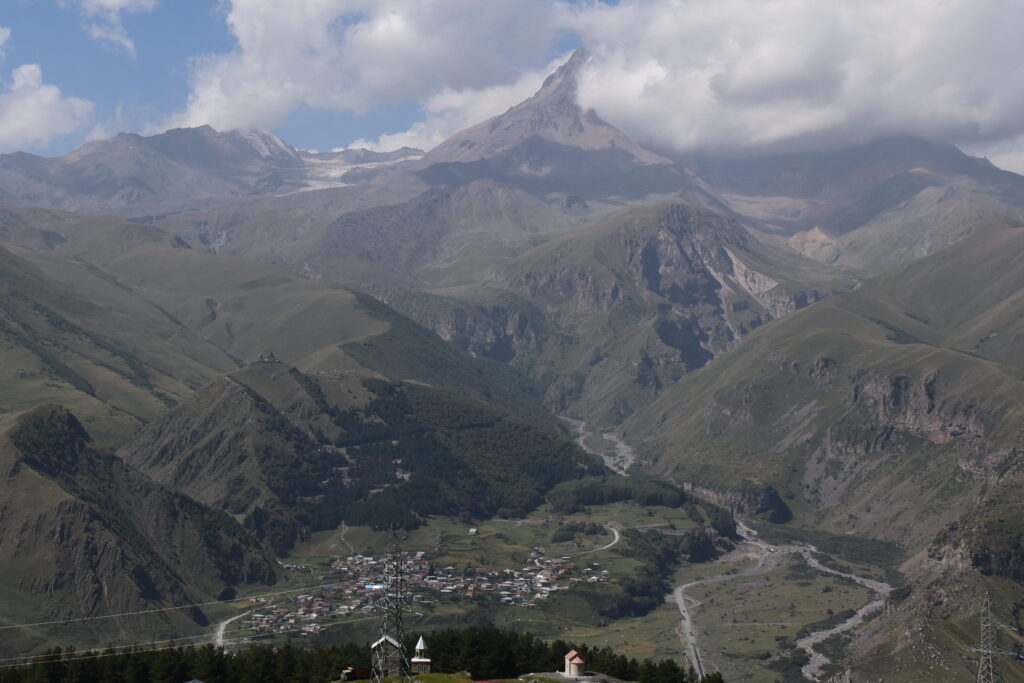
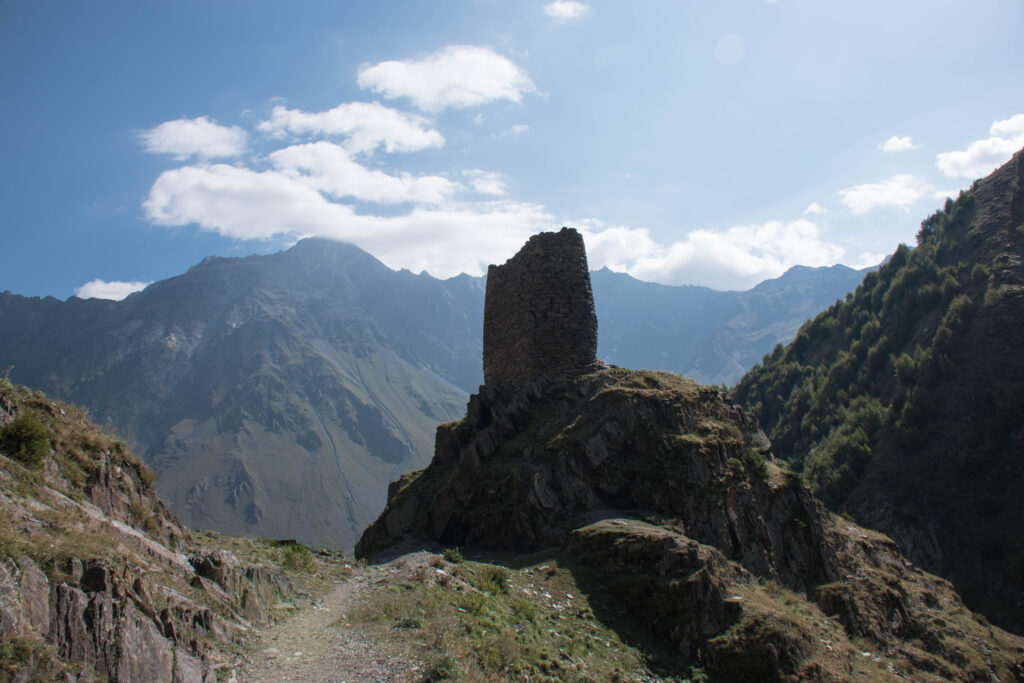
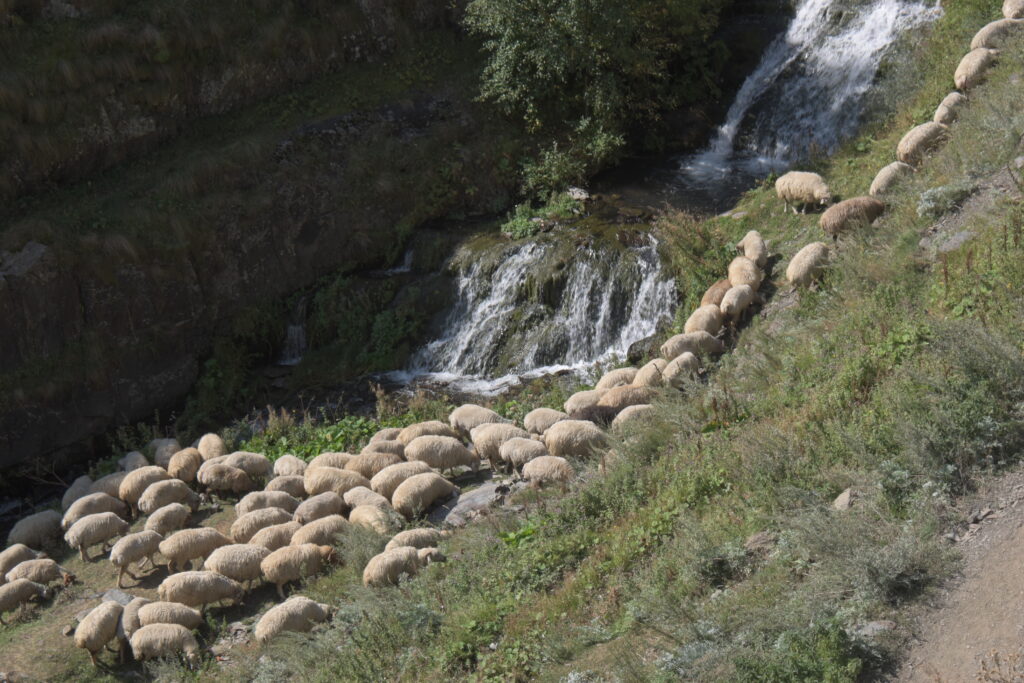
That’s what I did in 2018, and again in 2019. The direct trail climbs straight up the slope from the village, without following the road. Allow about an hour. On the way, you pass right below an old ruined watchtower, standing out against the mountains.
By car or 4×4
A paved road also goes up to the church, with a car park nearby. I didn’t take it, but I saw taxis driving up. In the village, drivers offer the round trip by 4×4: expect a few dozen lari (about 40 lari, around US$15, for the round trip according to a 2025 source), to be negotiated and shared with other travelers to bring the cost down. Bear in mind that landslides sometimes cut the road.
It’s a good option if you’re aiming for the glacier: you save the hour of climbing and about 1,400 feet (430 m) of elevation gain, and the round trip from the car park drops to about 8.7 miles (14 km).
The church itself
Gergeti Trinity Church (Tsminda Sameba in Georgian), perched at 7,120 feet (2,170 m), is the postcard view of the region. I didn’t go inside: in 2018, I walked on past it towards the glacier, and in 2019, we stayed on the terrace, which already gives you a beautiful view over the valley.
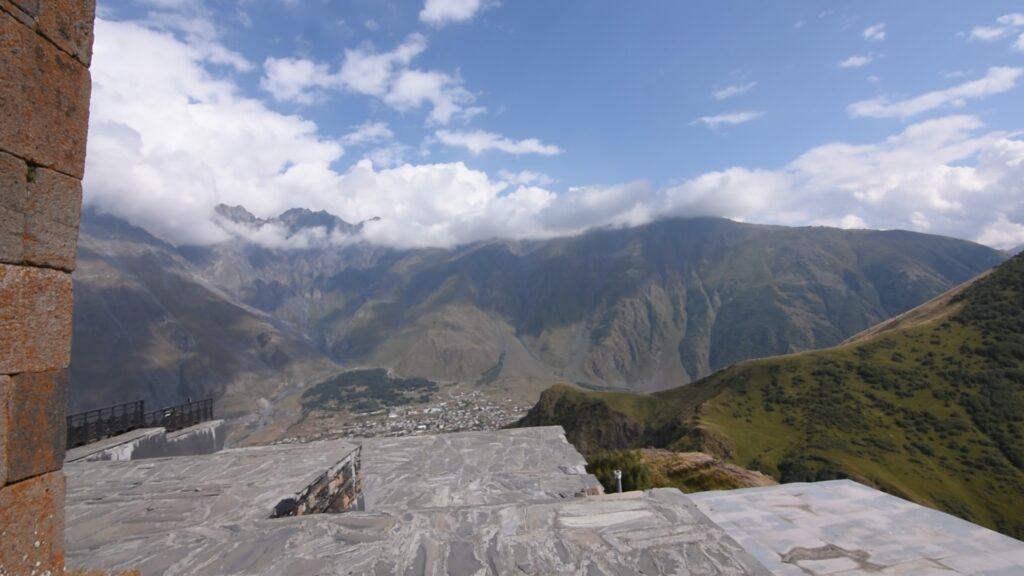
If you want to go in, remember it’s an active Orthodox church: modest dress is required. Shoulders and knees covered for everyone, no shorts for men, and for women, a long skirt and covered hair. Wraparound skirts are lent at the entrance, but bring your own scarf. The church is open every day during the daytime, from 9 am (closing at 5 or 6 pm depending on the source); outside those hours, you can still walk around it and enjoy the viewpoints.
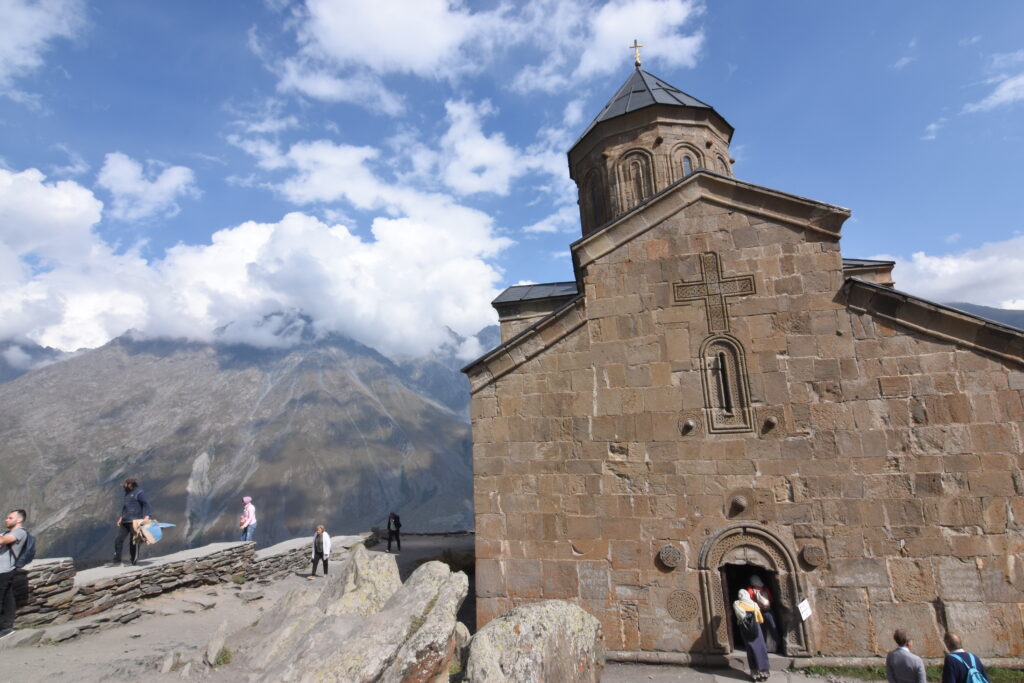
If you don’t want to go any further, the church alone is a lovely walk: about an hour’s climb from the village, with the view as your reward.
From the church to the glacier: the real climb
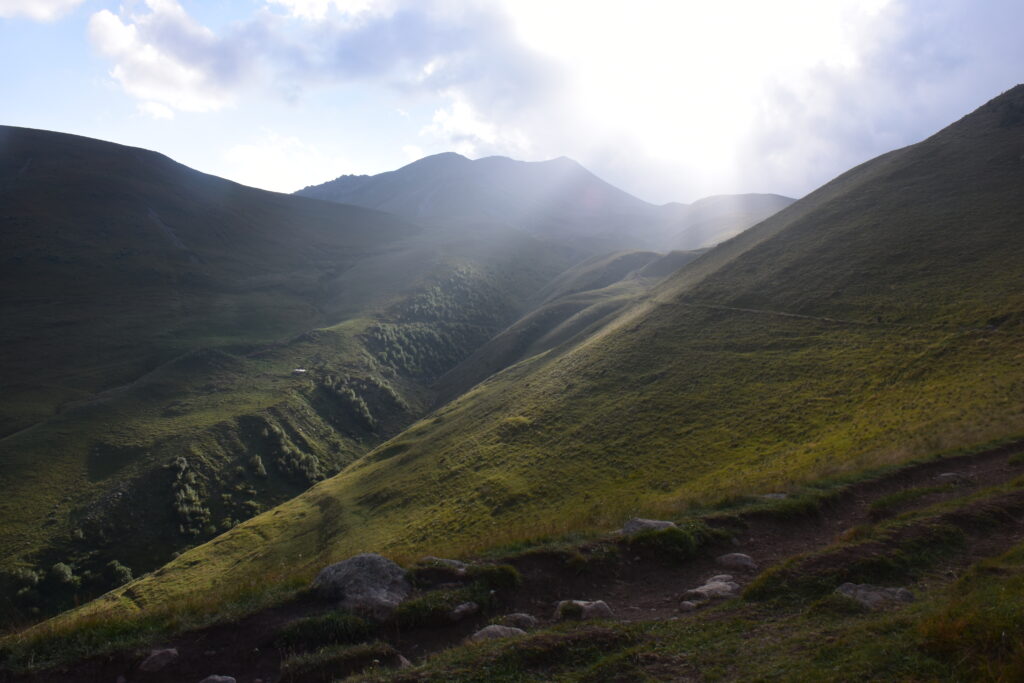
Above the church, the trail heads for Kazbek
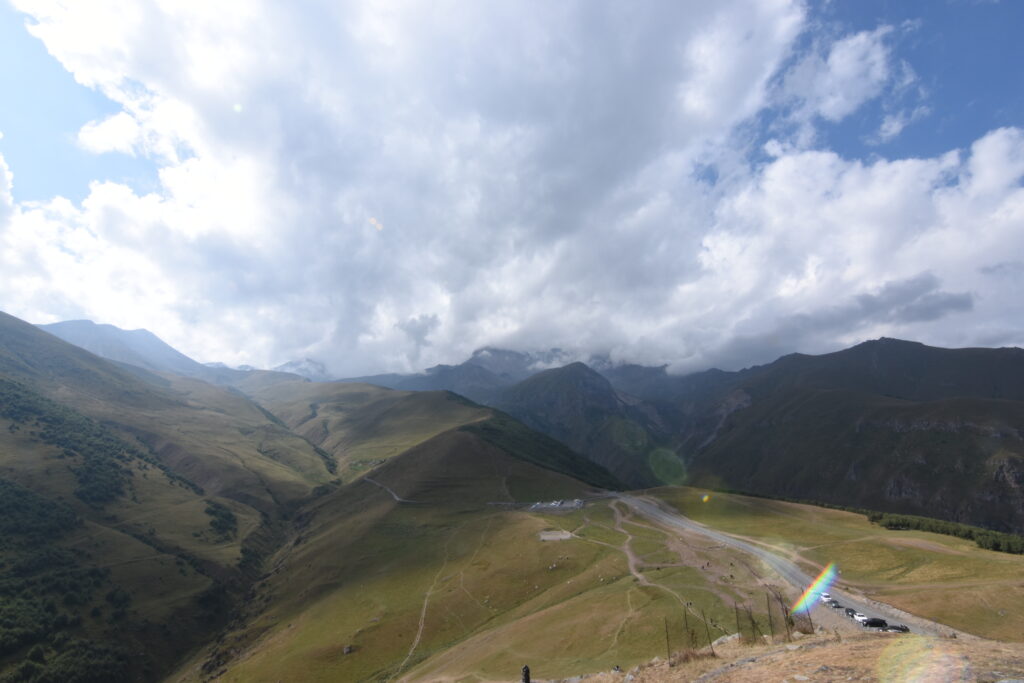
Behind the church, the path heads north, towards Mount Kazbek. This is where the hike really begins, and where the climbs get tougher.
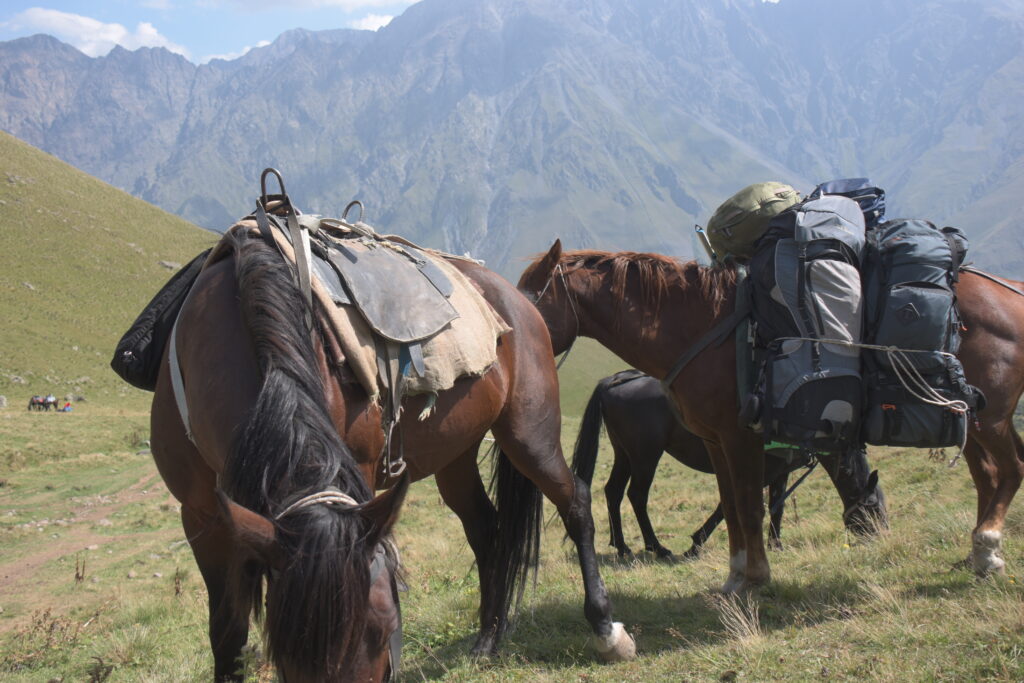
Kazbek climbers, and their horses
On this stretch, you’ll pass hikers carrying huge packs, ropes and ice axes: they’re probably heading for the summit of Mount Kazbek, a climb of several days. You’ll also pass quite a few horses carrying their gear, a bit like sherpas.
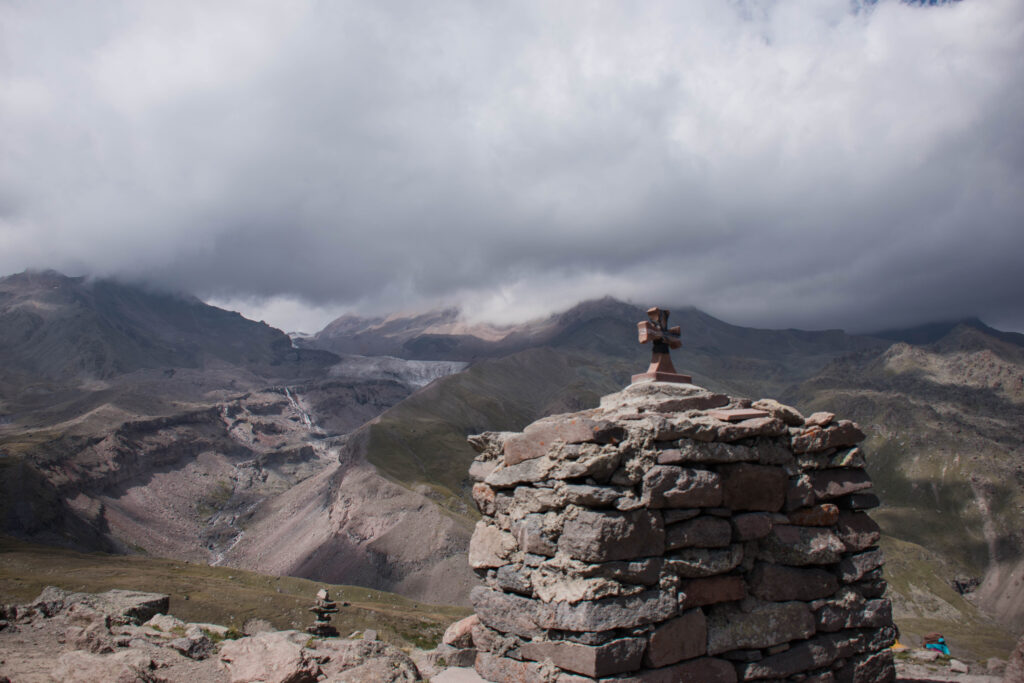
The pass and the stone cross
Higher up, at Sabertse Pass (also called Arsha Pass), at around 9,650 feet (2,940 m), the trail passes a stone monument topped with a cross, with the glacier in sight. It’s a good place to catch your breath and see what’s left to climb.
Old base camp, waterfall and streams
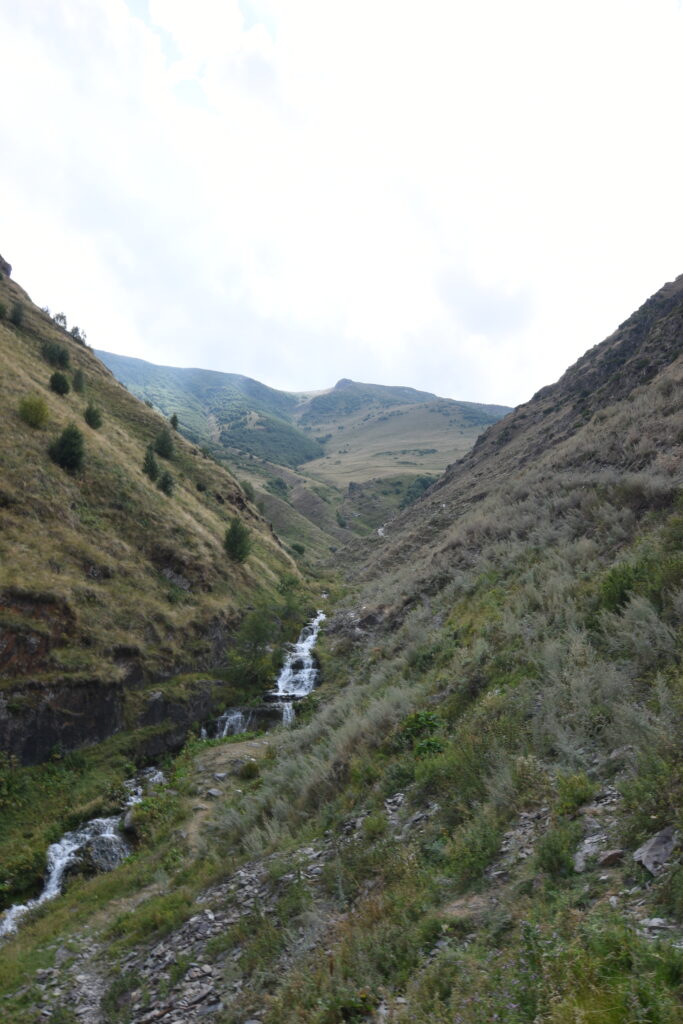
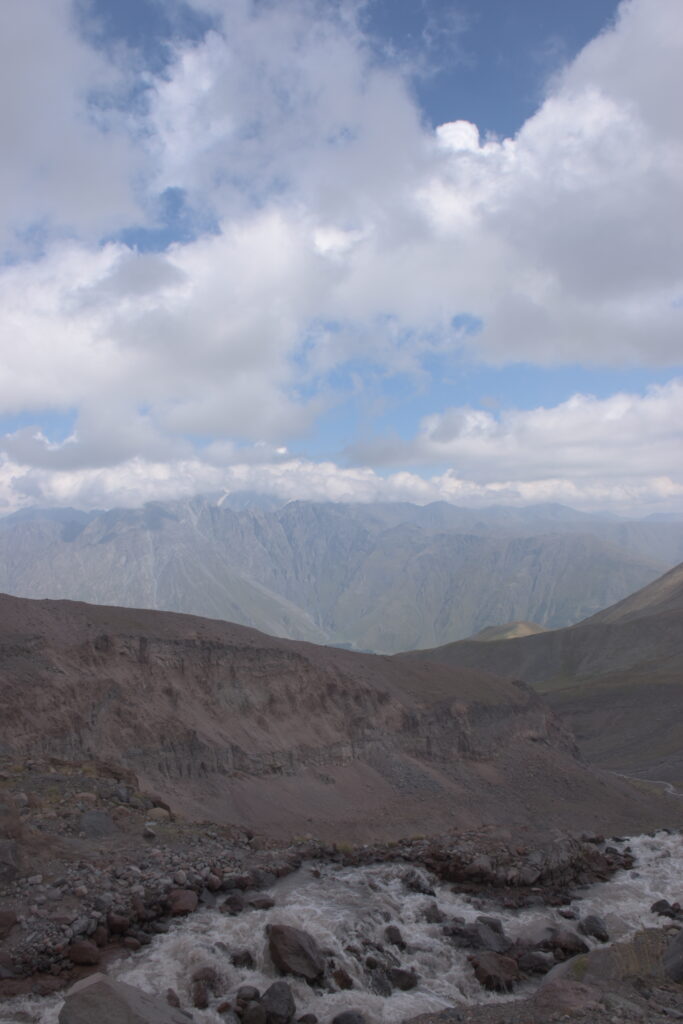
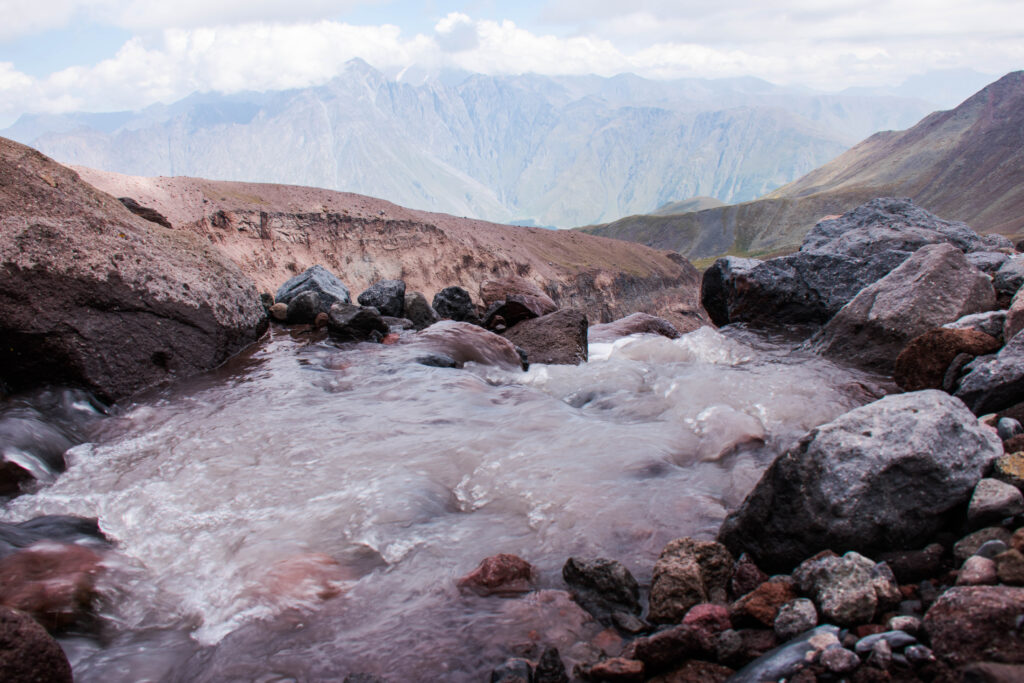
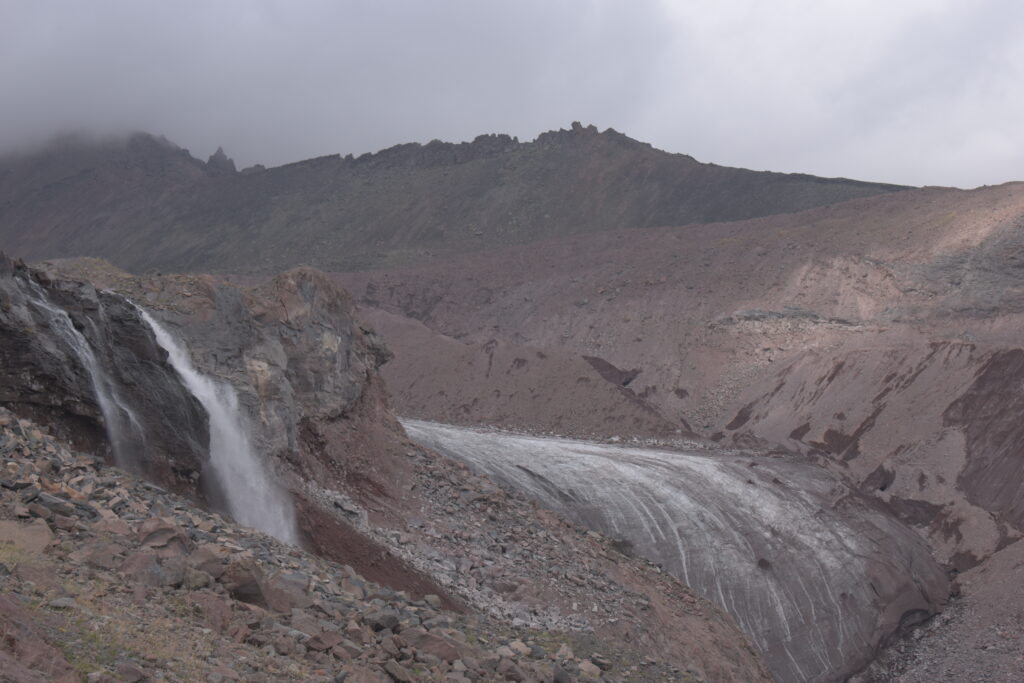
The path then goes through an old base camp, before running alongside a waterfall and streams flowing straight down from the glacier. The landscape changes completely: no more grass, just stones, brown earth and the sound of water.
At the foot of the glacier: how far can you go without crampons?
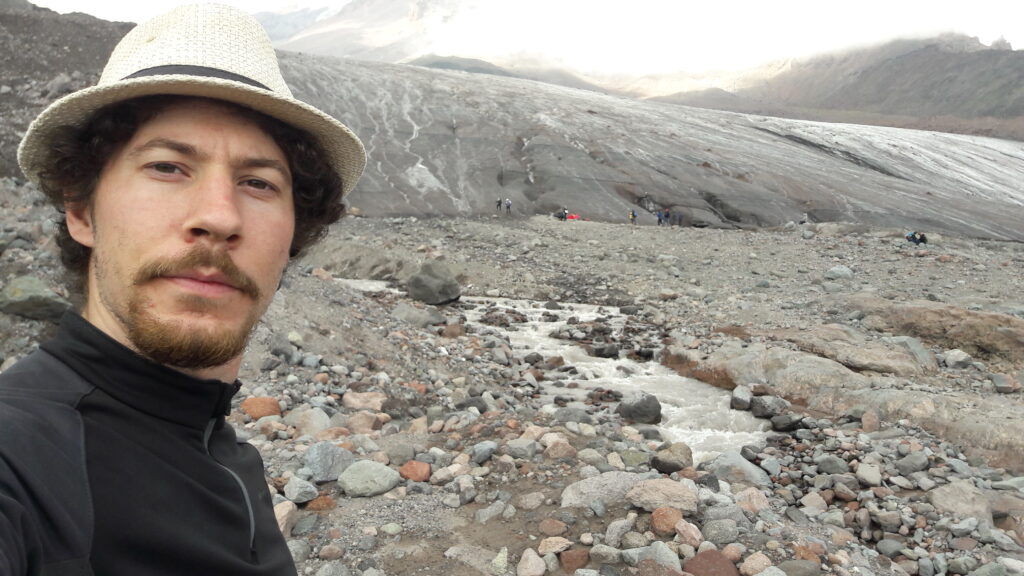
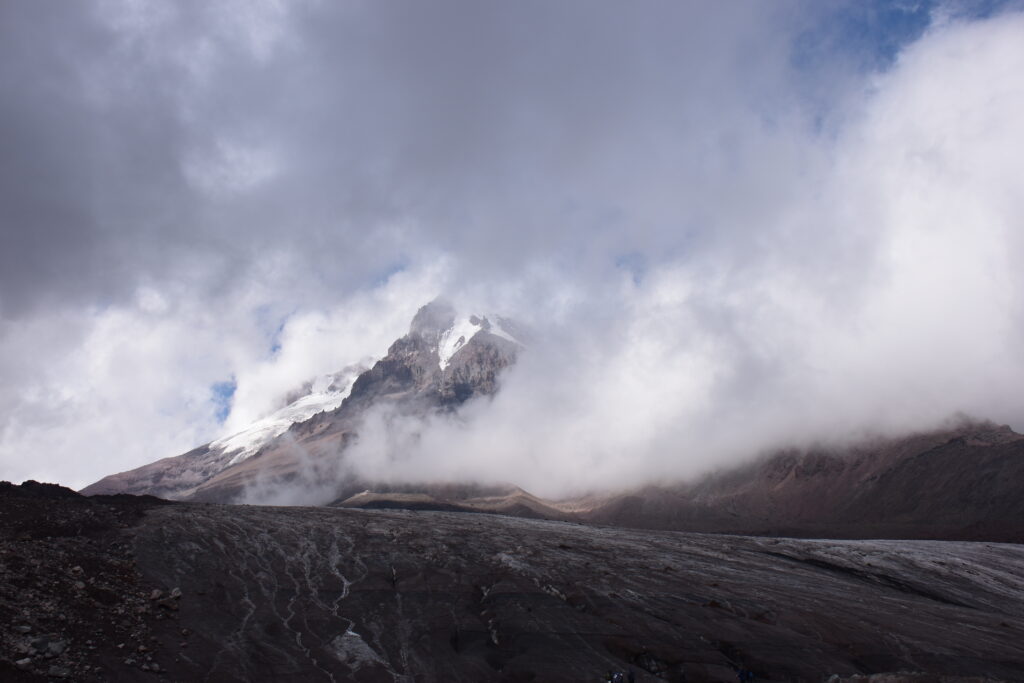
When you reach the foot of the glacier, at about 10,700 feet (3,265 m), you’ll quickly see why most hikers stop here. On one side, sandy ground that can hide crevasses. On the other, the ice, covered with a thin layer of earth that makes it treacherous. And the glacier isn’t white at all: it’s brownish black, because of the sediment and dust.
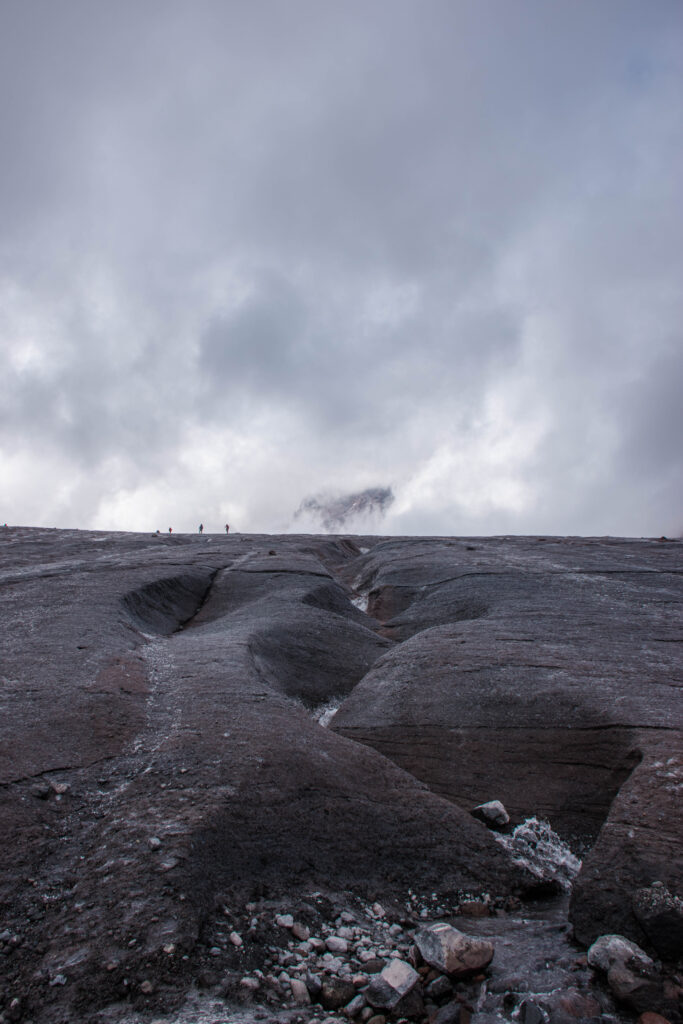
My advice: without crampons, stop at the foot of the glacier. I didn’t have any, and I’d rather come home in one piece than push my luck. You may see people venturing onto the ice: without the gear and glacier experience, don’t follow them. Beyond this point, it’s Kazbek climbers’ territory, with all the equipment that goes with it.
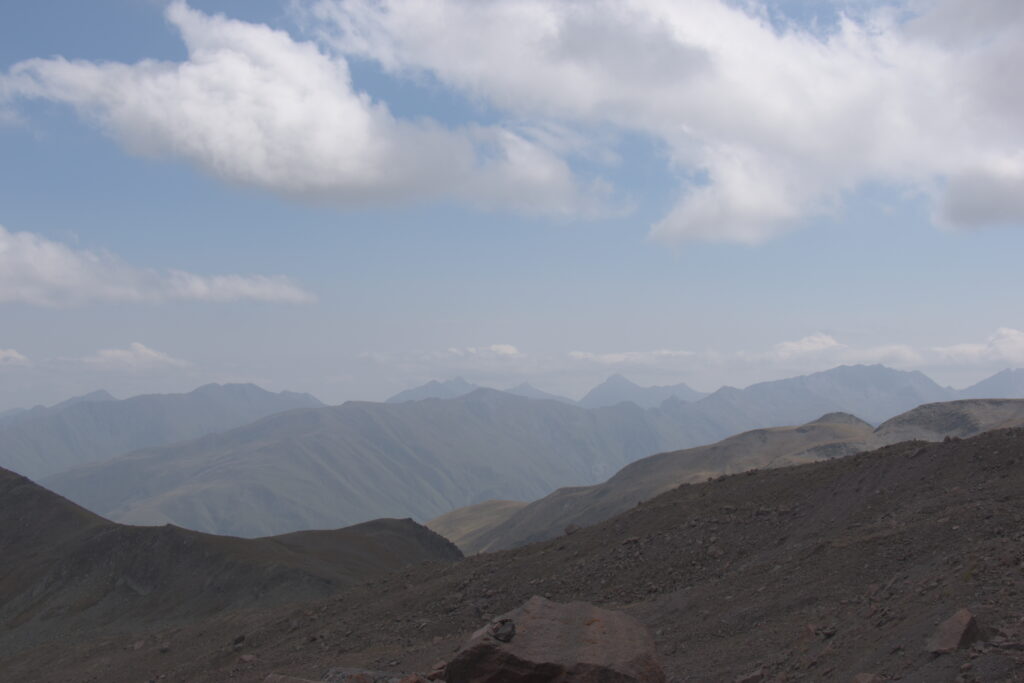
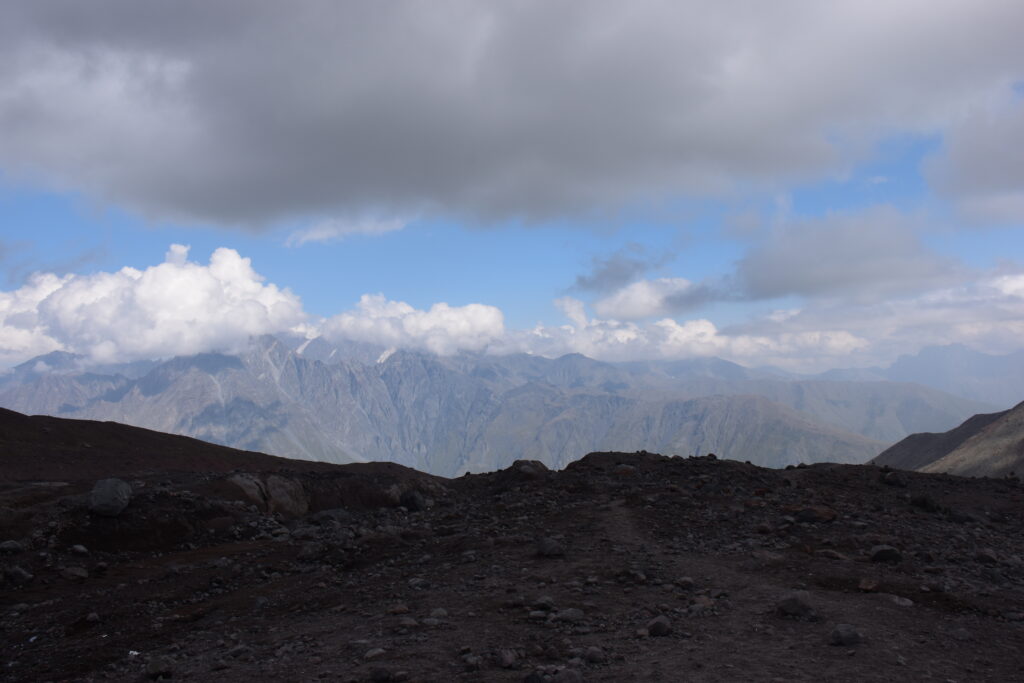
Take the chance to turn around: the view of the Caucasus mountains on the other side is almost as good as the glacier.
What time should you start, and what weather should you expect?
I set off around noon, without even knowing whether I’d go all the way to the glacier: the idea was just to walk and see. That day, it went really well. It was neither too hot nor too cold, a bit cooler at the glacier, with a few drops of rain on the way down, nothing dramatic.
Still, most sources advise you to start early, before 8 or 9 am, because clouds and storms often build in the afternoon in the mountains. It’s common sense, especially if you’re aiming for the glacier: you’ll have a better chance of seeing Kazbek in the clear, and more time on the way back. The sky was overcast when I passed the church, and the summit of Kazbek stayed hidden for much of the day.
And if, like me, you start late: check the sunset time and bring a headlamp, as you’ll be coming down at the end of the day.
The cold up top: even on a fine September day, it’s cold at the foot of the glacier, especially when you stop. A hiker I met at the hostel wanted to push on and sleep at the weather station: the cold changed his mind.
For the day’s weather, check a mountain forecast before you set off, for example Mountain-Forecast: pick the altitude (around 3,000 m for the foot of the glacier) and look at the afternoon in particular. For the weather in the village, yr.no is all you need.
Hut, café, weather station: what you’ll find on the trail today
In 2018, I didn’t stop anywhere: I probably spotted a hut along the way, but didn’t go in. Things seem to have changed since then. I haven’t tried them, but here’s what you may find:
- Altihut 3014: a mountain hut at 9,890 feet (3,014 m), near Sabertse Pass, opened in summer 2018, with a restaurant. You book on its website. From mid-November to mid-June, you may need touring skis or snowshoes to get there. Altihut 3014 info.
- Cafe 360°: a café that opened around July 2024, on the trail between the church and the hut, where the glacier starts to come into view. One hiker reached it in 2 hours 15 minutes from the church, then the hut 45 minutes further on (late 2024). You can get something to drink and snack on, but check it’s open before you count on it.
- The weather station, at around 12,000 feet (3,650 m), beyond the glacier: a stop for Kazbek climbers, not for a day hike.
Don’t rely on them for food and water without checking they’re open: take everything you need with you.
Difficulty and gear: what to bring
How hard is it?
No technical sections up to the foot of the glacier, but it’s a proper day hike: 12.5 miles (20 km) and more than 4,900 feet (1,500 m) of climbing, at altitude. If you hike regularly in the mountains, you’ll be fine. If not, the church alone is already a great outing.
What I had, and what I’d do differently
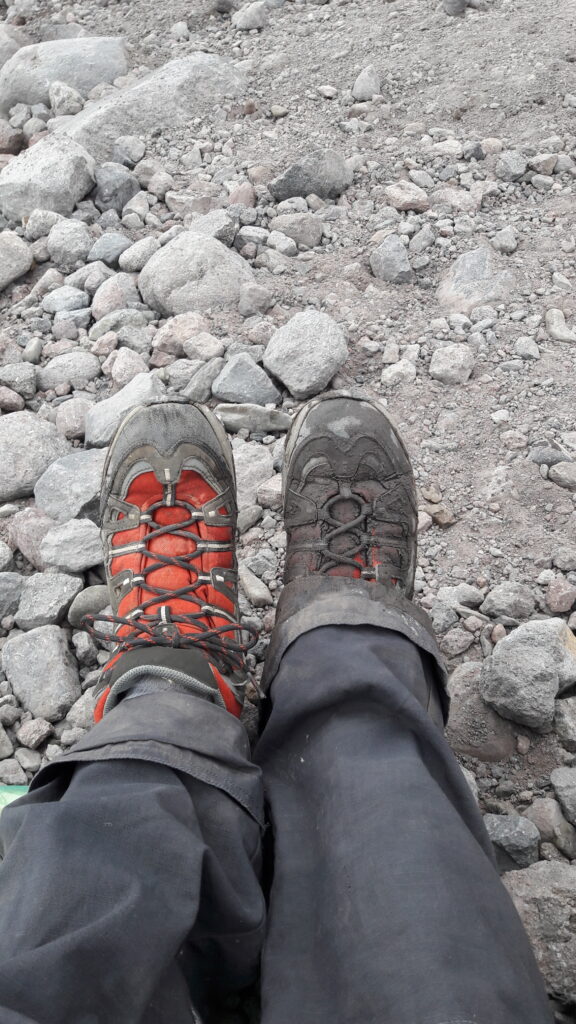
- Hiking boots: more comfortable on the stony paths, and less slippery. They reached the glacier pretty filthy, somewhere between mud and dust.
- A not-very-thick long-sleeved sweater: fine while walking, a bit light during the breaks at the glacier. Bring a warm layer and something for the rain.
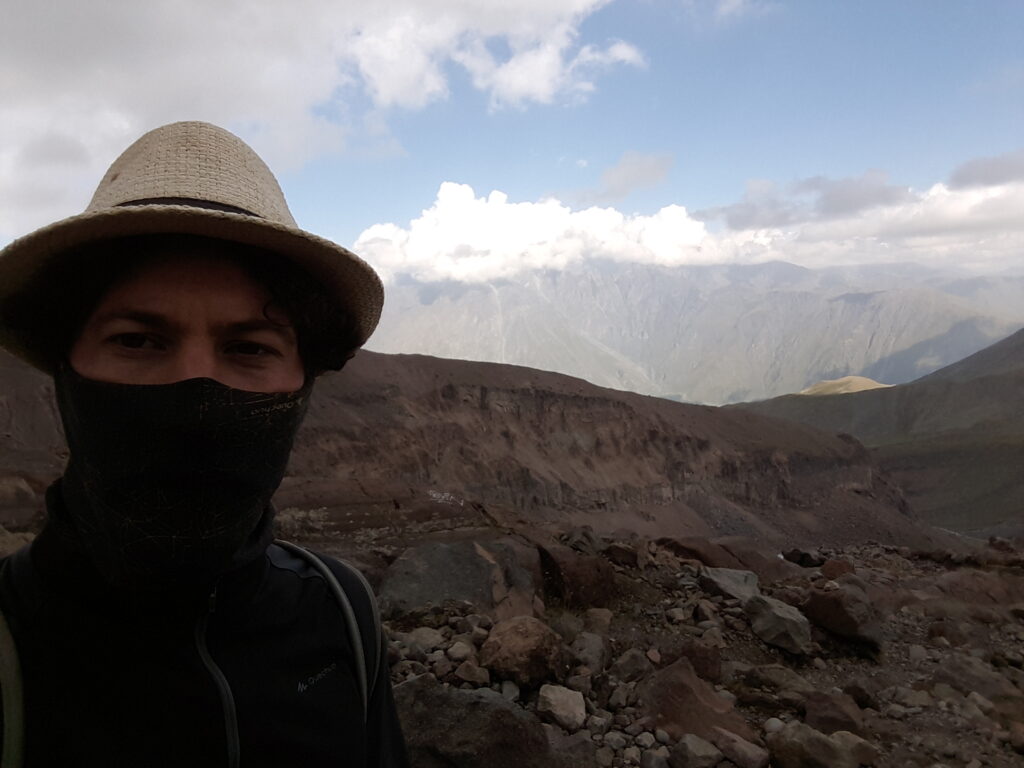
- A hat and a neck gaiter: the neck gaiter, against the wind as much as the cold, turned out to be really useful up top.
- No more than 1 liter of water, I think. Honestly, I wasn’t very well prepared: bring a lot more. Hiking guides recommend at least 3 liters. According to other hikers, there’s a tap at the church, then nothing reliable for several hours, until the torrents near the hut. And the glacier streams are full of sediment: if you’re counting on them, bring purification tablets or a filter.
- A makeshift picnic bought at a grocery store in the village: bread and sausage. You carry everything up from the village.
Do you need a guide or a permit?
For the day hike to the foot of the glacier, you need neither a guide nor a permit: I didn’t need one in 2018, and that’s still the case today (even as far as the weather station, according to the sources). The trail is busy, and you just follow the flow of hikers and horses. An offline map app is still handy to find your way, and let your guesthouse know where you’re going.
The summit of Kazbek is another story. According to most sources, no climbing permit is required on the normal Georgian route. But the summit sits right on the Russian border: carry your passport (border guards sometimes check IDs) and never cross over to the Russian side. Above all, it’s mountaineering: crossing the glacier, crevasses, crampons, ice axe and rope. Without experience, hire a guide in Stepantsminda, and check that your insurance covers high-altitude mountaineering.
Where to stay in Stepantsminda, and how to get there
Getting there from Tbilisi
In 2018 and again in 2019, I came by marshrutka (the Georgian shared minibus) from Didube bus station in Tbilisi: about 3 hours on the road for 10 lari (about US$4) in 2018 (prices have probably gone up since). The scenery keeps getting better as you approach the mountains.
Where to stay
Sleep in the village the night before: you can start early, or, like me, set off whenever you like.
- Solo, on a budget (2018): a simple hostel at 15 lari (about US$6) a night, with a WhatsApp number to let them know you’re arriving. I couldn’t find it online, so it may have closed, but the village has plenty of other hostels and guesthouses.
- As a couple (2019): Vaso-Levani House, 120 lari (€41, about US$45) for two nights in September 2019, so about 60 lari a night for two. It’s still listed online; prices have surely changed since. Nothing fancy: a simple, rather cozy room, and a lovely host.
In short
The Gergeti Glacier hike is a long day’s walk that takes you from the postcard view of Trinity Church to the stony slopes of Kazbek, among climbers and their horses. Start early if you’re aiming for the glacier (or set off at noon and keep your options open, like I did), take more water than I did and a warm layer, and stop at the foot of the ice if you don’t have crampons.
And if the weather or your legs don’t cooperate, the church alone is worth the climb.
To continue your trip in Georgia: Georgia travel journal 2018