A week solo between the mountains of the Caucasus and the cobbled streets of Tbilisi, with a band of travel companions picked up along the way — a Spanish blogger and a Pole traveling by motorbike — who keep turning up day after day like an unexpected common thread.
Arriving in Tbilisi, first steps in the old town
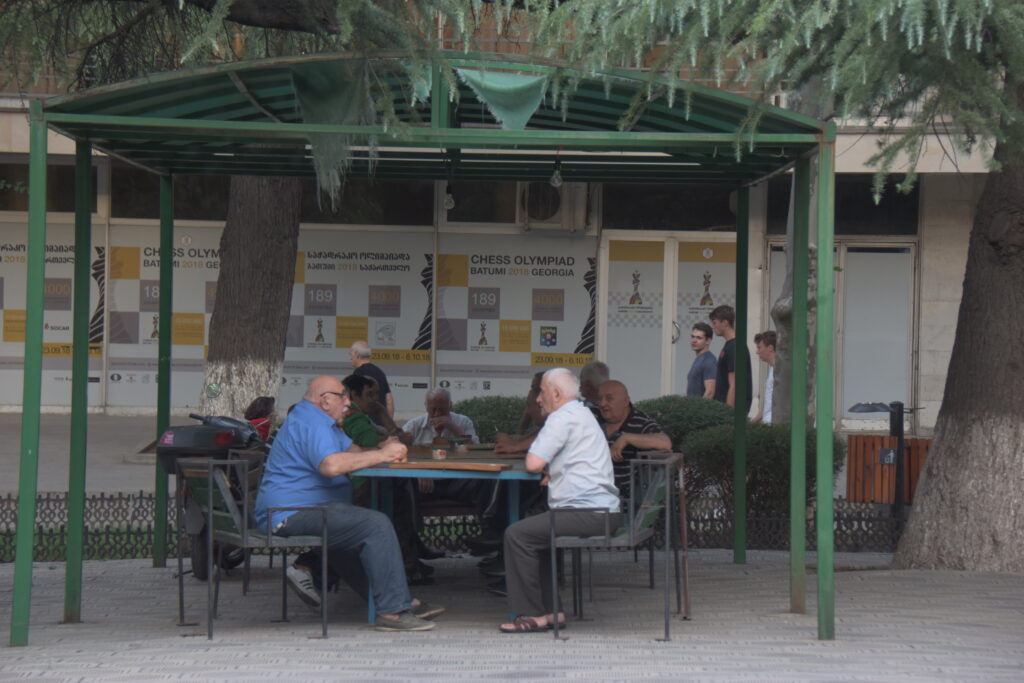
Flight booked two days before leaving. Landing in Tbilisi, and a surprise when I ask whether there’s a bus to the center: by some miracle, the answer is yes — for barely 50 tetri (the subunit of the Georgian lari), about 20 euro cents a ride. The area around the bus station doesn’t look very inviting, so I take the same bus back to a neighborhood I’d spotted in advance, where I find a hostel at 10 lari a night. A short wander through the lanes, a stop in a park of no particular interest but full of everyday scenes: older locals playing dominoes, a 2-lari beer on a terrace, the quiet Sunday atmosphere. I think about what comes next: heading for the Kazbegi region, to Stepantsminda to be exact — a small town tucked into the mountainous north of the country, right by the Russian border. It’s the most accessible of the places that tempt me, and I don’t have time to go farther.
A chaotic wake-up and the road to the mountains
The hostel manager sleeps in the same dorm as me — his phone rings at 5 a.m. without him so much as stirring, until an exasperated Frenchman gets up to wake him. The same scene plays out several times: he wakes up for two minutes, falls back asleep… He eventually goes out for a smoke, leaving the door wide open onto a street that’s already busy. Up for good around 10 a.m.
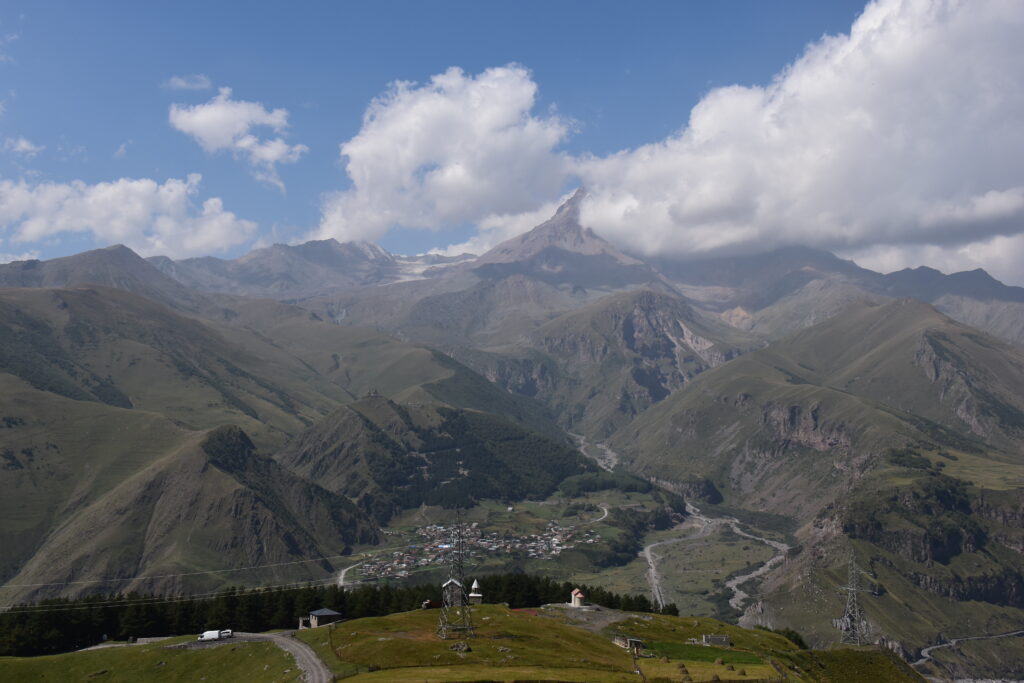
Off to Didube bus station by metro, then a marshrutka (the Georgian shared minibus) — the metro goes through a particularly deep station, almost comical compared with Dubai’s, or even Paris’s. About three hours on the road for 10 lari, with scenery that keeps getting more beautiful the closer we get. Arrival in Stepantsminda (1,740 m above sea level), a breathtaking setting in the middle of the mountains. A basic hostel at 15 lari a night, booked for three nights: I walk straight into a room by the entrance that serves as living room and kitchen, door wide open, the other room serving as a dorm with five single beds, nothing more — and not a trace of a receptionist, just a WhatsApp number to message to book your bed and pay. A bit of information-gathering on the hiking trails, then a stroll around the village.
Toward the glacier, at the foot of Mount Kazbek
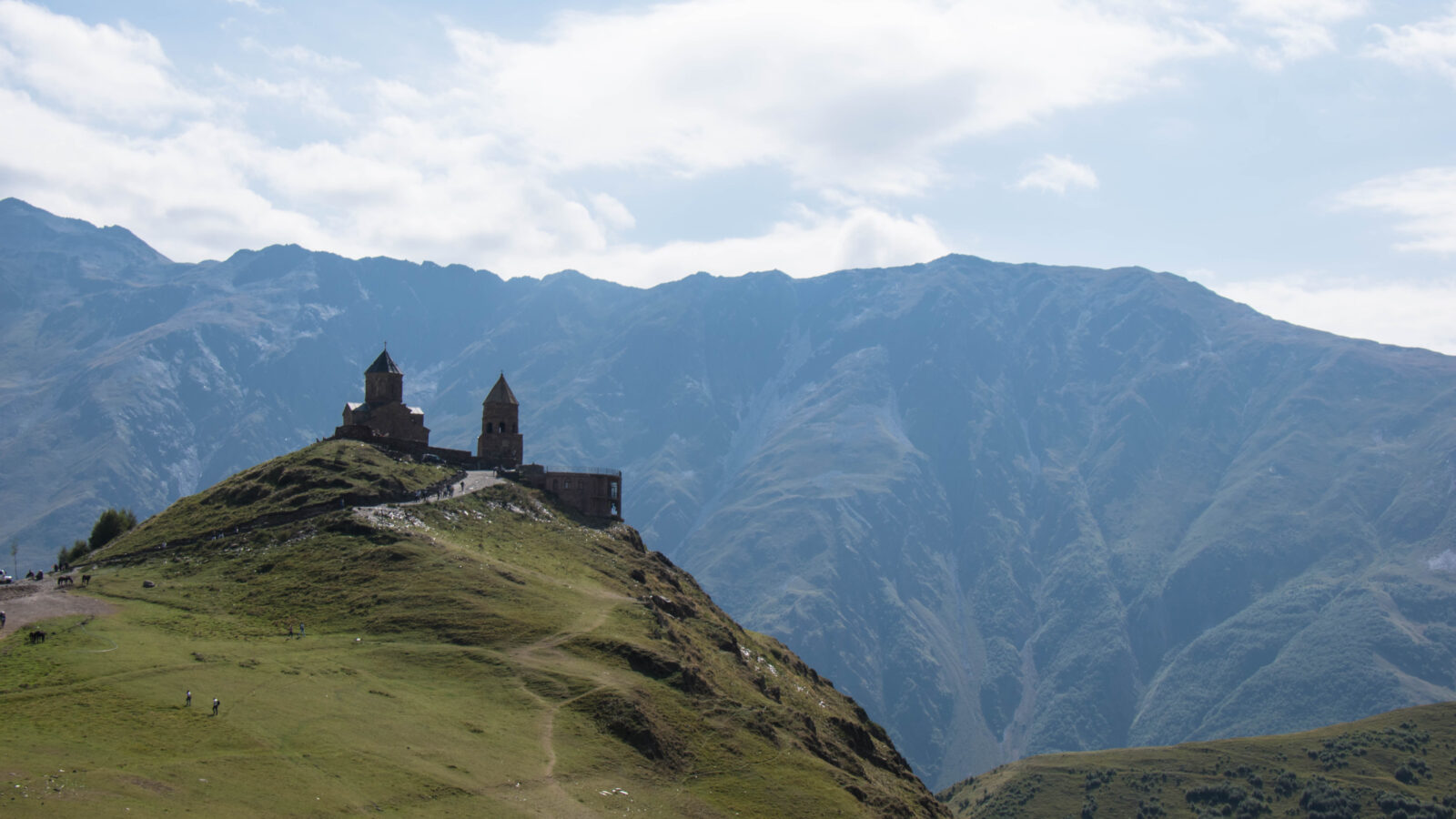
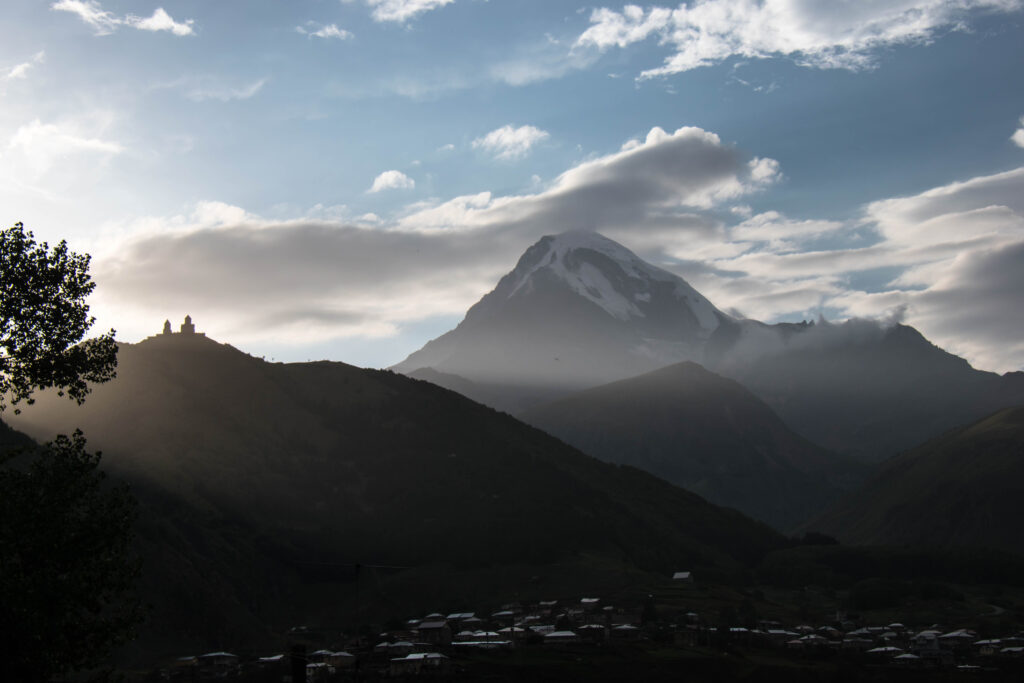
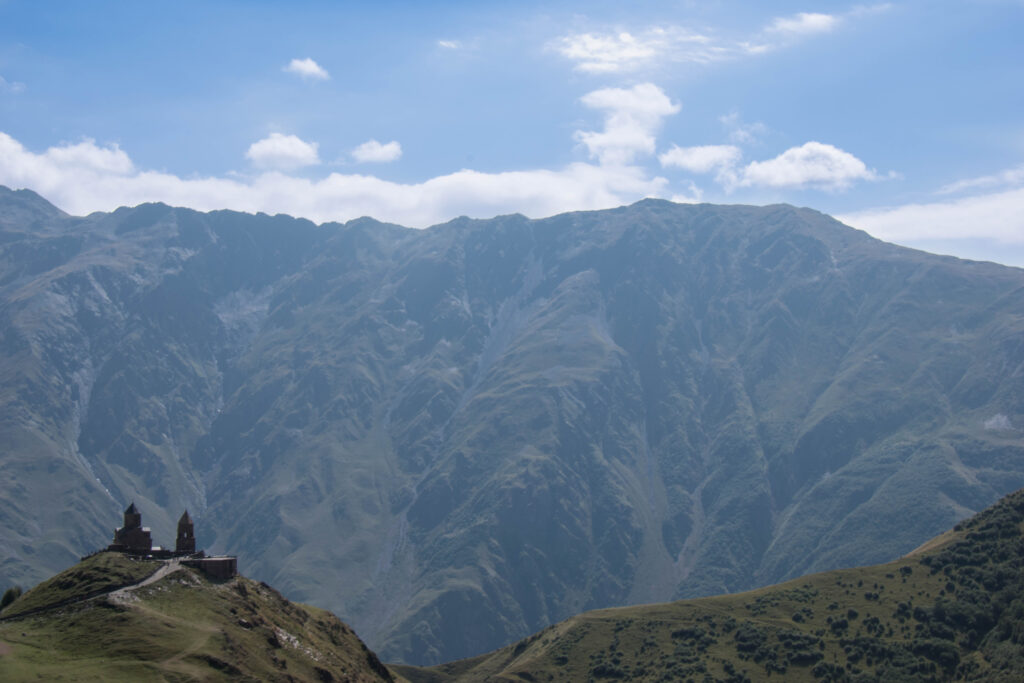
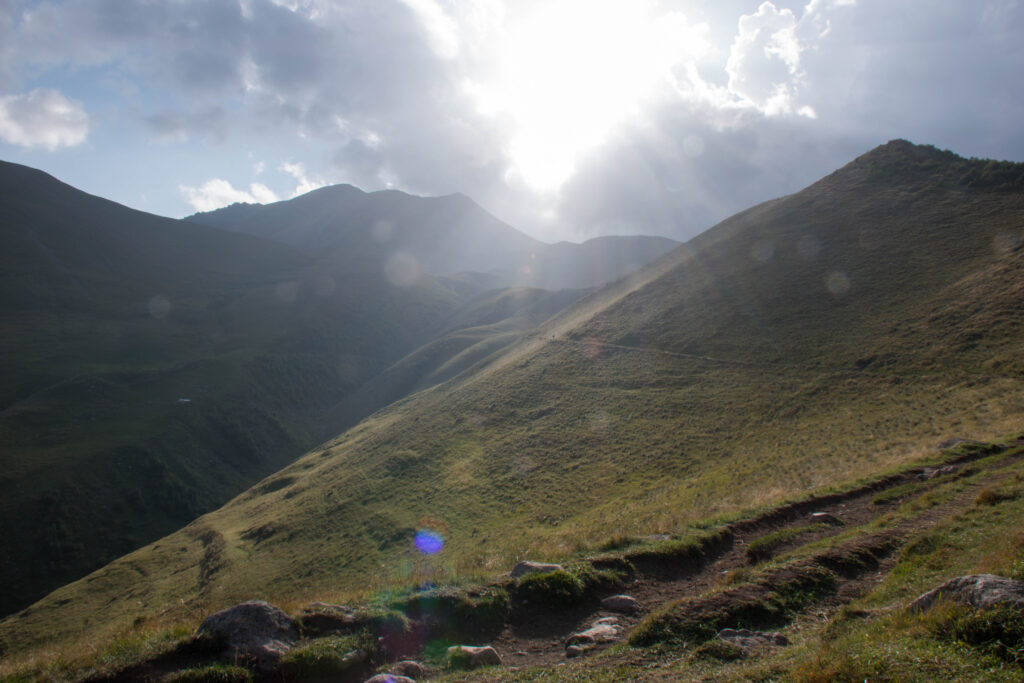
Breakfast and coffee in a bakery where the cashier speaks a few words of broken French, then off on the hike. First stop: the view of Gergeti Trinity Church, alone on its promontory. The landscape is superb despite an overcast sky hiding the summit of Mount Kazbek. A lunch break — bread and sausage bought earlier in a small grocery store — then the climbs get tougher. I pass quite a few hikers loaded with enormous backpacks, ropes and ice axes, probably off to attempt Mount Kazbek itself. I find my pace as the kilometers go by. The trail passes an old base camp before running alongside a waterfall and streams flowing straight down from the glacier. Magnificent.
At the foot of the glacier itself, at around 3,280 meters, the urge to keep going runs up against caution: on one side, sandy ground riddled with hidden crevasses; on the other, glacier ice covered with a thin layer of earth that makes it treacherous. Most hikers stop here for lack of crampons — I don’t have any either. I’d rather get home in one piece than tempt fate, so I eat something and head back down. A few drops of rain on the way, nothing dramatic. Back in the village after a 20 km round trip and more than 1,500 m of total elevation gain, a well-earned beer to warm up — it was cold up there.
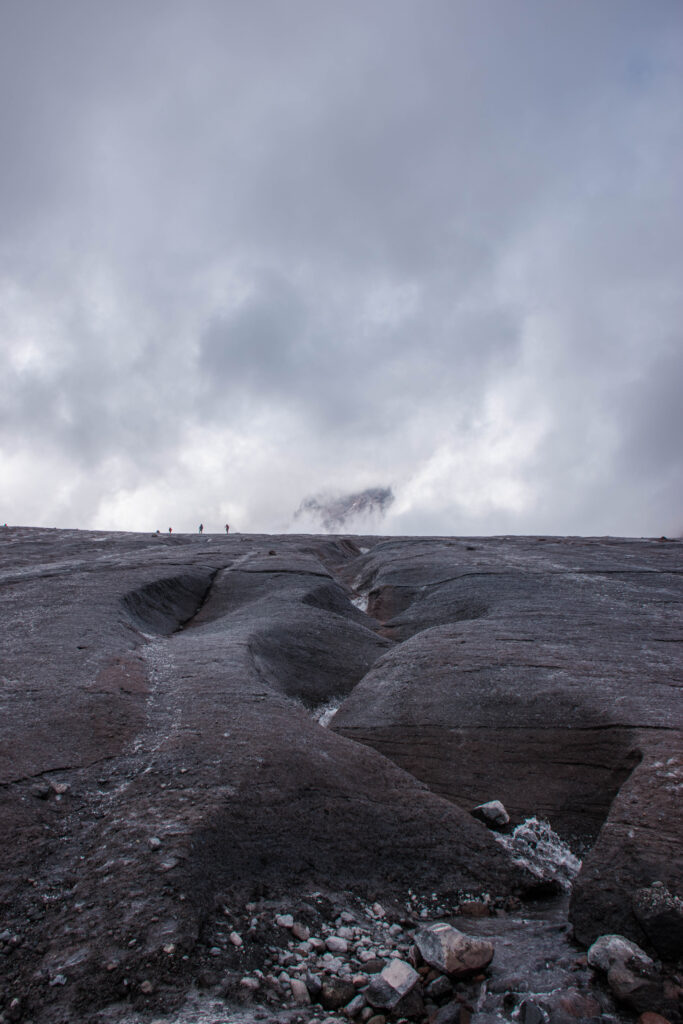
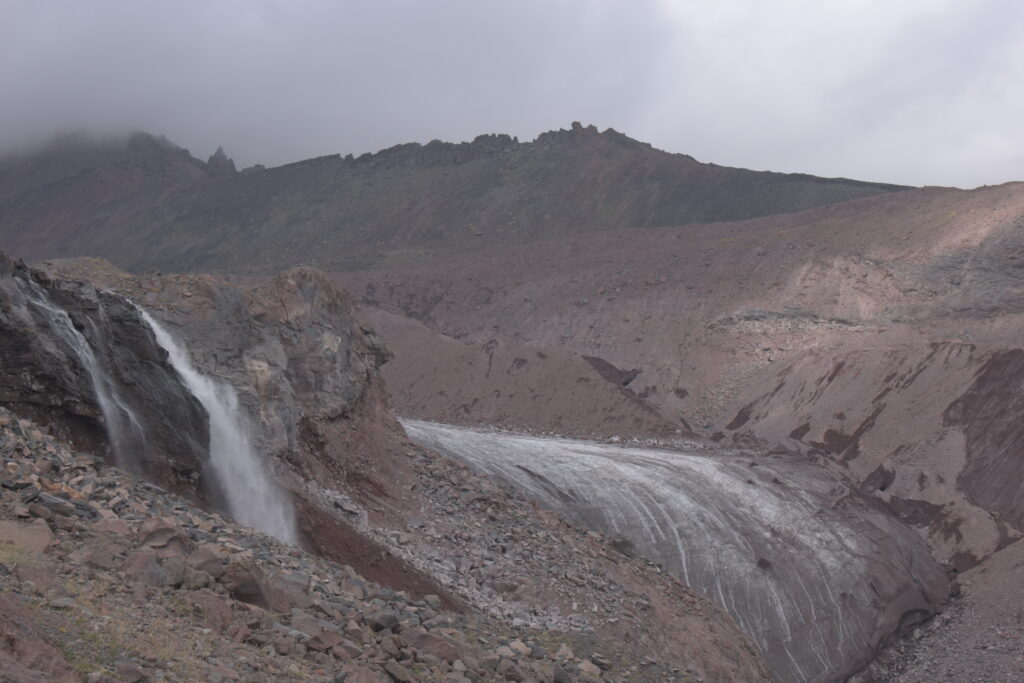
The glacier is brown because of dust sediment
Back at the hostel, I buy a bottle of red and some cheese to go with the bread and sausage I have left. I offer some wine to a girl sitting across from me — the start of a conversation that quickly spreads to everyone: Daria, a Spanish blogger who’s quite into Instagram, and Rafal, a Polish guy traveling by motorbike, who joins us along the way. The evening goes on with a few of us. As I’m heading to bed, I hear one of the girls in the group swear in French as she walks past me; I wish her good night, and she looks at me, baffled, asking how I guessed she spoke French (Belgian, actually). “I heard a little ‘bordel, putain’…” Cue fits of laughter before bed.
A shepherd for company, the mountains for scenery
Breakfast with Daria and Rafal, both setting off on the same trek I did the day before — she’ll stop at the church, he’ll try to push farther, maybe even sleep at the weather station, but the cold will decide otherwise. I head off on my own to explore the other side of the valley: two hours of walking with no particular goal, just the pleasure of settling into the grass and watching the mountains. A shepherd comes to sit next to me; I offer him a cigarette, and we talk as best we can, with gestures and scraps of words. After soaking up plenty of sun, I head down through the forest, taking photos along the way, back to the village where I was hoping for an Irish coffee — not available, oh well.
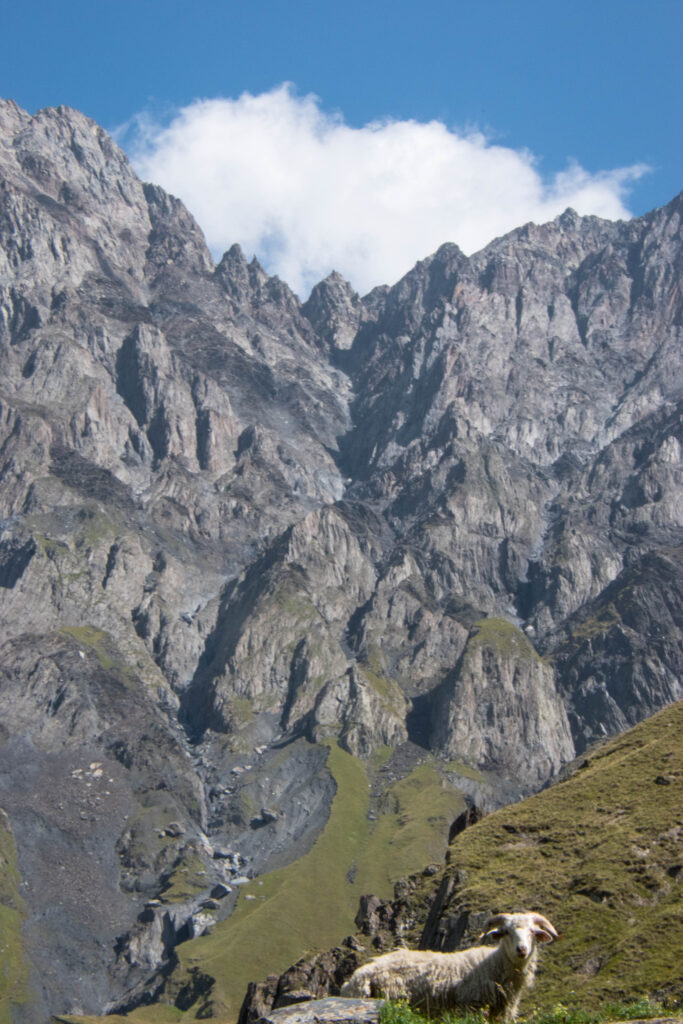
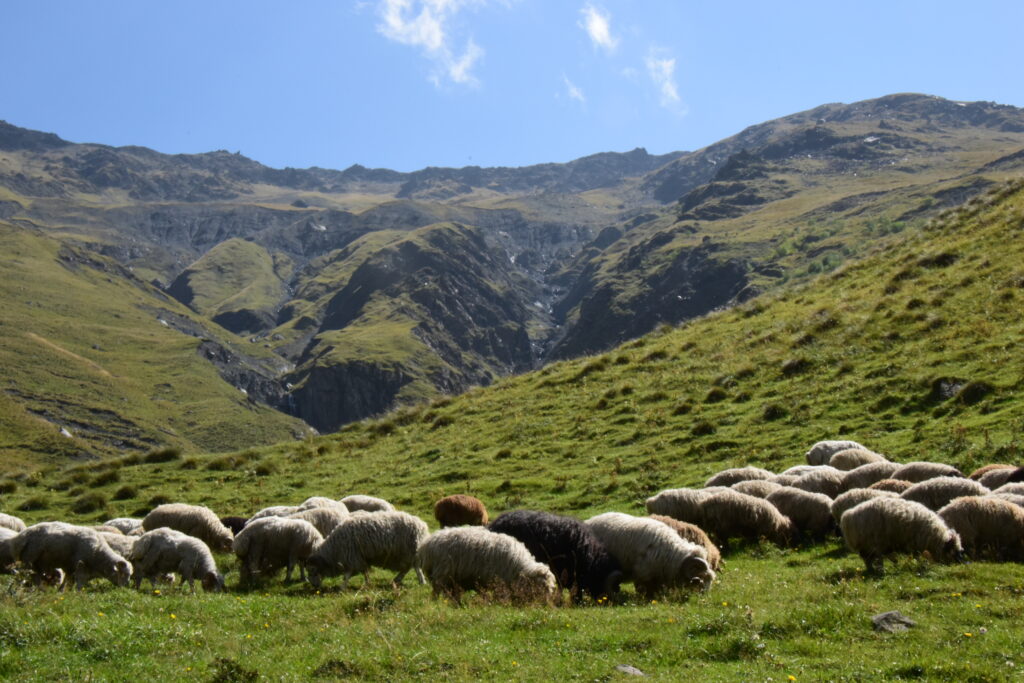
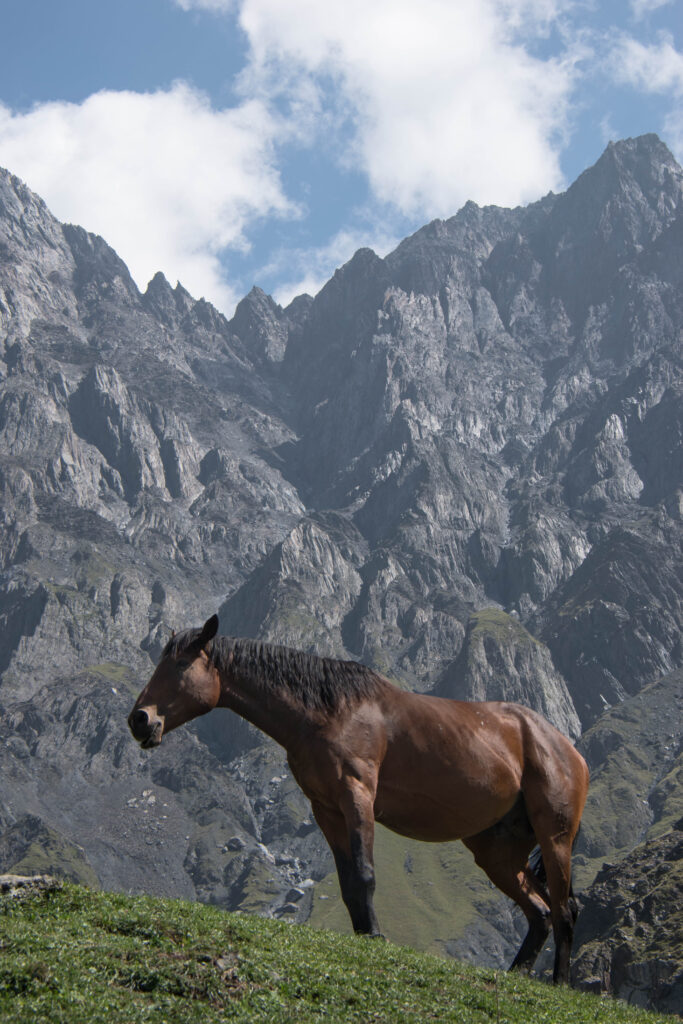
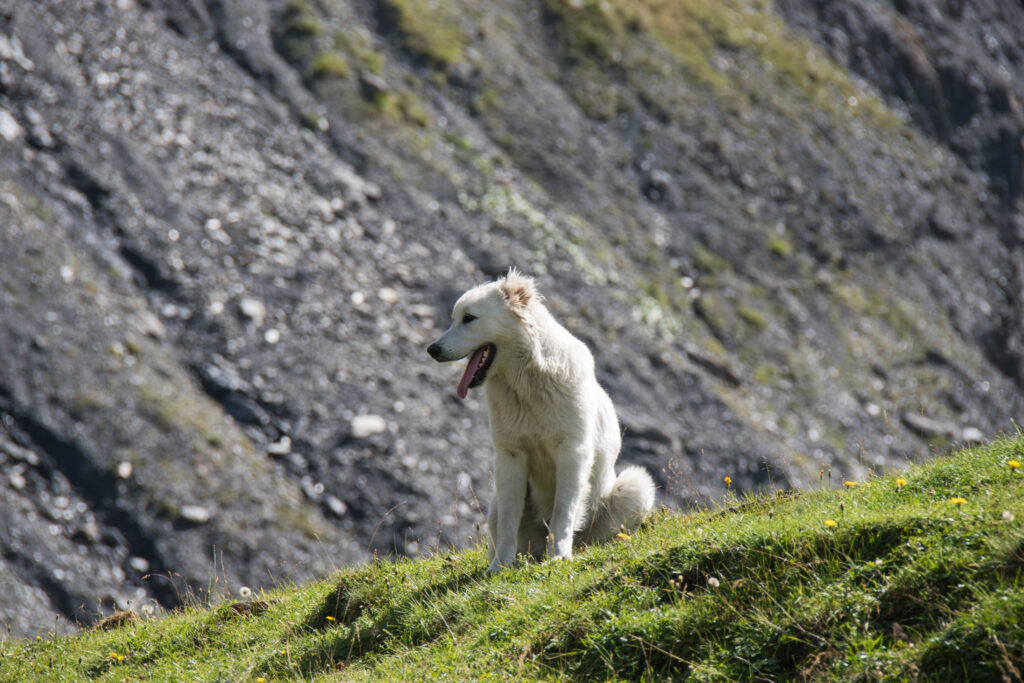
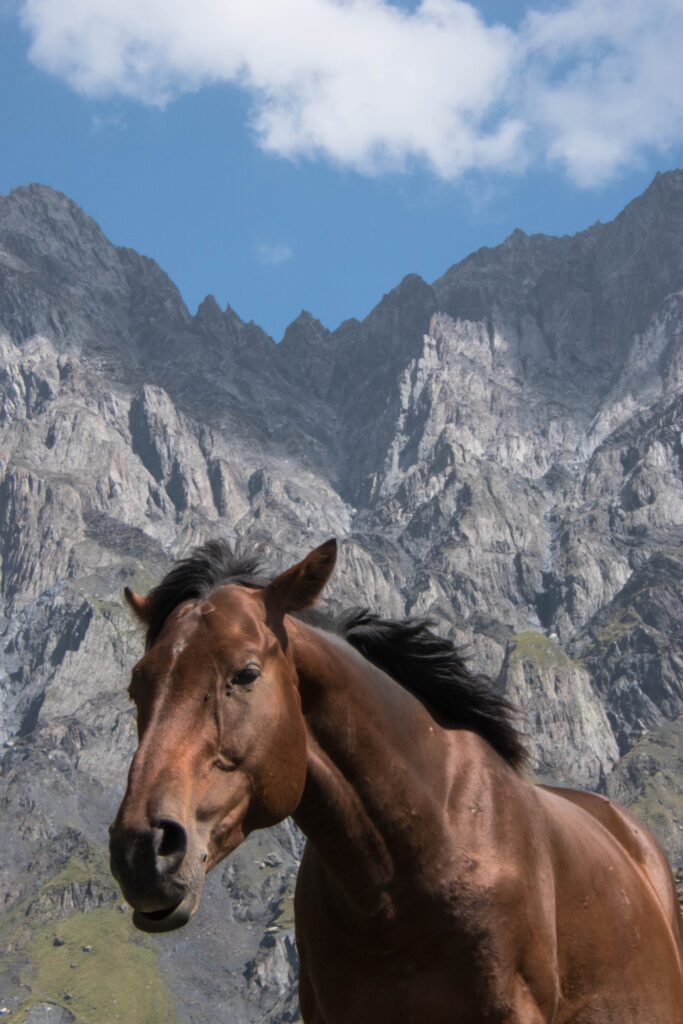
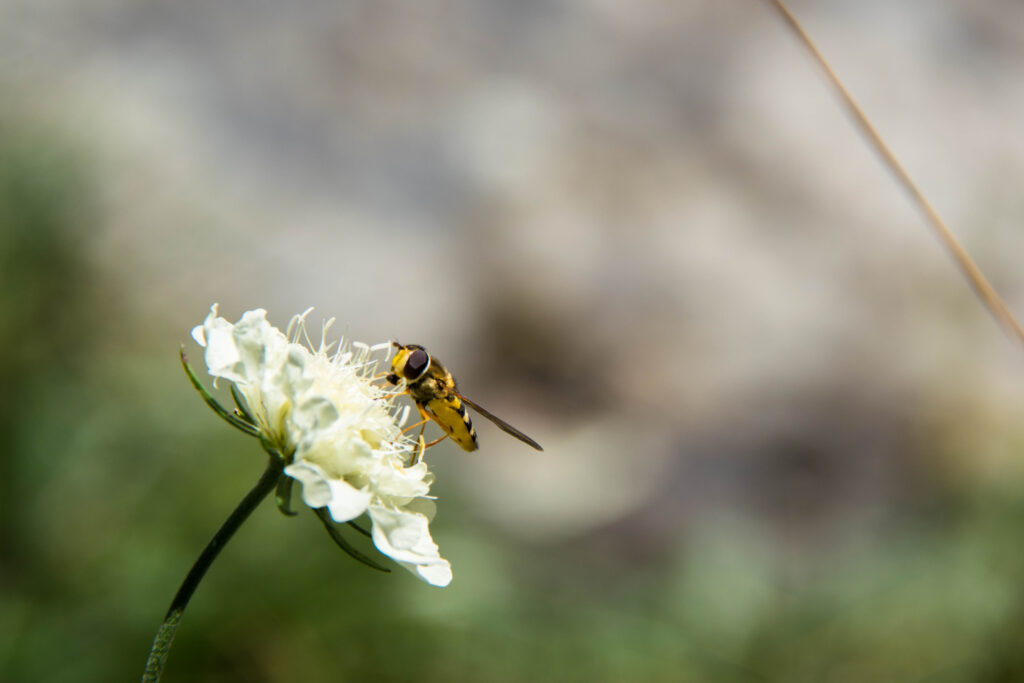
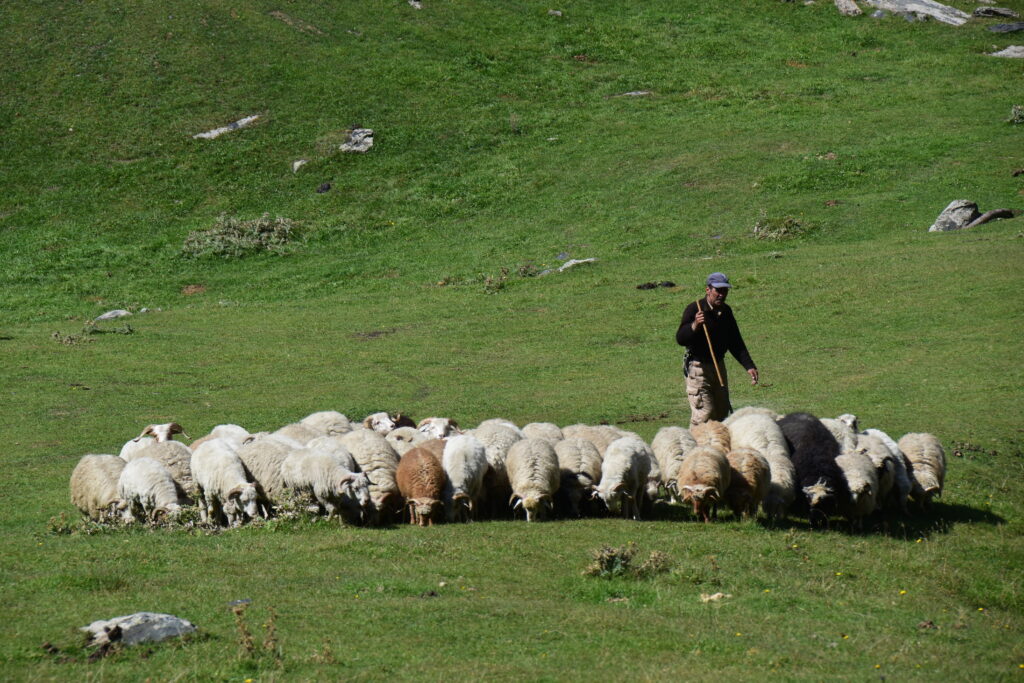
Back at the hostel, I run into the Belgian girl again, who explains she’s traveling around the world without ever taking a plane — a year and a half on the road already, and she still hasn’t left Eastern Europe and Turkey. She’s changing hostels, since there’s no room here; Rafal too. The WhatsApp system keeps up its comic effect: every new arrival has to be briefed on the famous number to call, the info passed by word of mouth between travelers passing through. Daria, Rafal and I end up buying vegetables and wine to cook together at the hostel.
The evening stretches on over travel stories, punctuated by a quick run to a small shop for a bottle of homemade wine. Rafal leaves around 10 p.m. to drop his things at his new hostel, then comes back to finish the evening with us. Really nice.
Back to Tbilisi and a chacha night at Fabrika
Breakfast with Rafal — porridge, fruit, Turkish coffee — before leaving for Tbilisi. Daria and I take the marshrutka (packed as always), while Rafal rides off on his motorbike with a detour through the Truso Valley, heading for the same hostel I’d stayed in when I arrived. Reunion over a meal. Daria then drags us to Fabrika, a huge hostel tucked away in the middle of nowhere, built around an inner street lined with bars — Rafal compares it to Bangkok’s Khao San Road.
One beer later, off to Bar Warszawa, a Polish bar on Pushkin Street where the beer turns out to be frankly bad, but where Daria insists we try the Chachachello, the house specialty — a shot of chacha (the local grape brandy) with lemon, a bit like a Georgian take on limoncello, sweet but dangerously effective. Everyone buys a round; the beer stays undrinkable, the Chachachello a little less so. As we leave, our attempt to order a local Uber fails — but three young Georgians walking by, seeing us struggle, call a driver for us themselves. He ends up canceling without explanation; never mind, they hail a taxi, pay for the ride themselves (barely 5 lari) and bundle us in, without us asking for anything. Back to the hostel, lights out.
A quiet day between a roller coaster and a wine bar
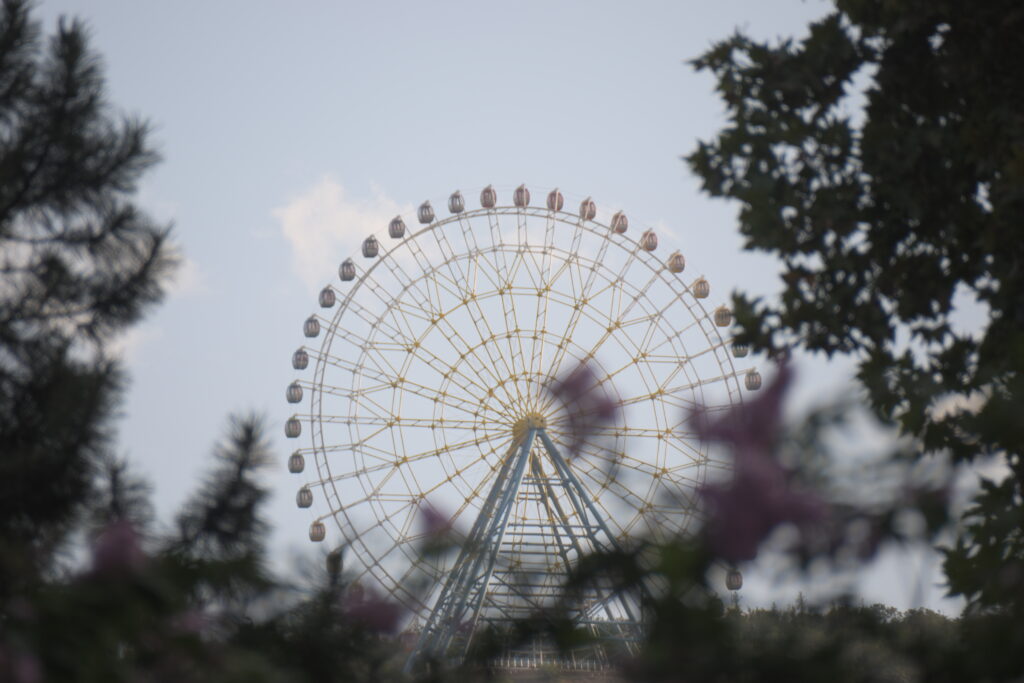
Up before the other two, whose heads are a bit heavy after last night. I go down for breakfast, then keep them company with a drink while they order food. Daria and Rafal are both leaving for Yerevan today — goodbyes, and a bit of time at the hostel before heading out to explore Mtatsminda amusement park, perched on the hill overlooking the city. I walk halfway up before laziness wins and I take the funicular the rest of the way. Nothing extraordinary once at the top, but the atmosphere is relaxed: a drink break next to the roller coaster, then back down to town on foot. On the way, a stop at a wine bar where I chat with the waitress, who’s planning a trip to Strasbourg — small world. Back to the hostel in a light rain. An uneventful day, but a pleasant one.
Old town, modern bridges and a khinkali lesson
A disrupted night thanks to a traveler I hadn’t even heard come in, who leaps out of bed to throw up over the balcony (maybe he went a little too hard on the chacha 😂) — this hostel gets a little stranger every day. Check-out that same morning for a real hotel, with a real room and somewhere to catch my breath — spa, pool — after a whole week sleeping in dorms and racking up kilometers on foot. Two last days planned here, to recover before heading home.
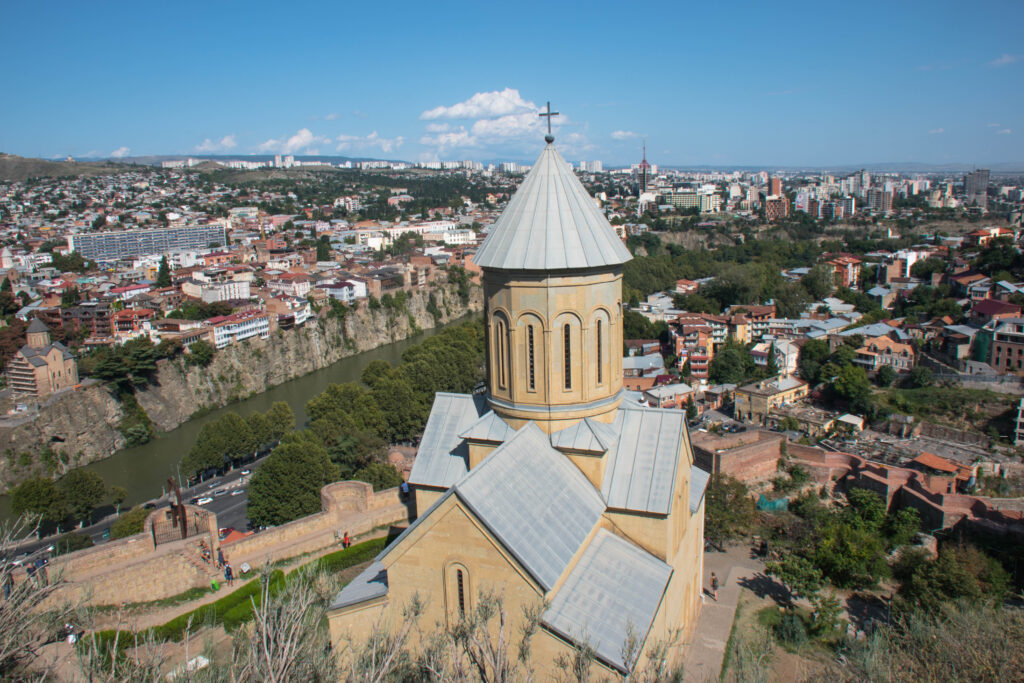
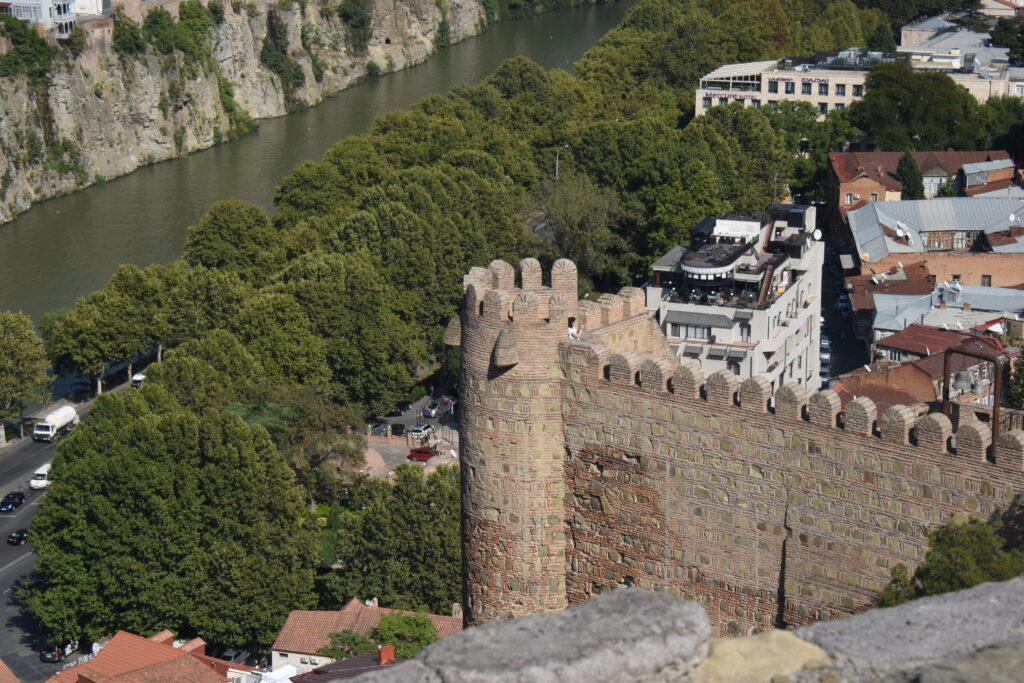
Next, off to Narikala Fortress, an old stronghold half abandoned, but whose charm works all the same.
Right next to it stands the statue of Mother of Georgia (Kartlis Deda) — twenty meters of aluminum, a cup of wine in one hand and a sword in the other, symbolizing both the country’s hospitality and its ability to defend itself.
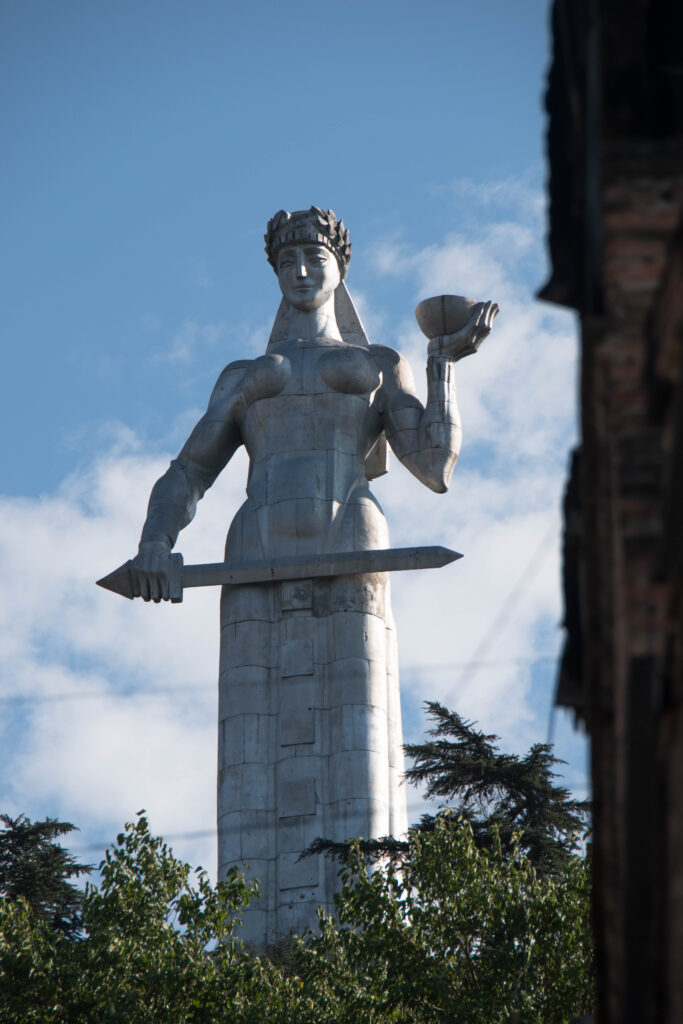
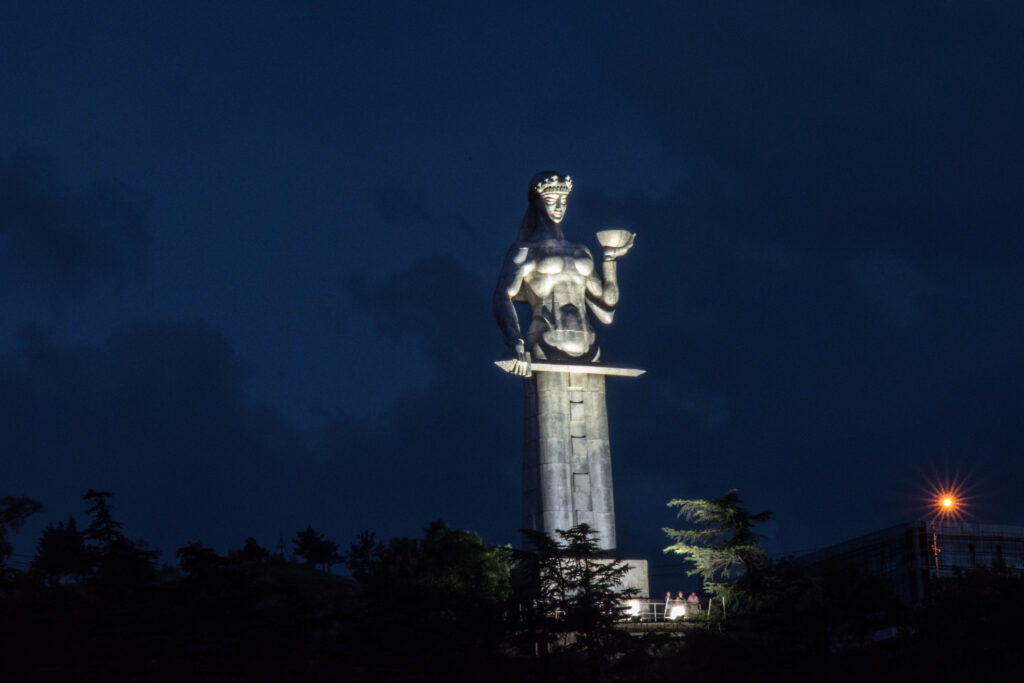
Mother of Georgia
On the way down, I get lost on purpose in the lanes of the old town and stumble upon the Gabriadze Clock Tower, a slightly whimsical leaning tower with its automatons — nice, and the restaurants around it are surprisingly expensive for the country (the old town is a bit more touristy).
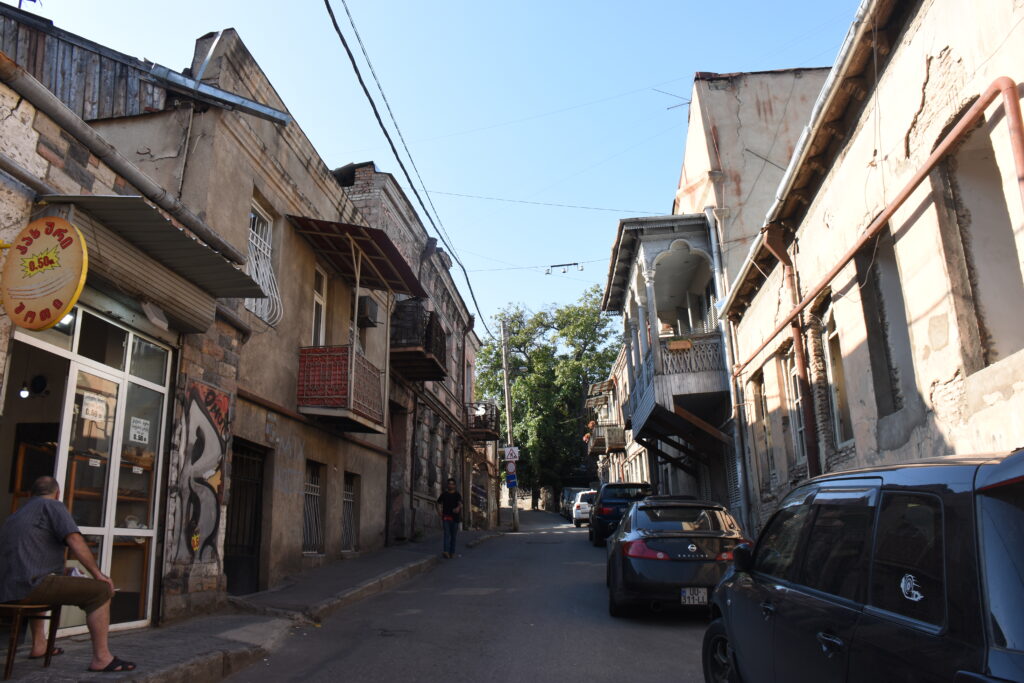
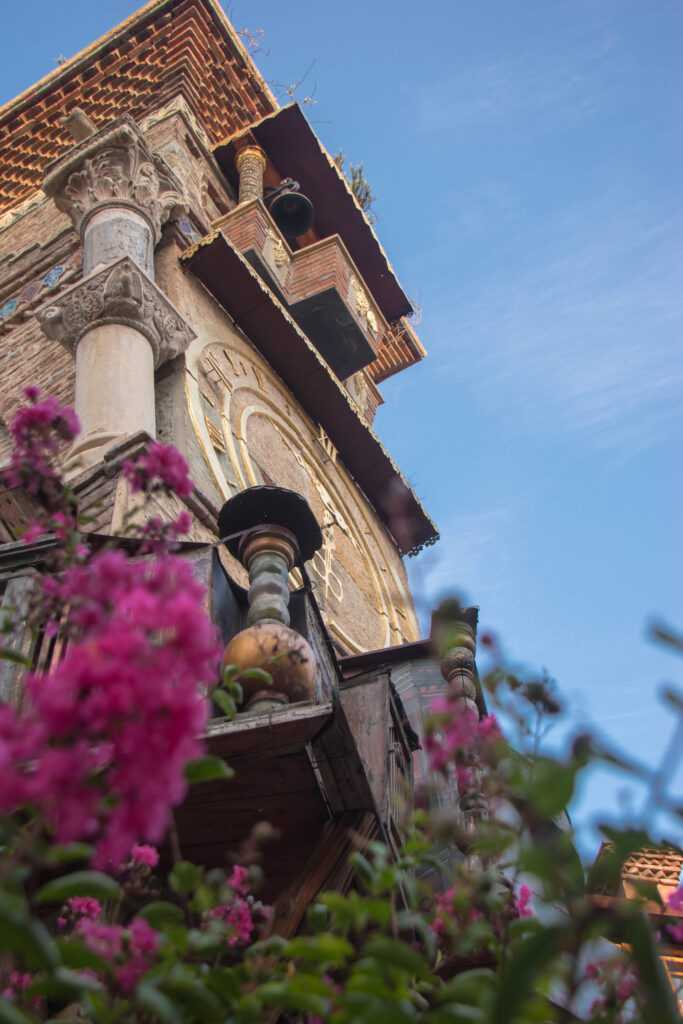
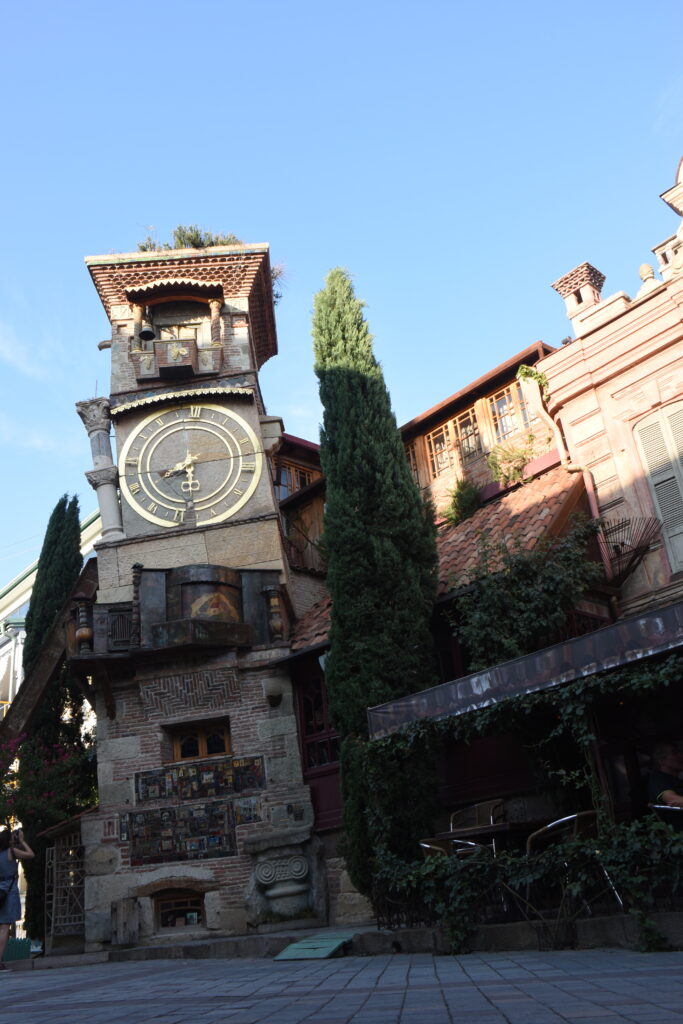
Then on to the Baratashvili Bridge, right next to the Clock Tower — nicknamed the “Bridge of Love,” known for the bronze statues of embracing couples that decorate its railings,
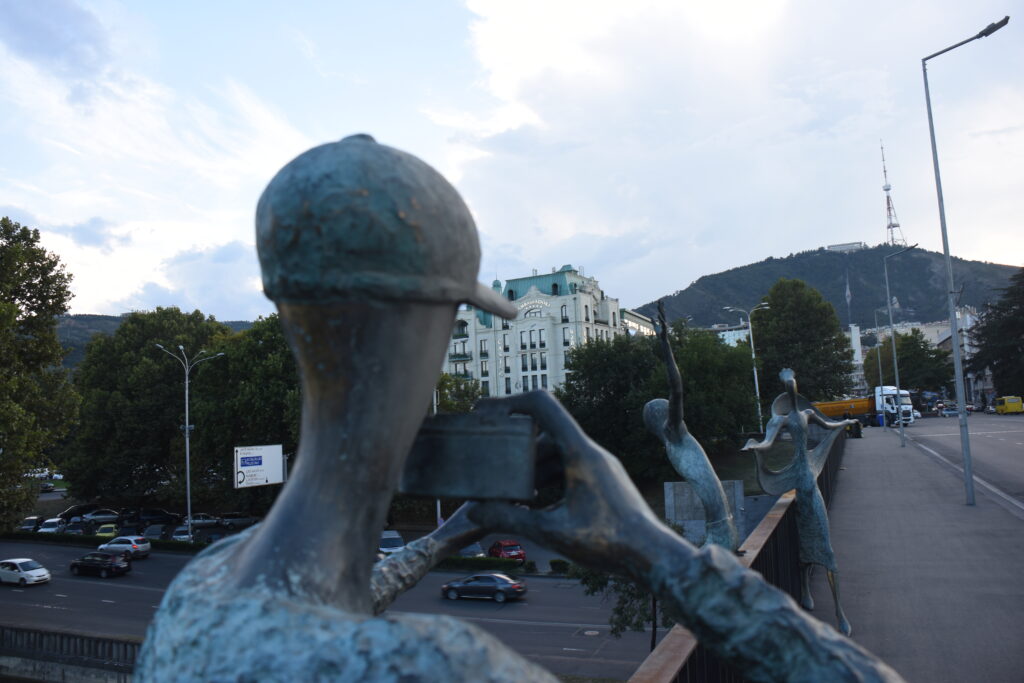
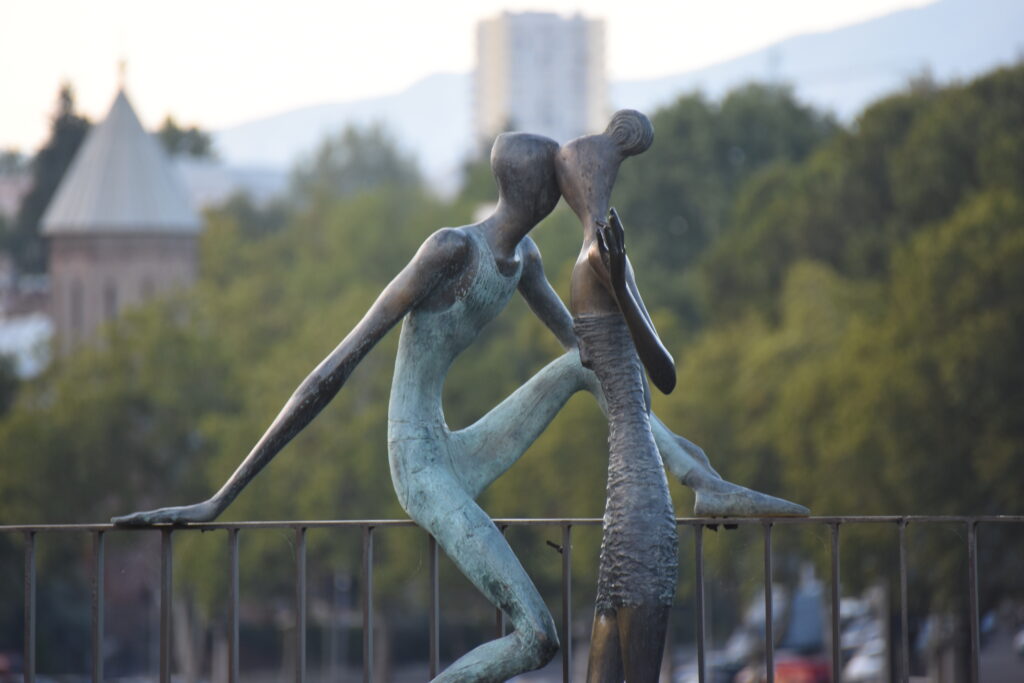
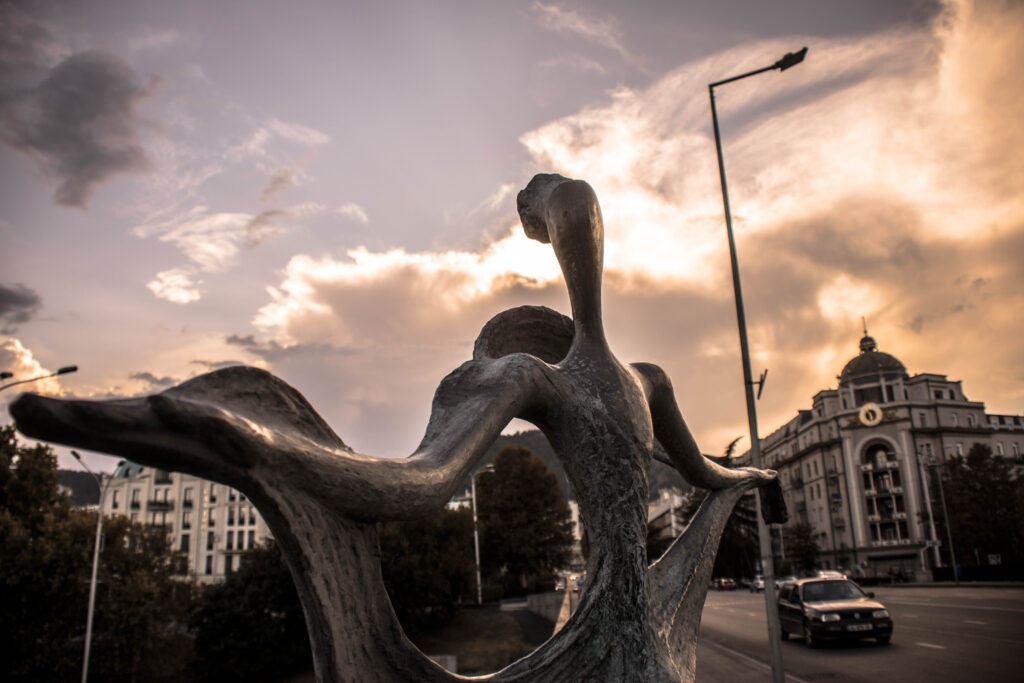
Then the Bridge of Peace, a modern pedestrian bridge where I take a photo break in the adjacent park.
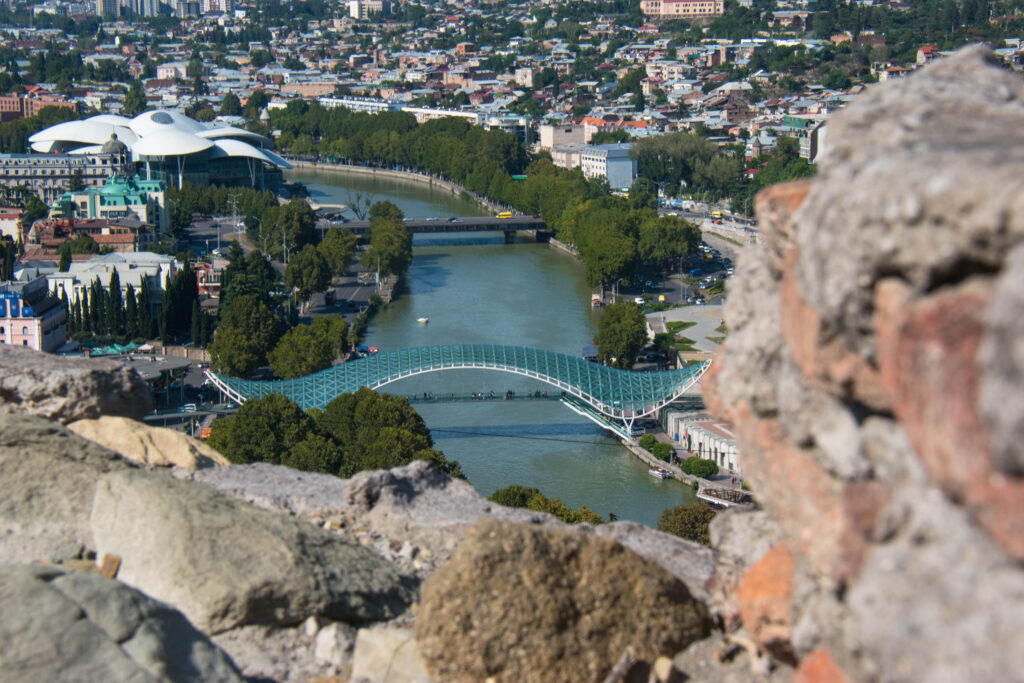
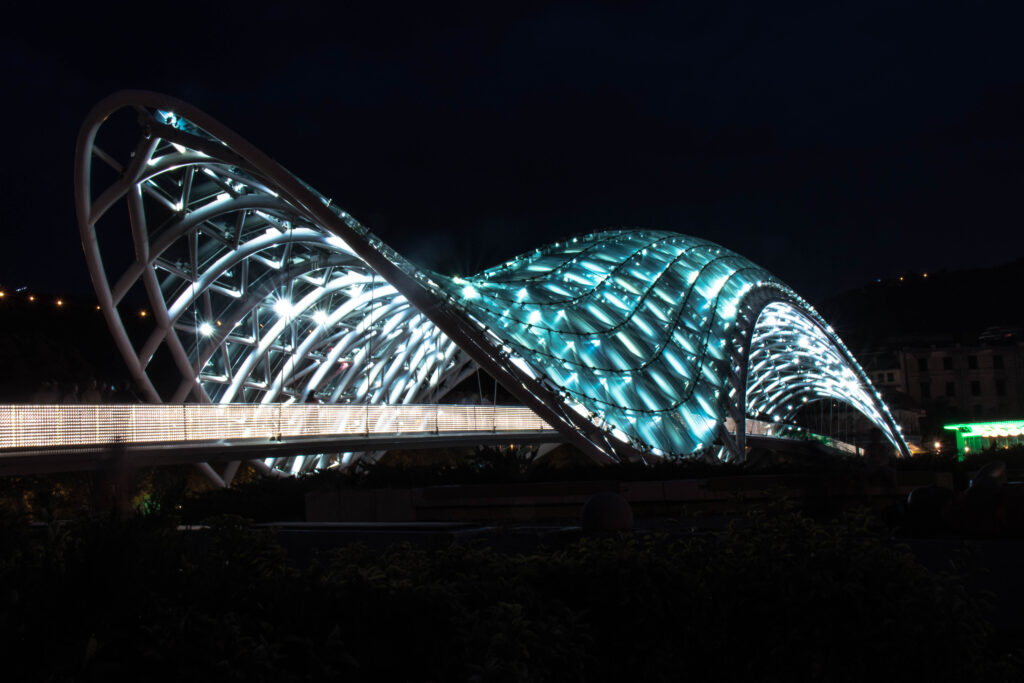
On the way back, I stop at a small, unpretentious restaurant. Seeing me step out for a cigarette, the owner calls out “take more wine and go” and ends up joining me outside to chat — an Armenian who lived in Toronto for a long time. Back at the table for my khinkali (huge Georgian dumplings), the old lady serving me rushes over to show me how to eat them properly, cracking up at the sight of me improvising. She does the same routine with the next dish, a khachapuri — a sort of bread stuffed with egg and cheese. A real stand-in mom for the length of a meal. I end the evening making friends with a Siberian, who proudly shows me his photos taken at Fabrika, before heading back to the hotel.
A last wander through the old town, and a farewell below the cathedral
For this last day, back to wander the old town — heading for the Abanotubani district, known for its sulfur baths whose brick domes push up out of the ground like beehives, a very particular architecture unlike anything else in the city.
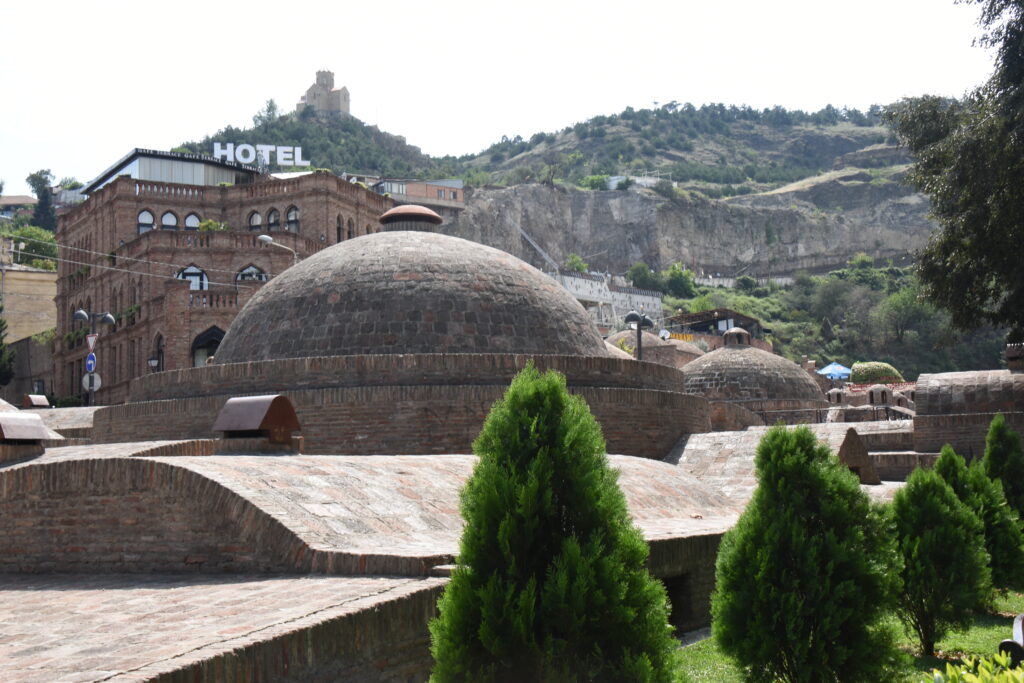
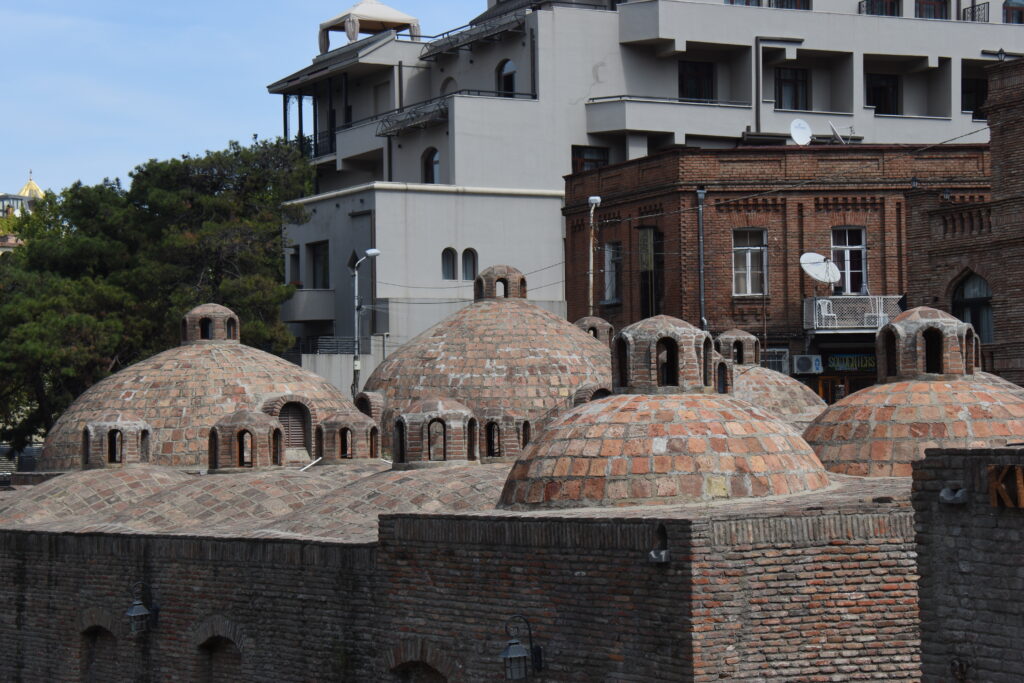
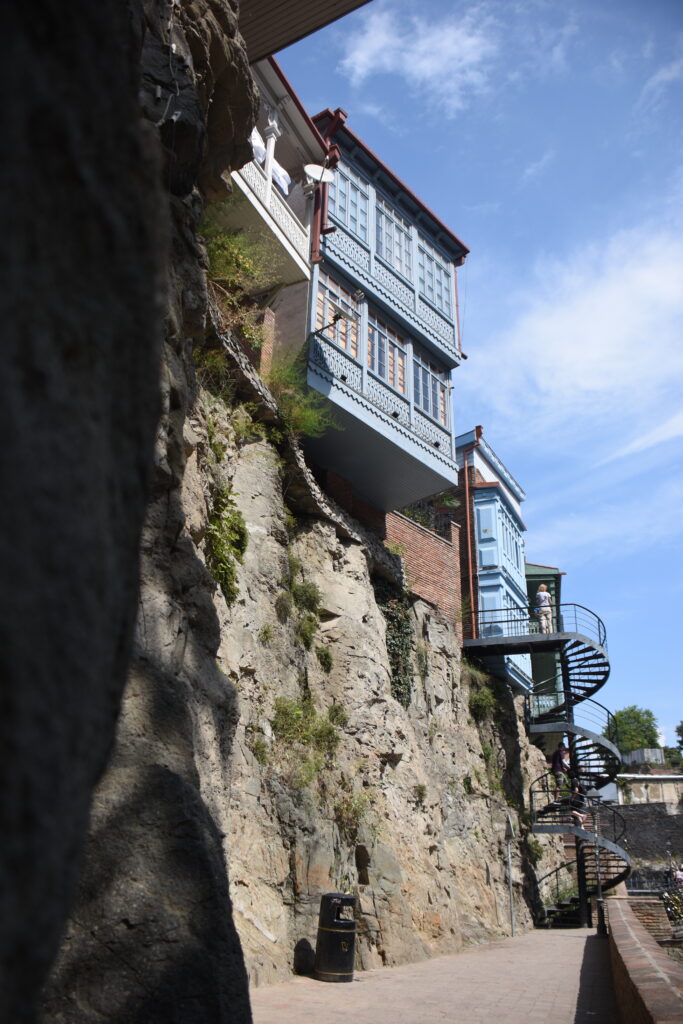
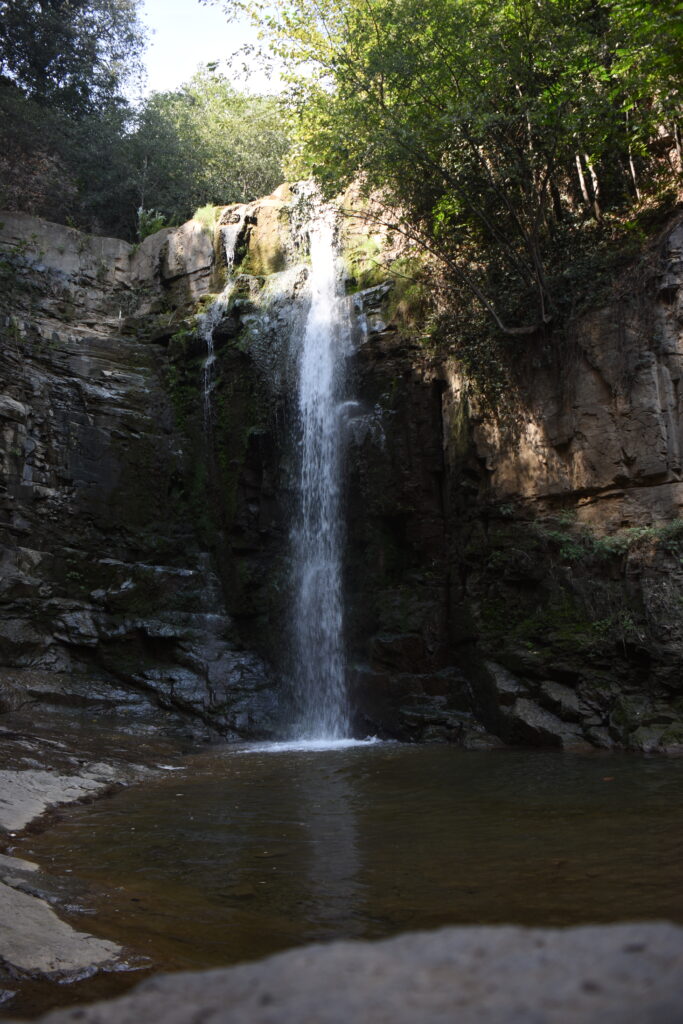
I continue on foot through the Leghvtakhevi canyon to the waterfall of the same name. All along the way, old wooden houses literally cling to the rock face, balconies jutting out over the void and a spiral staircase winding between the homes — one of the most unusual corners of the old town.
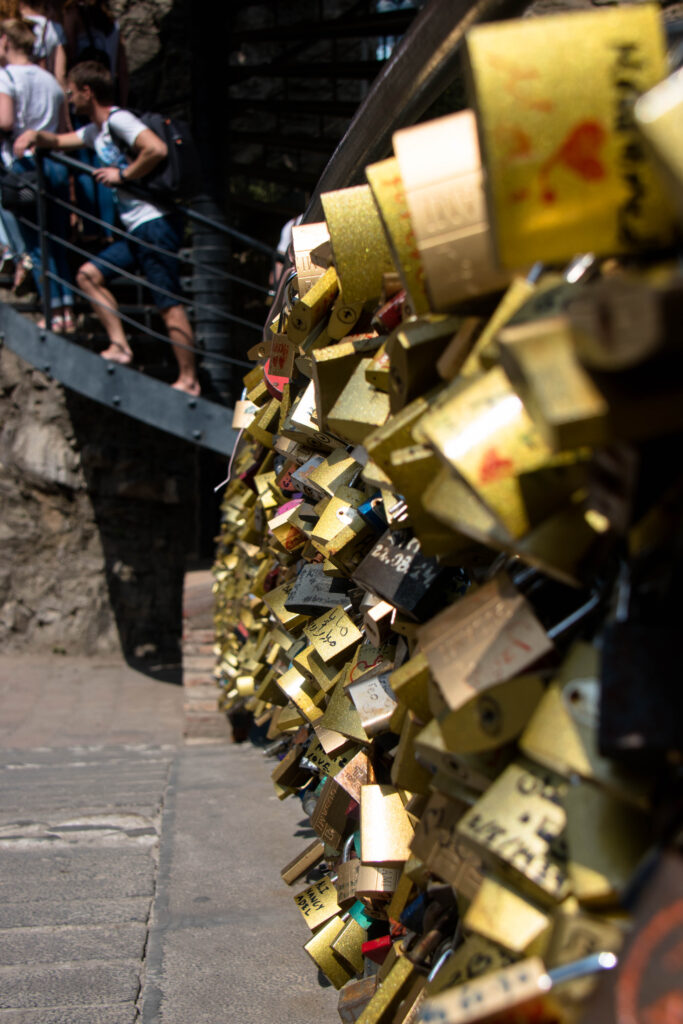
Along the way, a second “Bridge of Love,” different from the one the day before: a small footbridge covered in hundreds of padlocks meant to seal couples together forever, in the same spirit as the Pont des Arts in Paris before all its locks were removed.
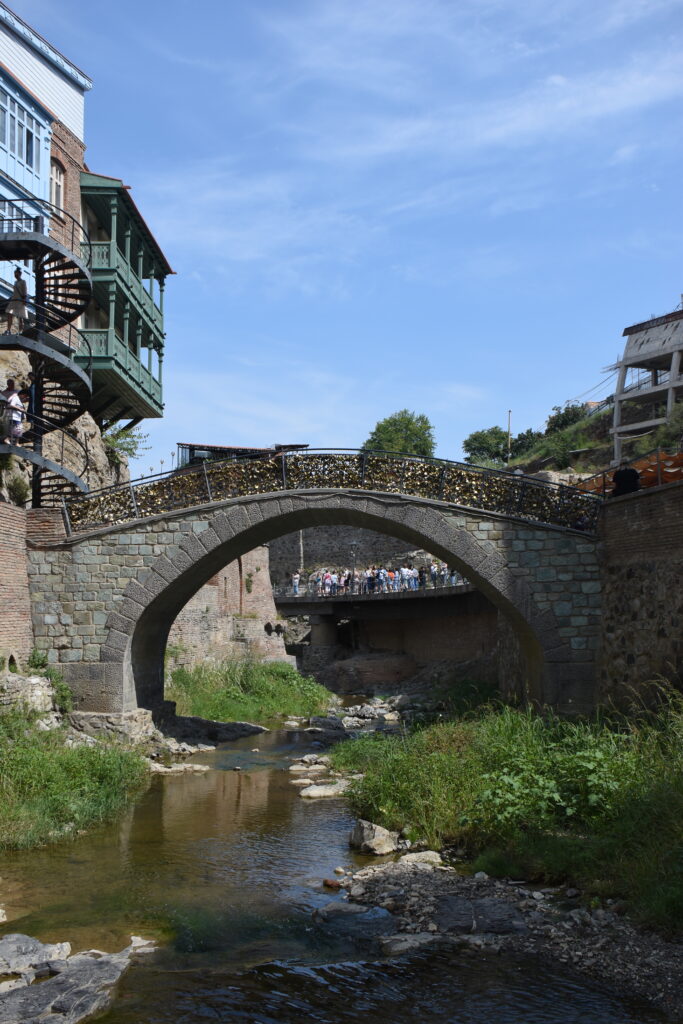
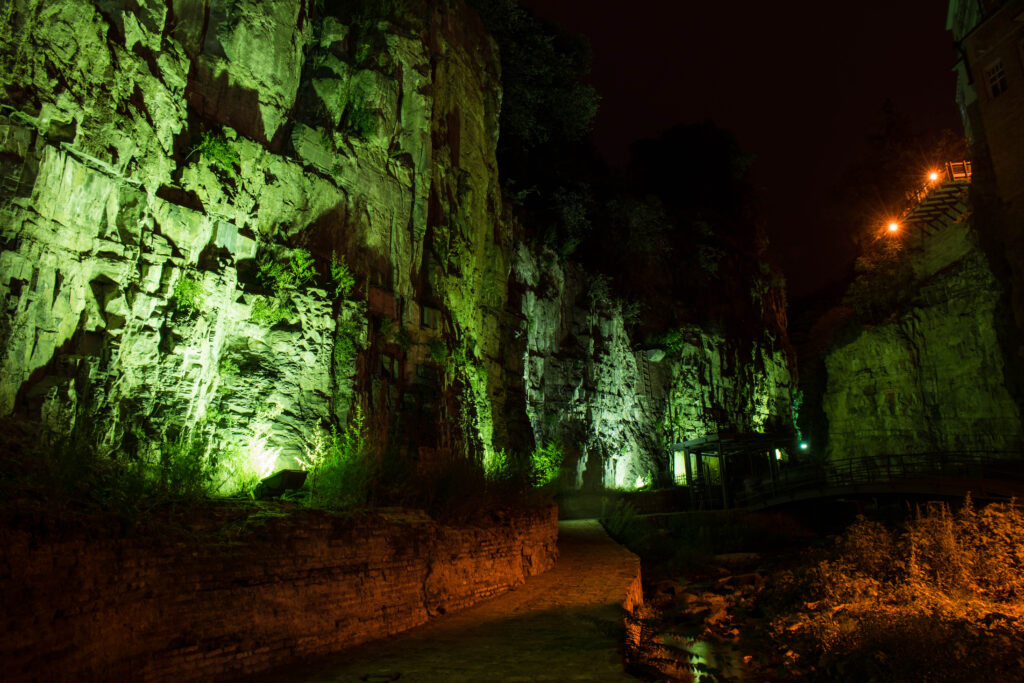
I linger until nightfall to see the canyon lit up — the place takes on a completely different atmosphere once illuminated.
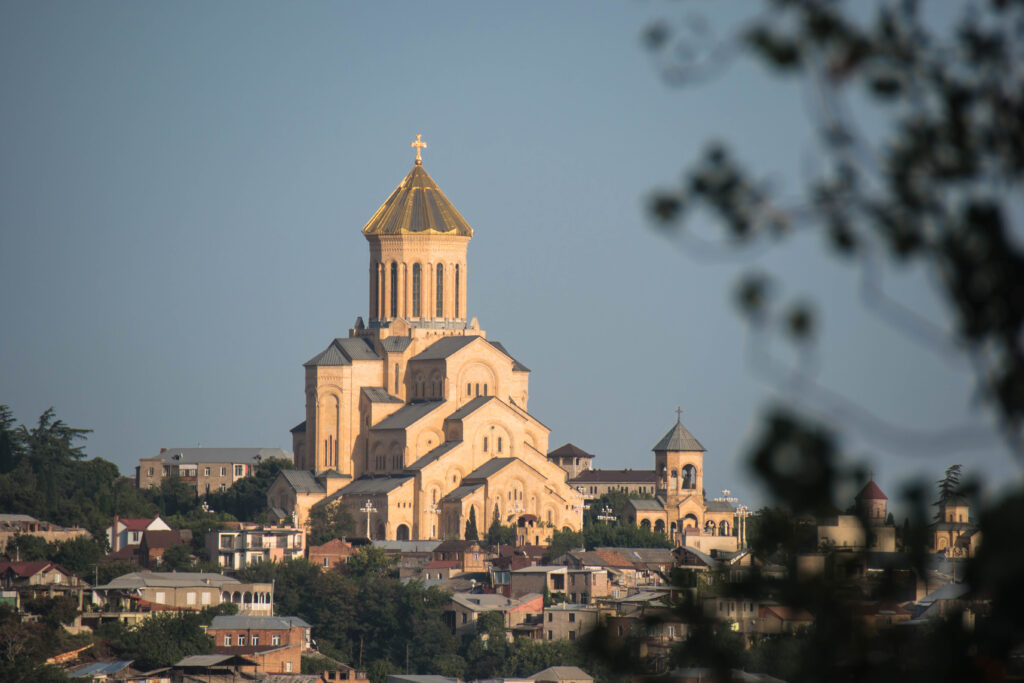
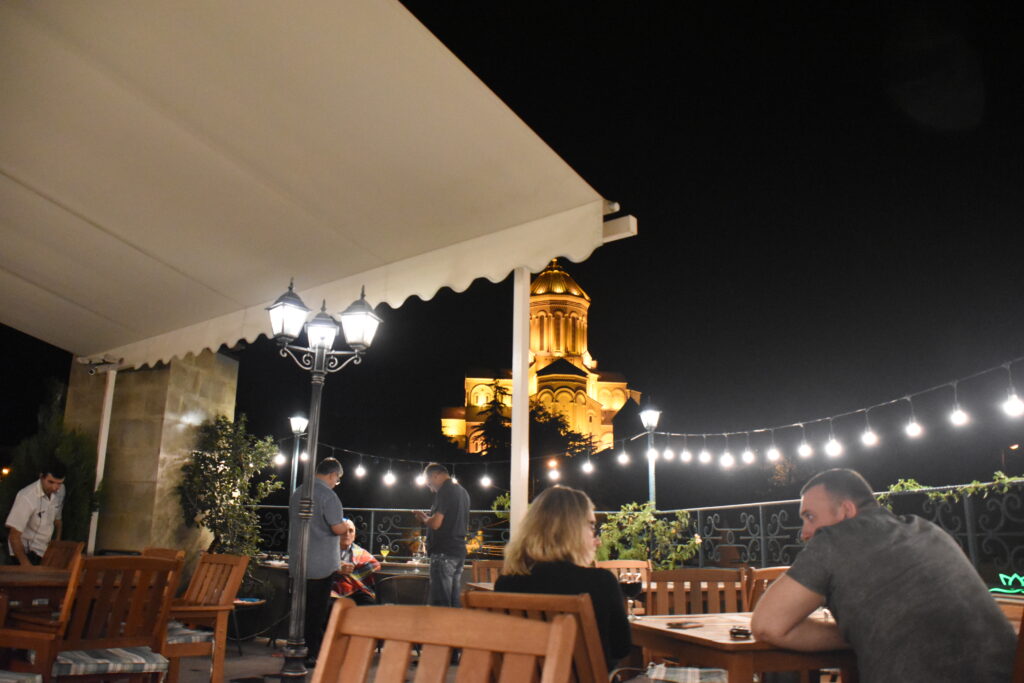
Then on to Holy Trinity Cathedral (Sameba), the largest Orthodox church in the country, for a last dinner with a view of the illuminated building — and the surprise of a small impromptu concert of Georgian music in the restaurant. A lovely way to end the trip.
Looking Back
A week that will mostly be remembered for a string of improvised, generous encounters: people met by chance one evening over a bottle of wine and found again several days running, all the way to Tbilisi; three strangers paying for a taxi without anyone asking them to; an old lady more attentive than any tour guide, teaching you how to eat a khinkali. Between the peaks of the Caucasus and the lanes of Tbilisi, Georgia is remembered less for its monuments than for the almost systematic generosity of the people you meet along the way.