Nine days to travel down Croatia from north to south, from Zagreb to Dubrovnik, with a few turquoise lakes and a bit of hitchhiking in between. Traveling solo, a light pack, and not much of a plan beyond the route.
A quick note before setting off: the prices below are in kuna, the currency at the time — Croatia has since switched to the euro.
Zagreb, first steps
As usual, I pack my things at the last minute. Alex, my neighbor, drives me to the airport for 9 a.m. — the check-in line is endless. I’m flying Turkish Airlines, pretty nice, decent meal. A small scare when the plane starts circling for almost an hour above the airport, but we finally land in Istanbul a little under an hour late. Just enough time for a cigarette, then I’m off to board again. Another delay at boarding, but we end up taking off on time. Two hours of flying to Zagreb, with Kung Fu Panda 3 in the original version to keep me busy.
Zagreb has a tiny airport, easy to find your way around. I pick up my bag, change €100 (about 750 kuna), and take the bus to the center. Once there, I ask around about what to do and where to sleep, walk to the city center, and find a hostel at 180 kuna a night for two nights. I drop my things and head straight back out to find something to eat — not exactly exotic, but not unpleasant either. A little local fast-food place: a slice of pizza (24 kn), a burger (14 kn), and the first beer on the house. Off to a good start.
Zagreb, between offbeat museums and a monumental cemetery
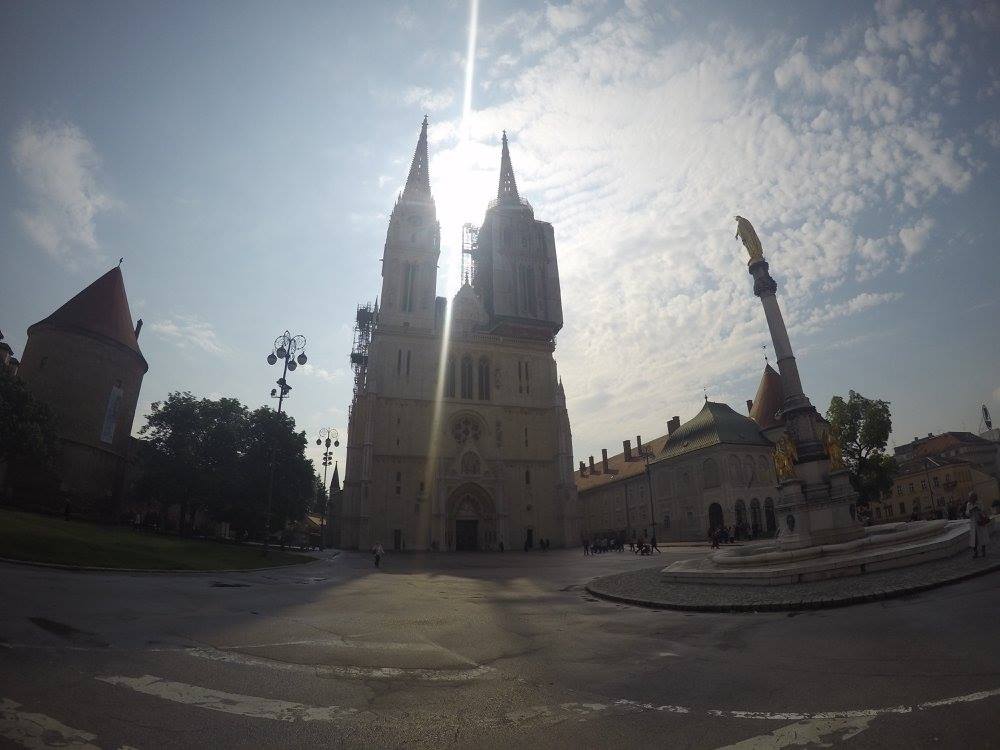
Up around 8:30 a.m., off to a bakery for an improvised breakfast — two not-so-great croissants, eaten at the hotel with a coffee. I set off on foot toward the center, cross a park, and stumble on a fruit and vegetable market and a flower market. The center is pleasant, full of small shops, still quiet at this hour. I get lost on purpose in the least touristy streets — that’s often where you find the most interesting things. I visit the cathedral, beautiful inside and out, but a mass is under way so I don’t linger.
While wandering, I come across the Museum of Broken Relationships by chance (30 kn): a collection of objects from all over the world, each one accompanied by the story of a breakup. Original. I keep going and, this time, land on a torture museum (40 kn) — not exactly a cheerful transition. The place is small but very dark, with no windows; a tablet in front of the display cases explains what each instrument was used for. No shocking images, but a truly grim atmosphere.
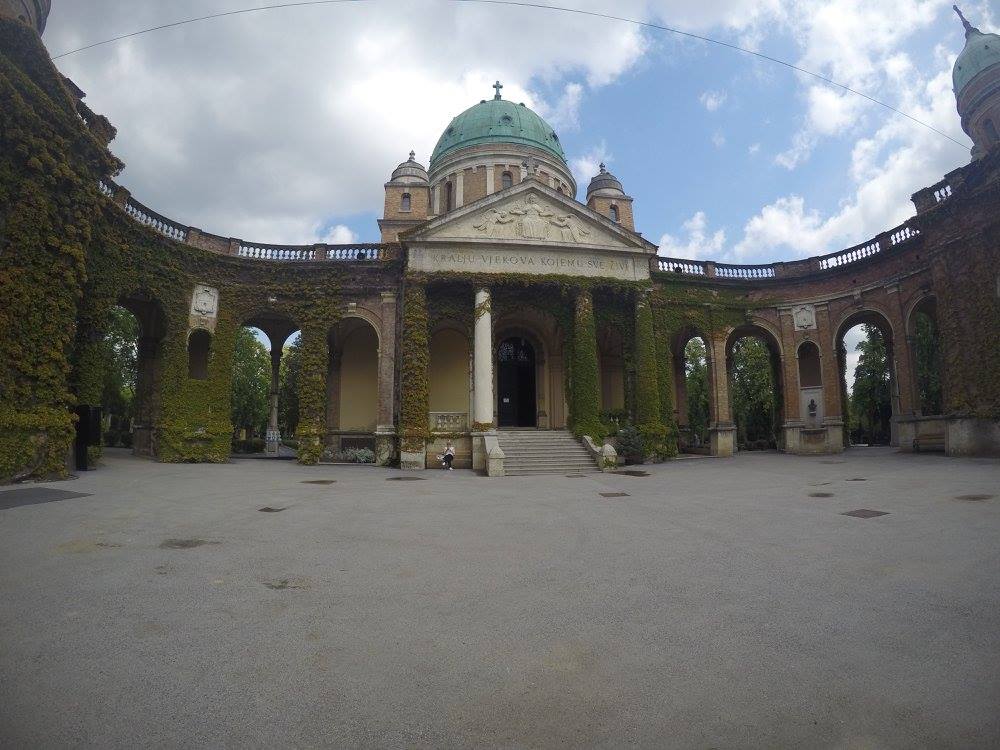
After these two rather contrasting museums, I stop for a club sandwich and a beer. Next, off to Mirogoj Cemetery: the entrance building, a kind of rampart topped with a dome, is the most beautiful part of the site. The cemetery itself is huge — I probably saw a fifth of it — and brings together every religious faith, with arcades reserved for famous Croatians. I sit on a bench for a while to decide what to do next, and an enormous funeral procession passes in front of me. Quite the atmosphere.
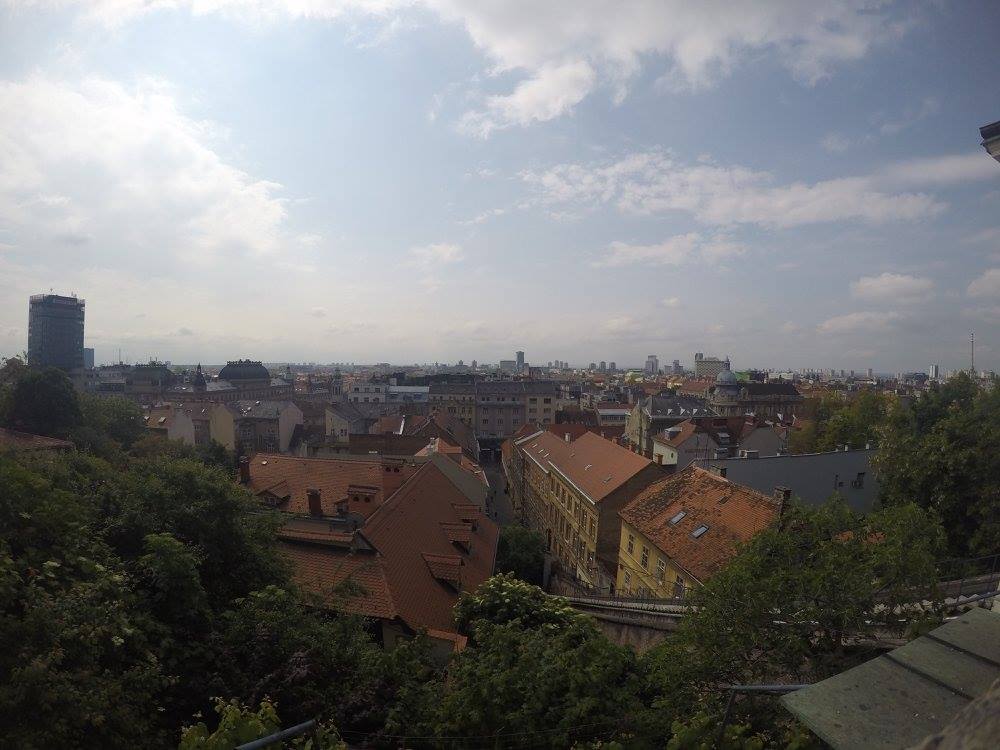
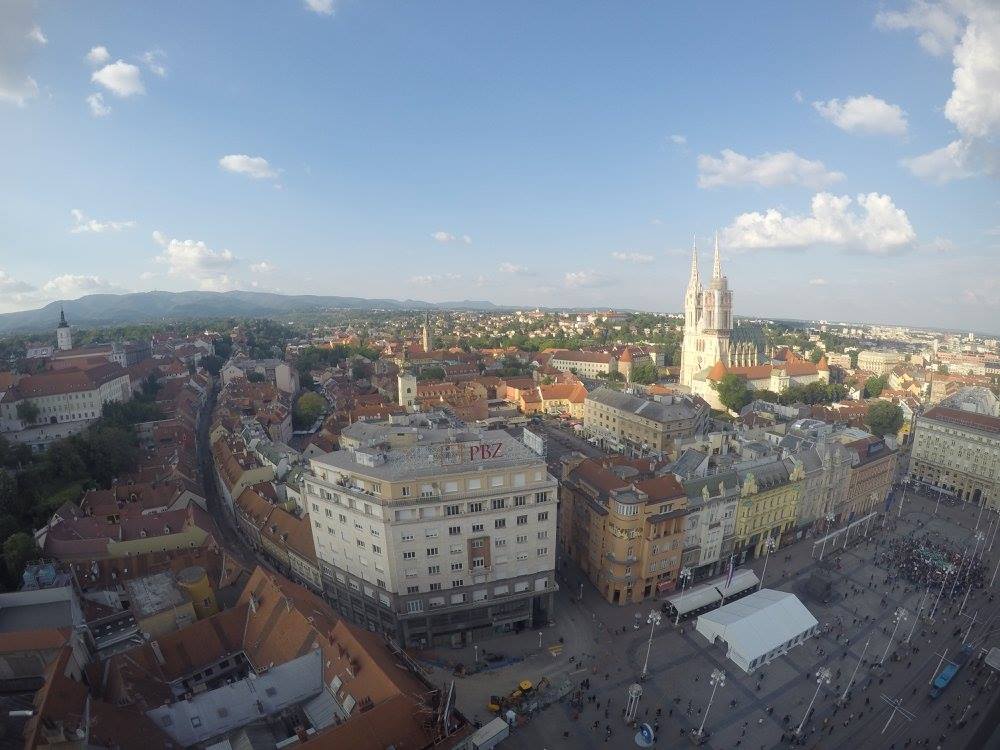
I head off to Bundek Park by tram — a fairly long ride, a neighborhood of tower blocks, not touristy in the slightest but not grim either. The park is okay, nothing more: a small lake split in two, one part wilder, the other lined with a pebble beach for swimming. Lots of dogs roam around off the leash, all very well behaved. I end the day at a rooftop bar spotted earlier (30 kn entry, drinks at normal prices), beer in hand, watching the sun set over Zagreb. There are lots of people out — some kind of demonstration going on. People are pretty friendly here.
Plitvice, beauty and crowds
Up at 6:30 a.m., a quick chat with the people at the hostel, coffee, and off to the bus station. I wanted the 7:30 a.m. bus to Plitvice, full — it’ll be the 8:40 then. Just enough time for a coffee and two croissants (better than yesterday, the bar was low), and two and a half hours on the road later, I arrive at the national park. Lots of people — tourists, school groups. I buy my ticket (110 kuna) and leave my bag in a luggage room whose security leaves something to be desired.
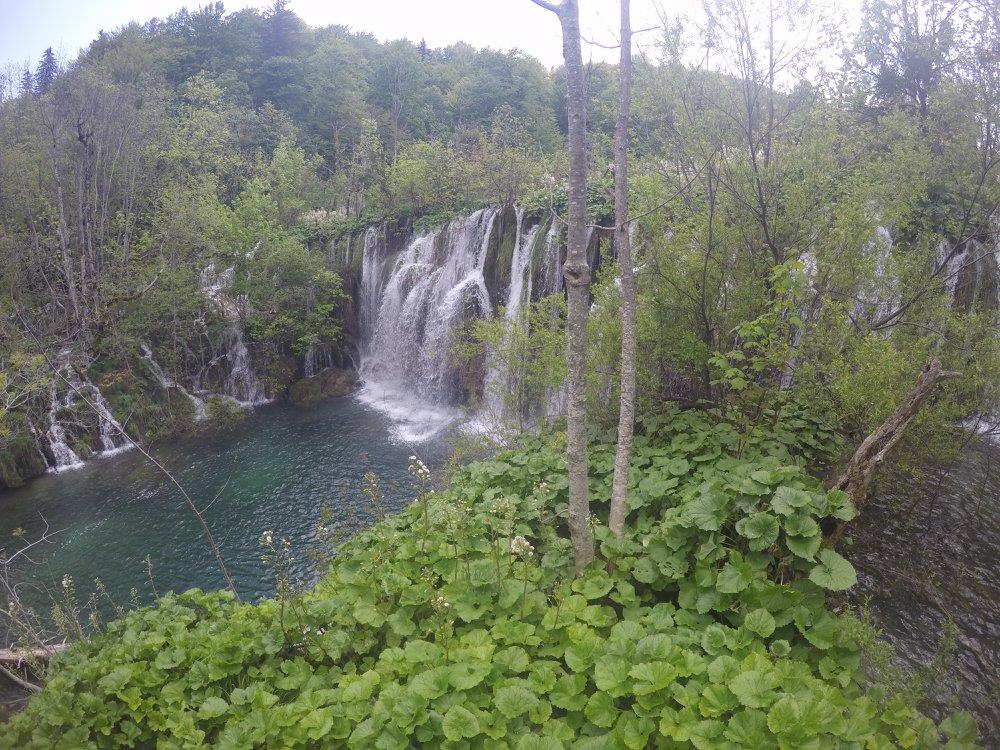
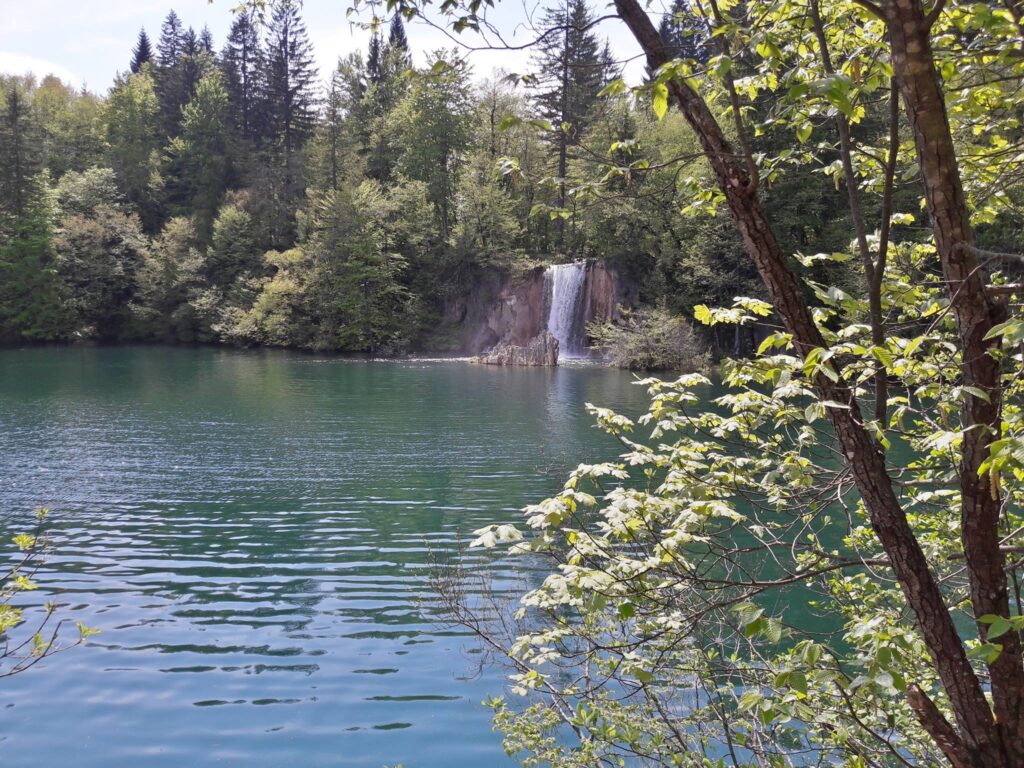
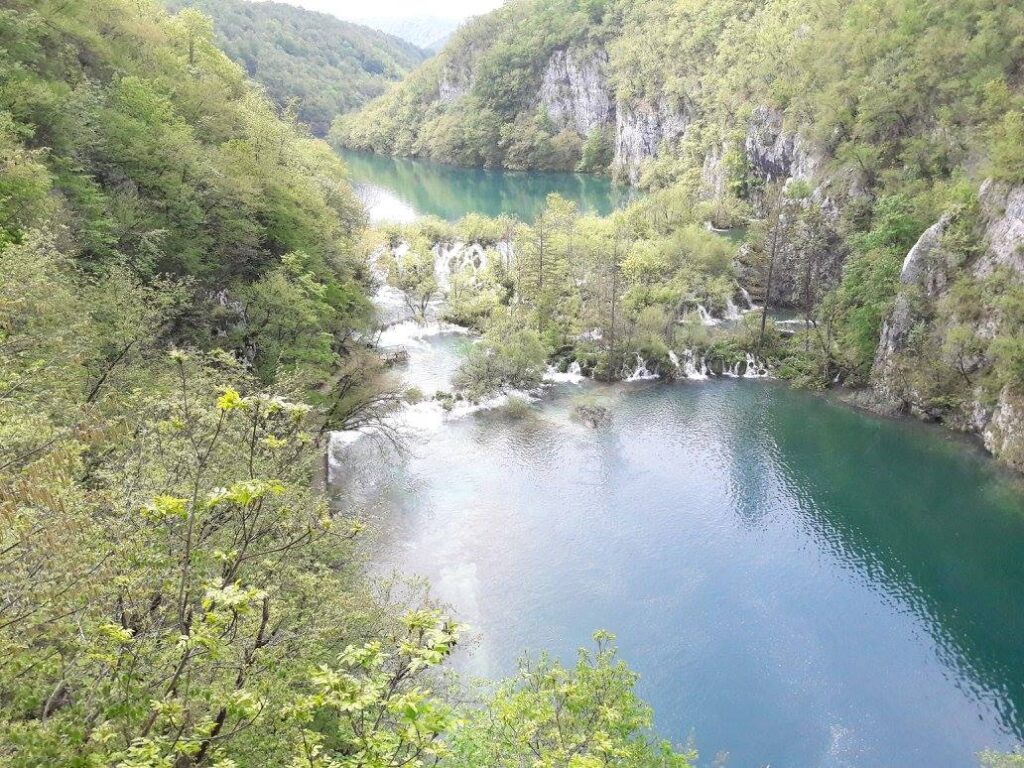
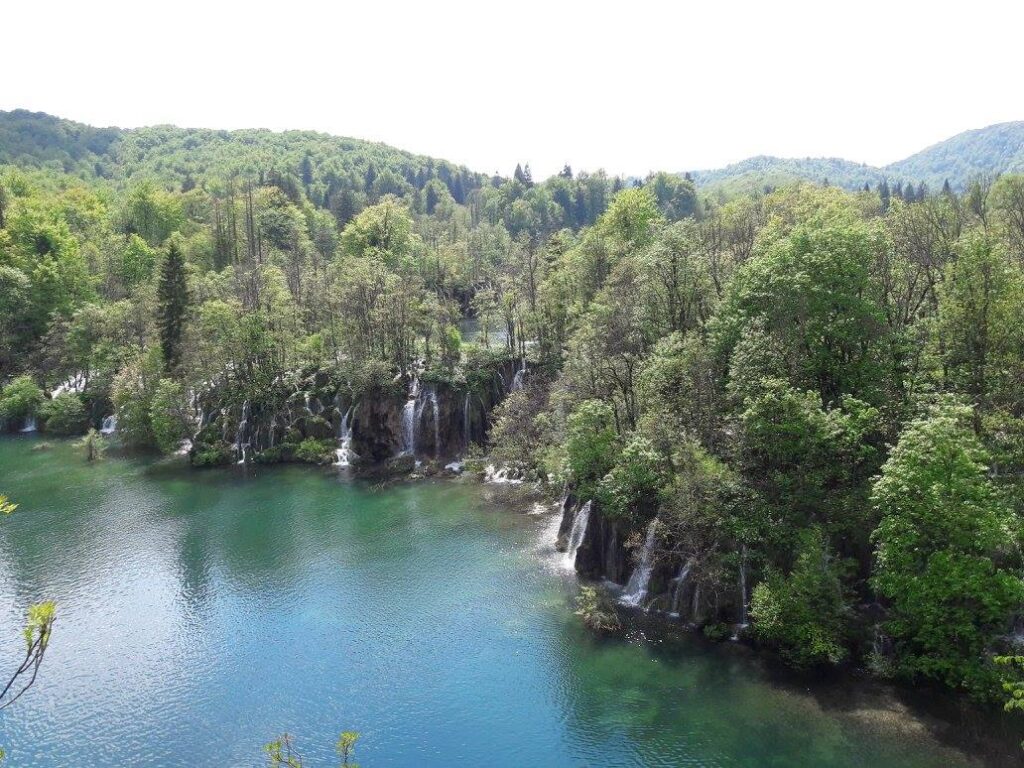
Right at the entrance, the park’s biggest waterfall — magnificent, but drowned in visitors. I carry on on foot, and the landscape keeps getting more beautiful: lakes, waterfalls, turquoise water. At dock no. 2, I take the electric boat across, and deliberately skip the lunch break to avoid the worst of the crowds. It doesn’t really work: some sections, covered by ten centimeters of water, are so narrow that people can’t pass each other — real pedestrian traffic jams build up. The last part of the route, on the other hand, is much calmer, and the water there is so clear it makes you want to dive in.
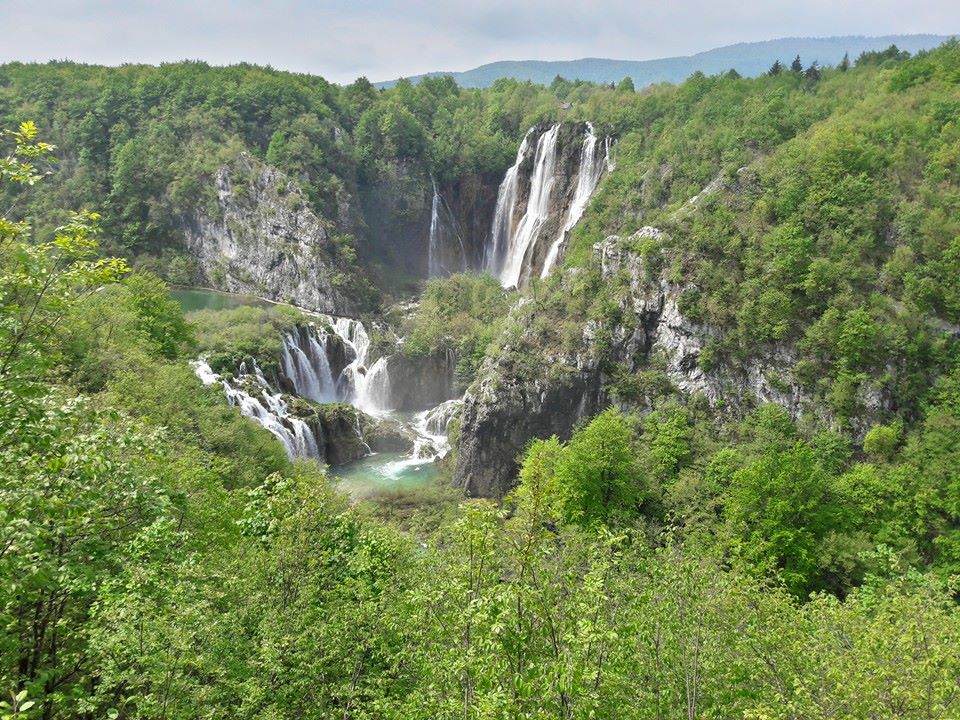
At the last checkpoint, a little train takes you back to the starting point. A shame that quite a few trails are still closed (winter flooding) and that I arrived a bit late to see everything. The result: I have time on my hands and wait for my bus to Korenica like an idiot, way too early. Arrival at the hostel around 5:30 p.m., a relaxed atmosphere — a game of Trivial Pursuit is under way without me. Before that, the only restaurant open in town: nothing special, and the waiter tries to make me pay for bread I didn’t touch, insisting in a slightly irritated tone that a slice is missing. Five kuna won’t ruin me, but it’s the principle — I don’t pay.
Hitchhiking to Split
The bus to Split leaves at 10:40 a.m. and takes six hours. I try my luck hitchhiking instead. A handmade “Split” sign, and I take up position at the edge of Korenica around 8:20 a.m. Lots of cars go by, some drivers giving me funny looks — hitchhiking doesn’t seem very common here — but after an hour and a half of waiting, a Croatian man in his sixties stops. He happens to be going to Split to see his daughter, cool!
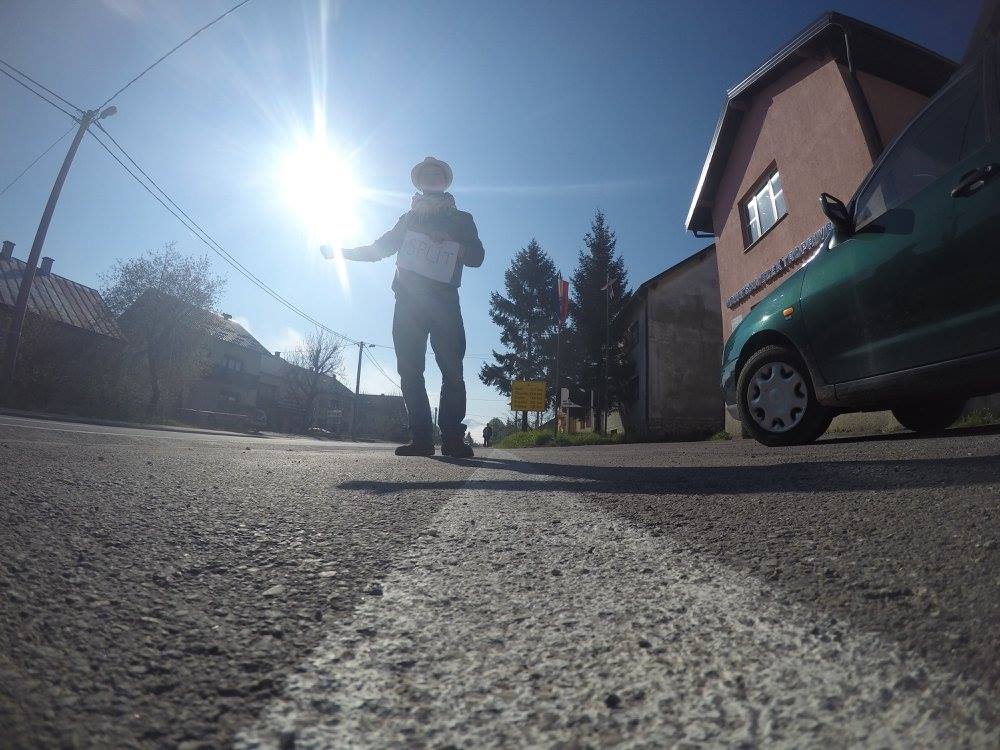
The ride, two and a half hours along small country roads, is magnificent — and above all full of conversation. The man knows his history very well and tells me about the war: the hinterland, stunning but still dangerous — mines sometimes turn up — and deserted by its inhabitants, who fled to take refuge near the coast, where there was still work. Some houses were abandoned so quickly that they’ve stayed frozen in time, table still set, bullet holes in the walls. He seems happy to have a bit of company for the road.
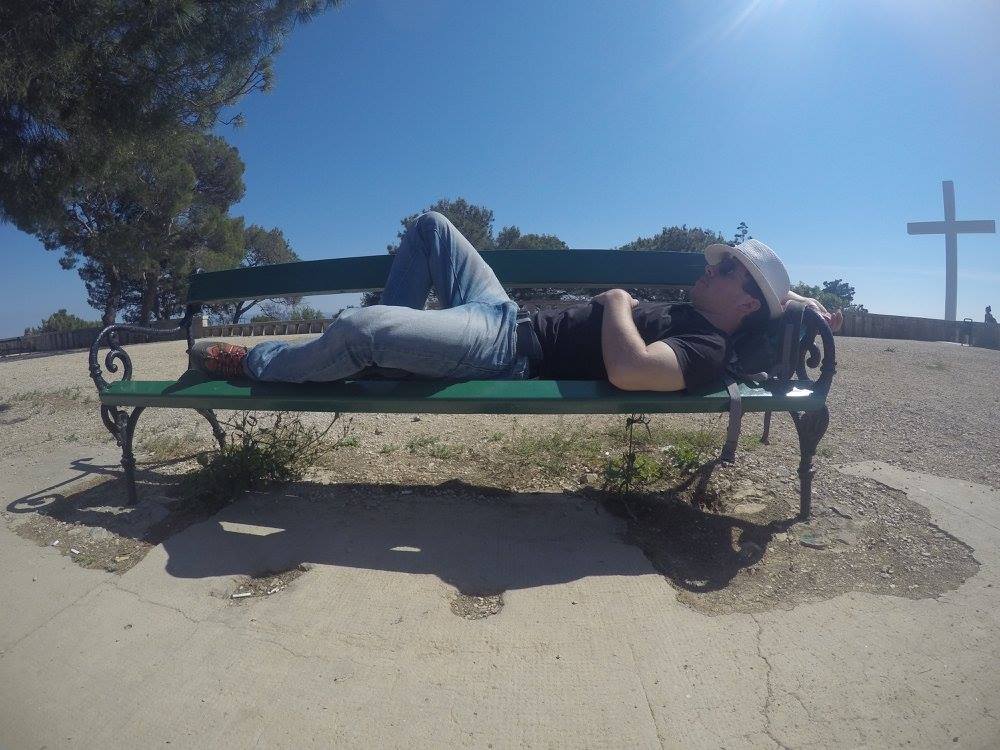
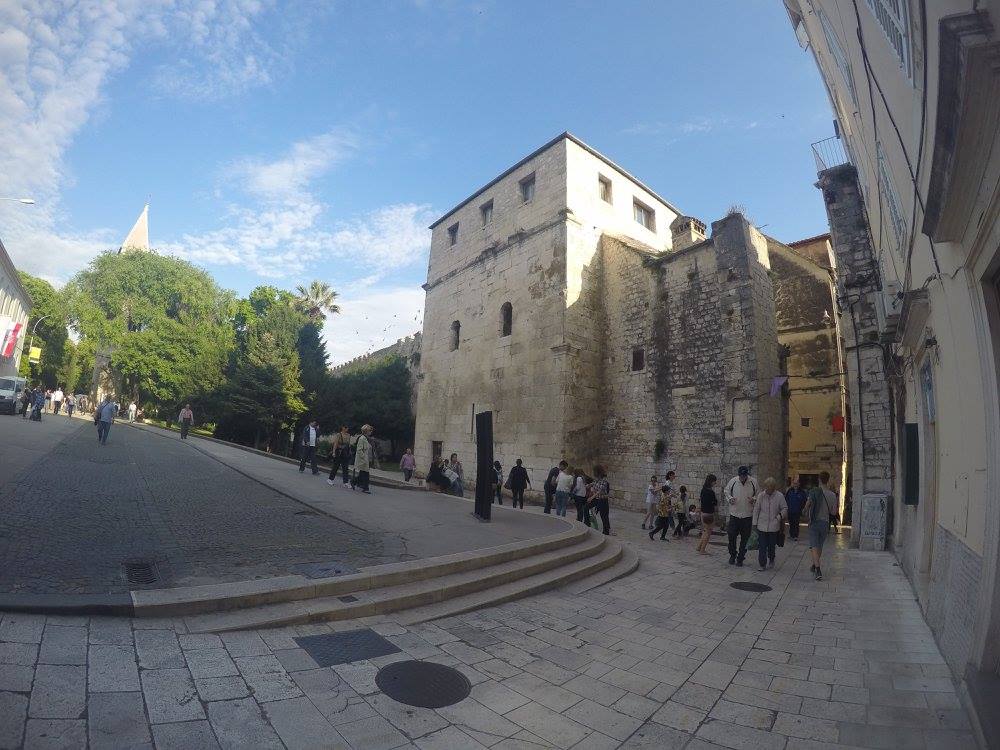
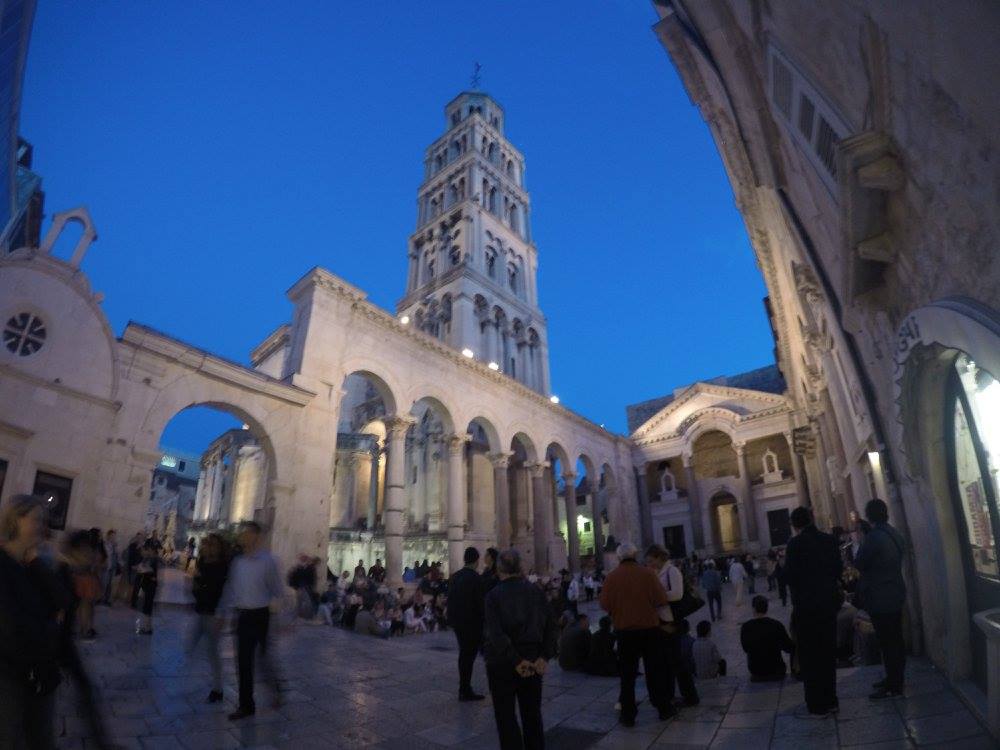
Once in Split, he even helps me find my hostel — on the 3rd floor of a building, with no sign whatsoever, in the middle of a maze of narrow, fortress-like lanes. I drop my things and head back out to wander through a city packed with people: it’s a holiday, the feast of Saint Domnius (Sveti Duje), Split’s patron saint. Off to Marjan Park for a first viewpoint over the city, then, climbing the stairs, a full panorama — less of a view of the old town, but a great overall view. A short nap on a bench, then down by a wilder path through the forest to an almost deserted fire lookout post — a magnificent view of the sea, with hardly anyone to share it.
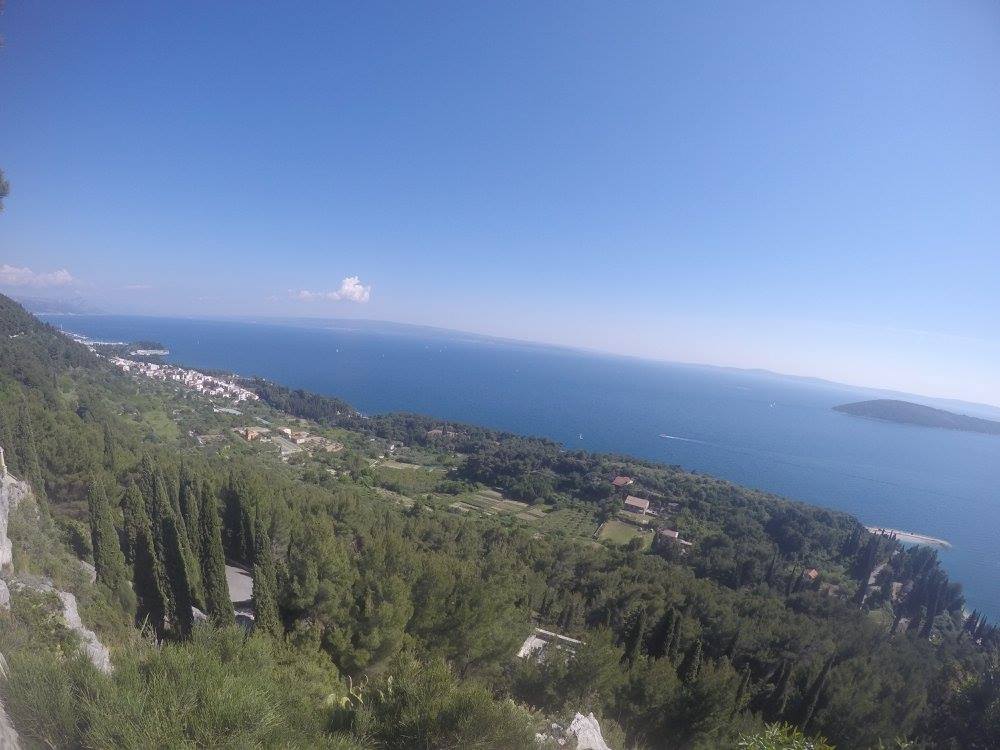
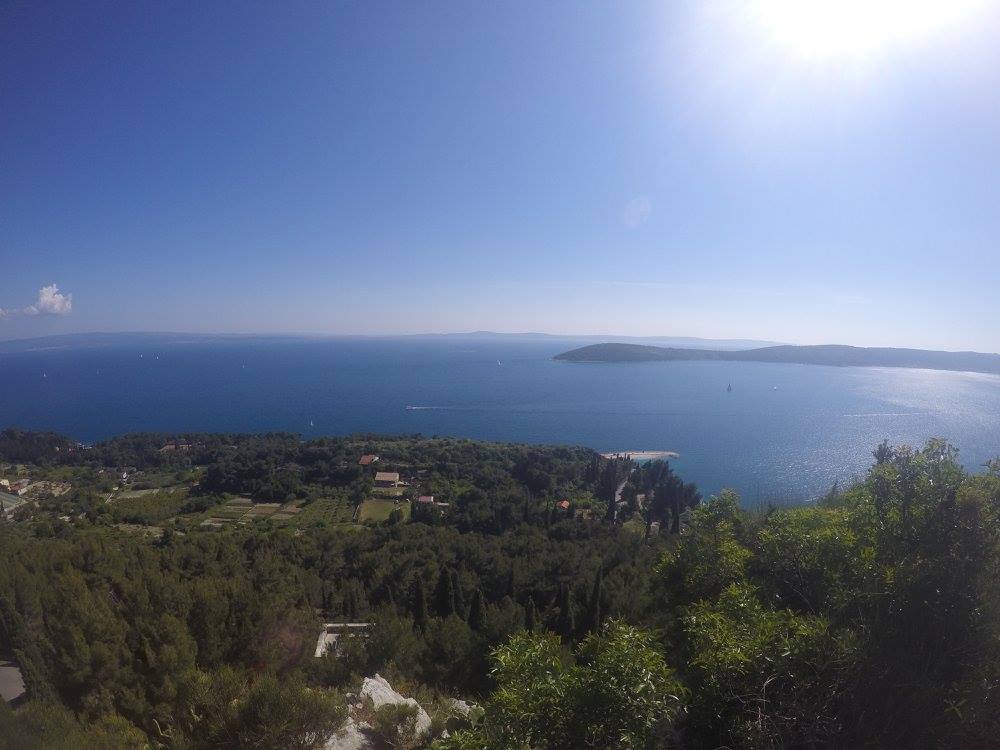
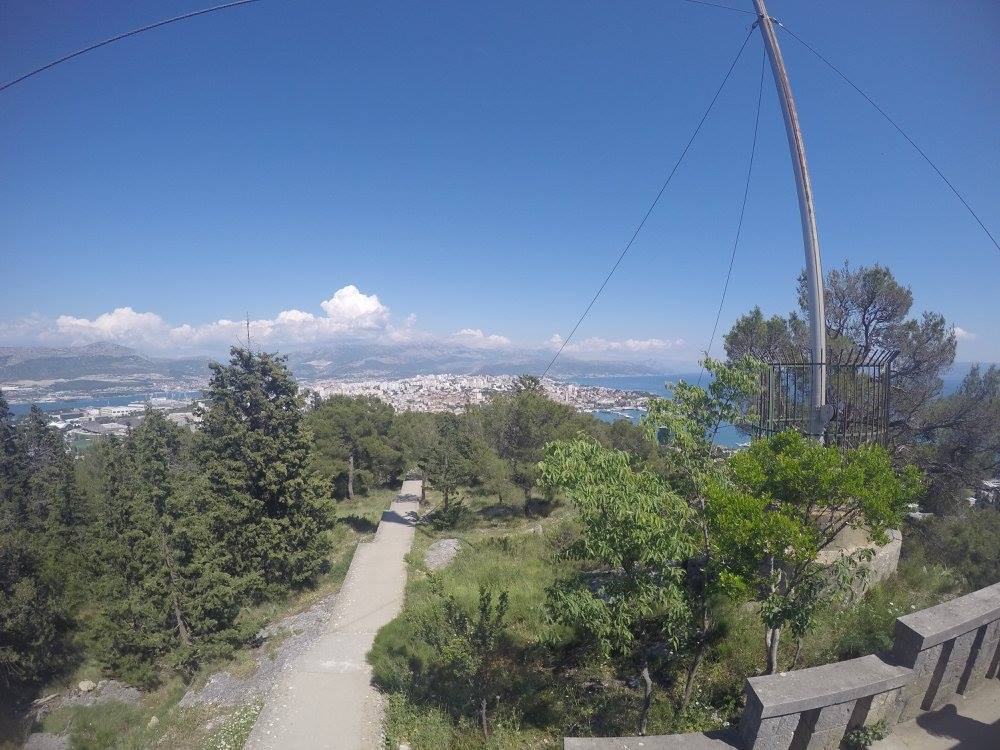
Then off to Bene beach, following the tip of the park, with a few nice coves along the way. The beach itself is a bit of a letdown, laid out almost like a swimming pool.
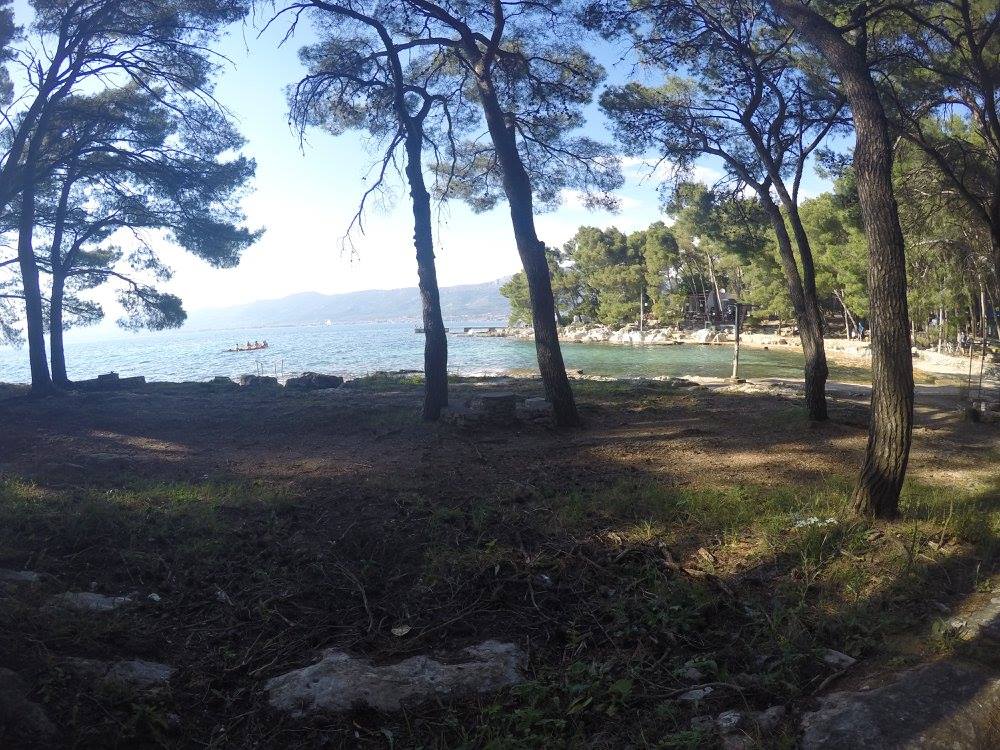
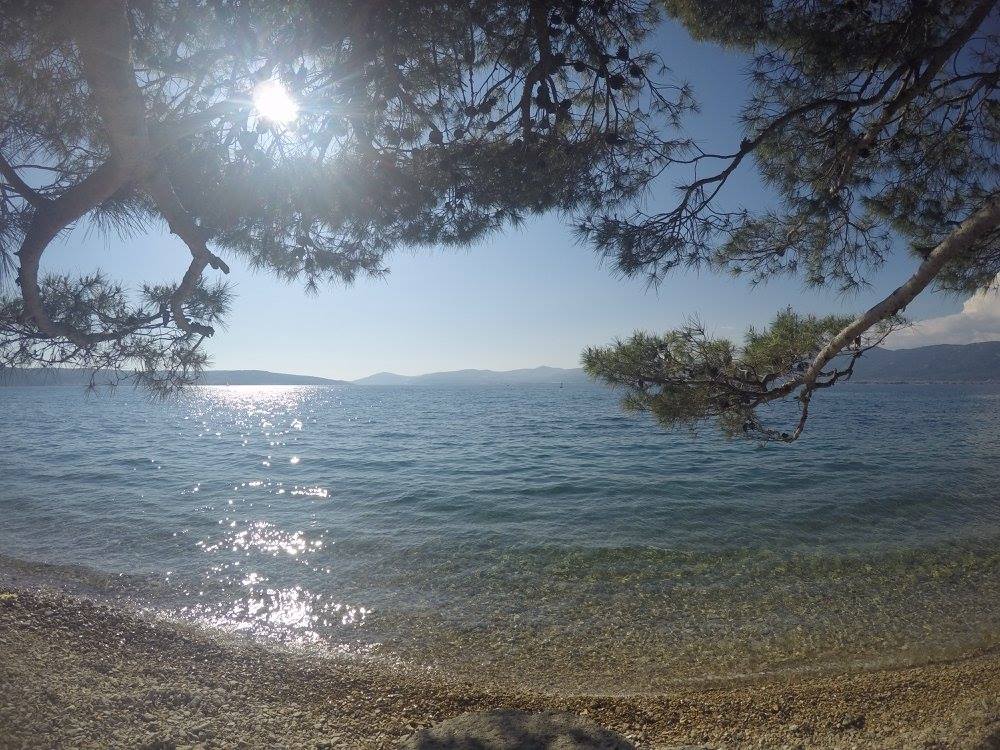
Back toward the old town (a good ten kilometers on foot for the day), where I wander a little more through the lanes — beautiful but packed — before visiting Diocletian’s Palace: an underground street, several rooms with flower exhibitions on one side and rather ordinary artworks on the other, but the place is still pleasant, and less crowded than above ground. In the evening, I chat a bit with the people I meet at the hostel.
Klis and the beaches of Split
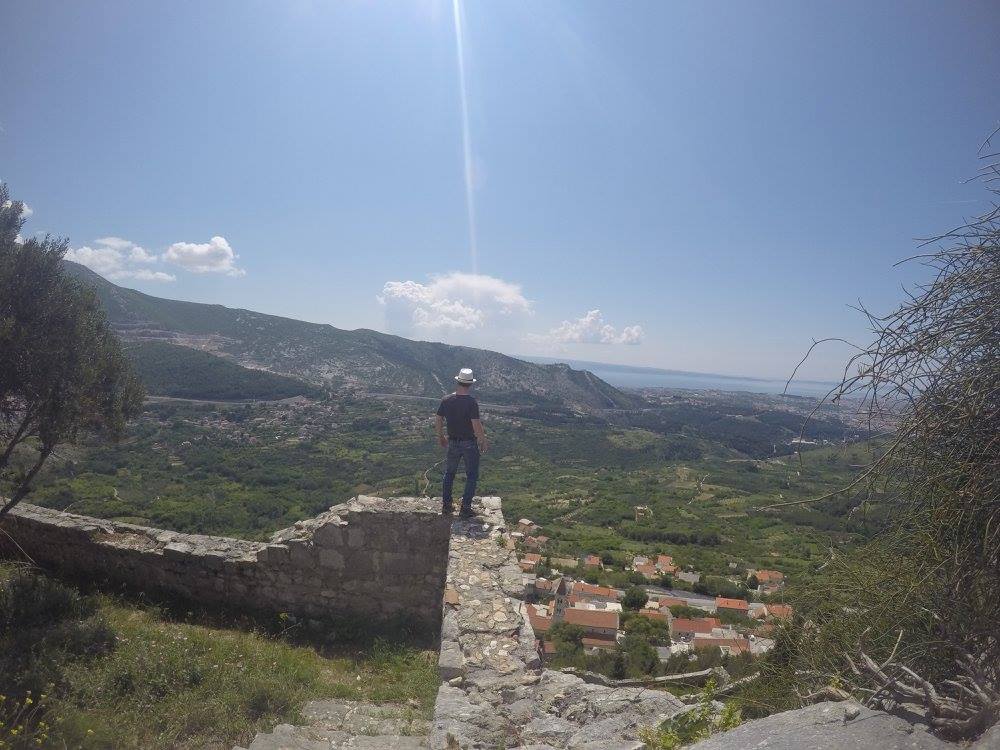
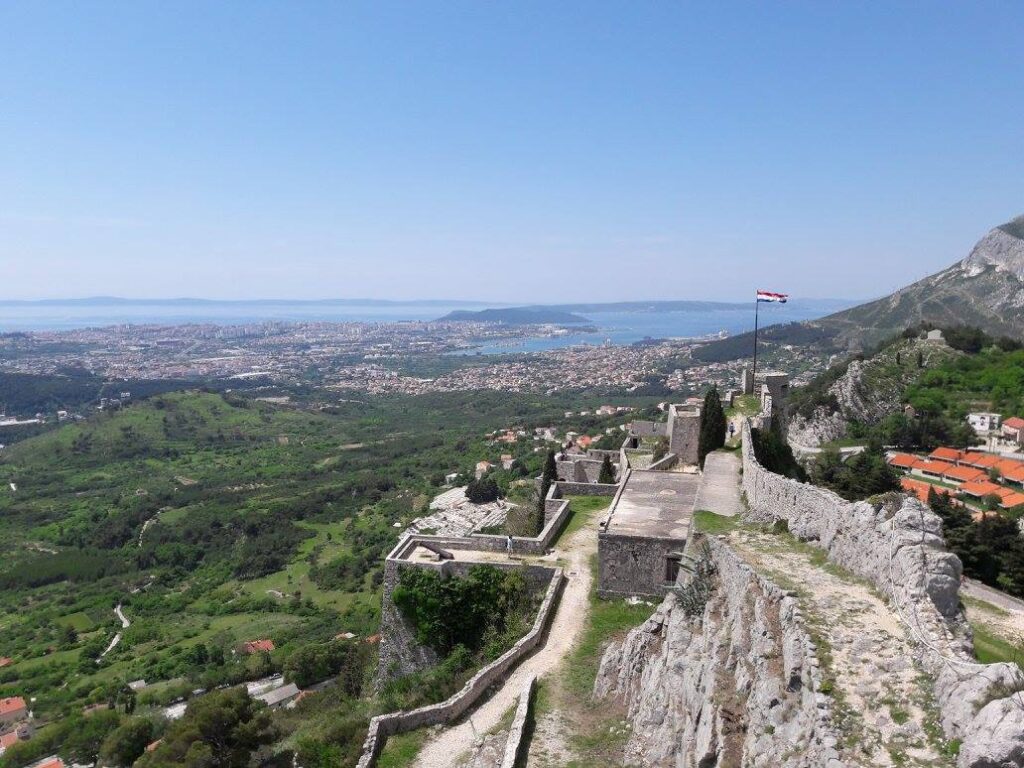
Up at 7 a.m., coffee, a chat with the people at the hostel, then off to Klis Fortress, where several scenes of Game of Thrones were filmed. At the bus stop, I hear two women speaking French — they’re going to Klis too, so I follow them. Not easy to get there on a Sunday: few buses, nothing signposted in English at the stops, but we finally make it after two changes. 40 kuna entry: lots of little passages to explore, a nice view of the mountains and of Split, some construction work that spoils the picture a little, and a small photo exhibition about the filming locations. The visit takes barely an hour to an hour and a half.
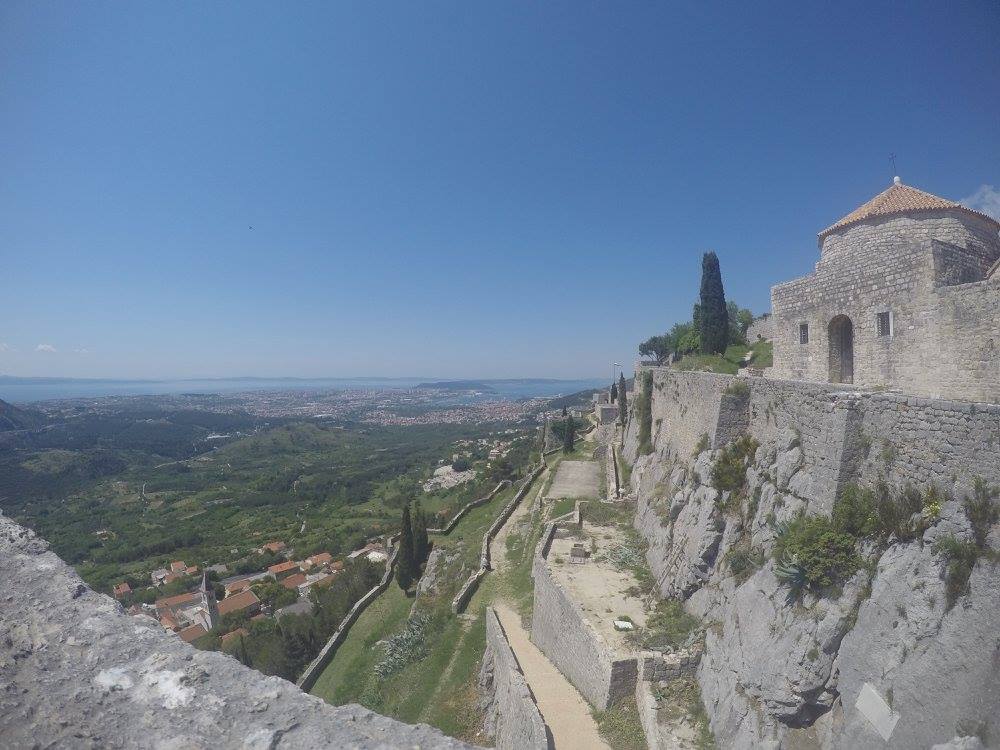
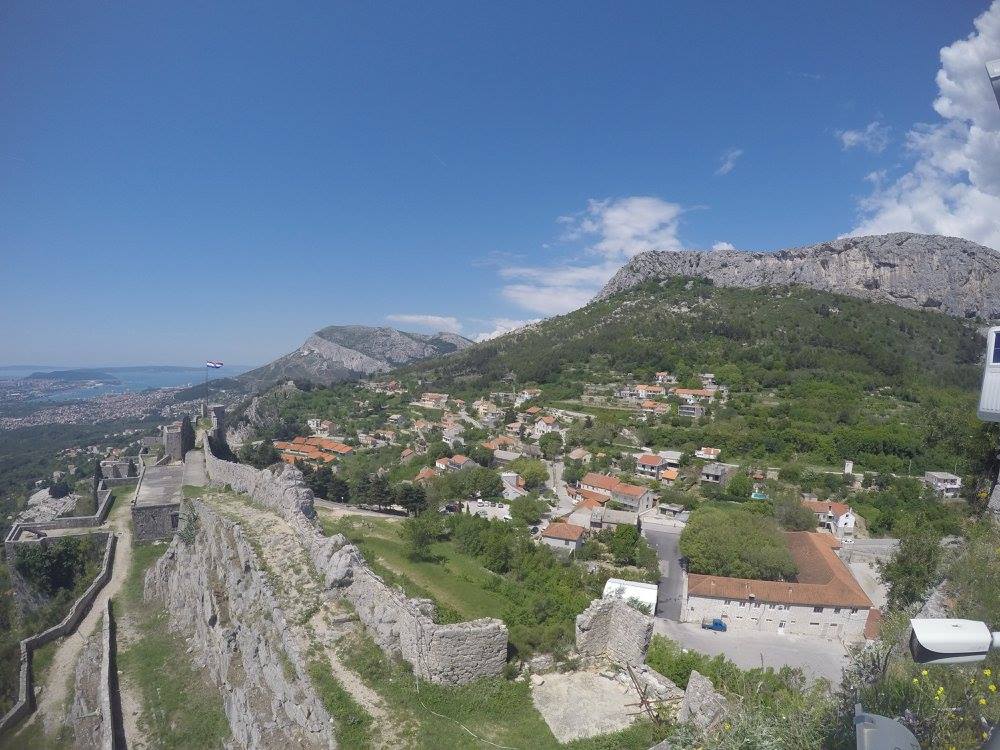
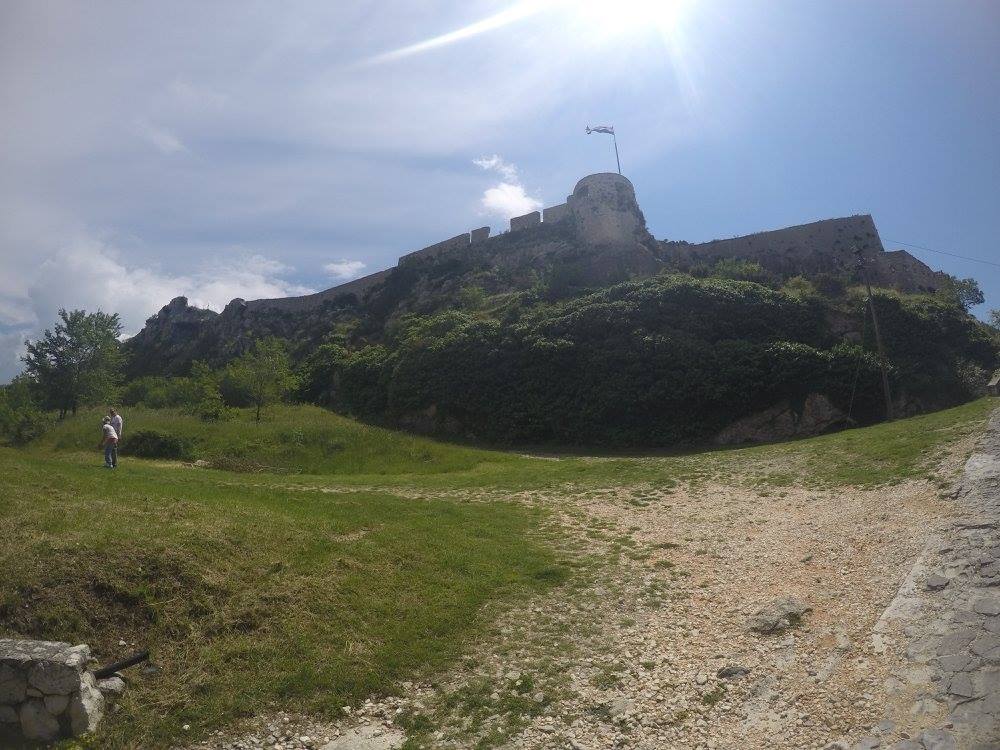
It’s twenty past noon, and no bus before 3 p.m. from what I can tell. I go to ask in a small bar, and one of the regulars offers to drop me wherever I want. He ends up dropping me in Solin, where buses are more frequent. On the road, we talk about everything and nothing — he brings up the Paris attacks. As often here, Croatians seem a little cold at first but turn out to be warm once the conversation gets going.
Back in Split, I go to check out the beaches: the first one, laid out like a swimming pool, doesn’t really tempt me for a swim — can’t be bothered. I carry on along the coast, nothing like paradise but nice, and stop for a nap on one of the beaches. Heading back to the hostel, I run into a Brazilian I’d met in Zagreb — the small world of hostels. In the evening, I climb up to the viewpoint to admire the city by night: rather romantic, except that I only have my beer to share it with, surrounded by couples. A concert echoes from the coast in the background. Back around 11 p.m., bed.
Dubrovnik, city walls and rising prices
Off to Dubrovnik by bus (120 kn), along a road that hugs the coast with a view of the islands — even while dozing a little, it’s hard not to watch the scenery roll by. We even cross a five-kilometer strip of Bosnia and Herzegovina. Arrival after four hours on the road. This time, I’d booked my hostel — the beds aren’t ready yet, so I head back down to eat while I wait: a sandwich and a beer, 35 kn each, double the price in Split or Zagreb. The city, magnificent, was also a Game of Thrones filming location, but you can feel it in the prices: 520 kn for three nights in Dubrovnik (about 173 kn a night, plus €1 tourist tax for the old town), compared with 167 kn for two in Split.
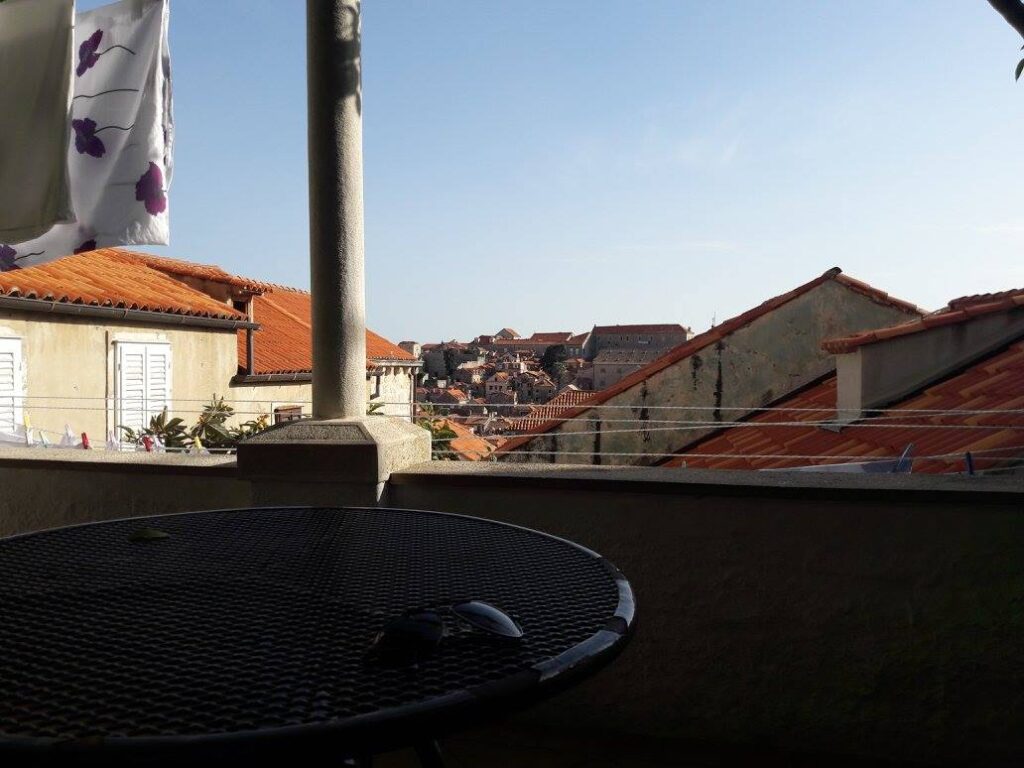
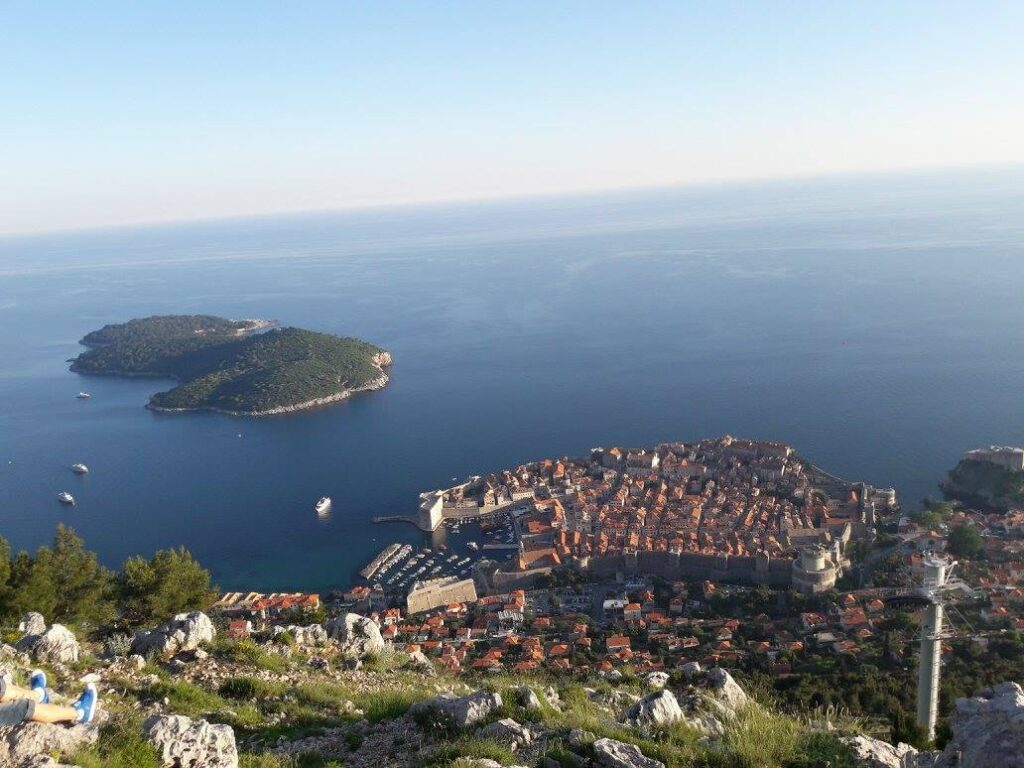
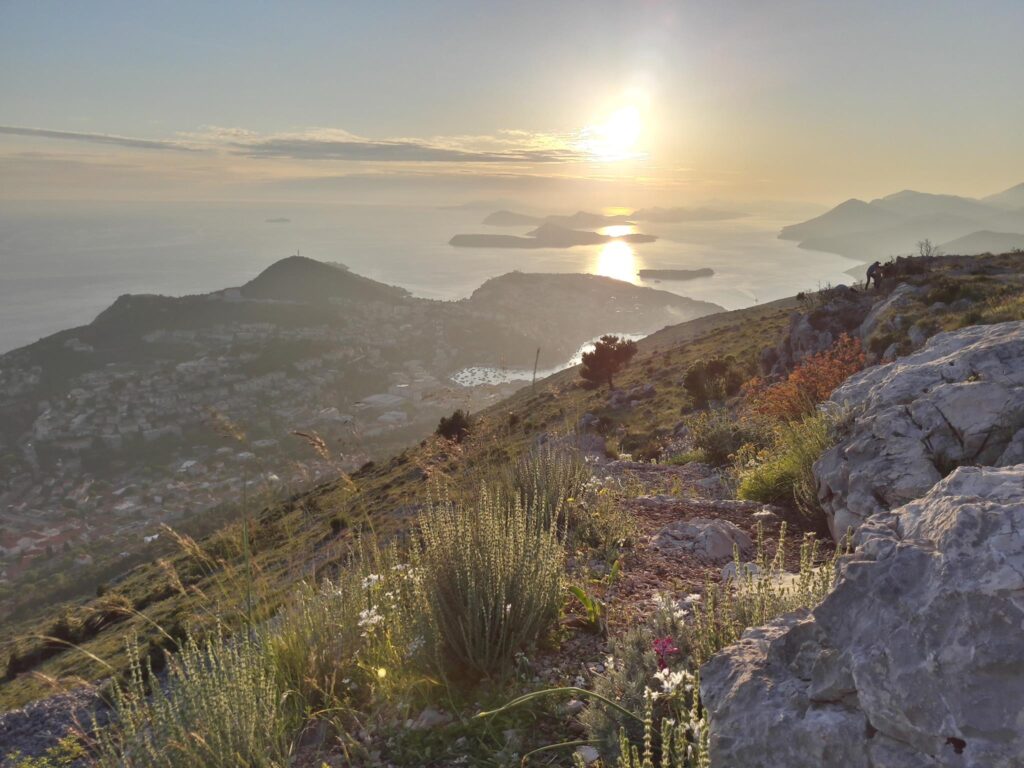
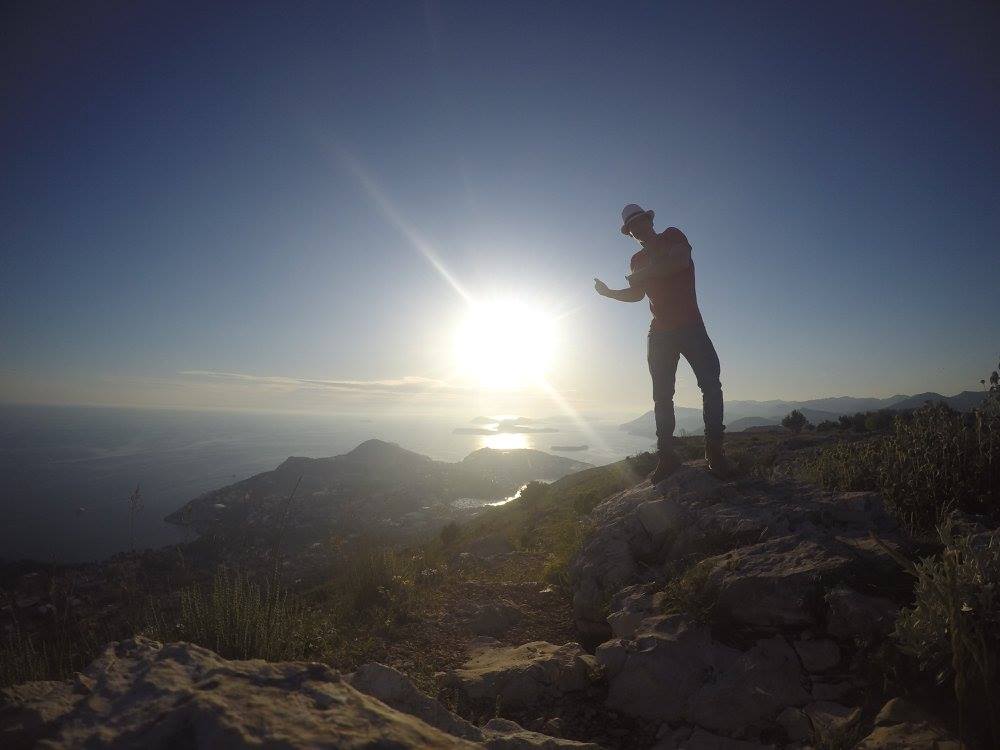
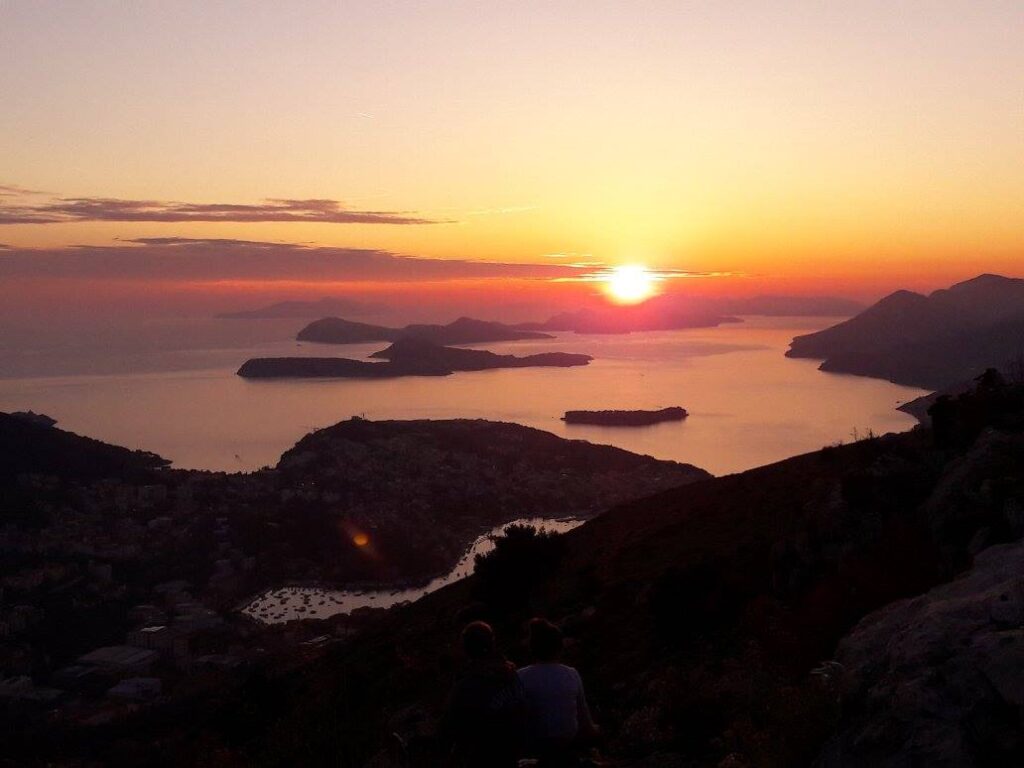
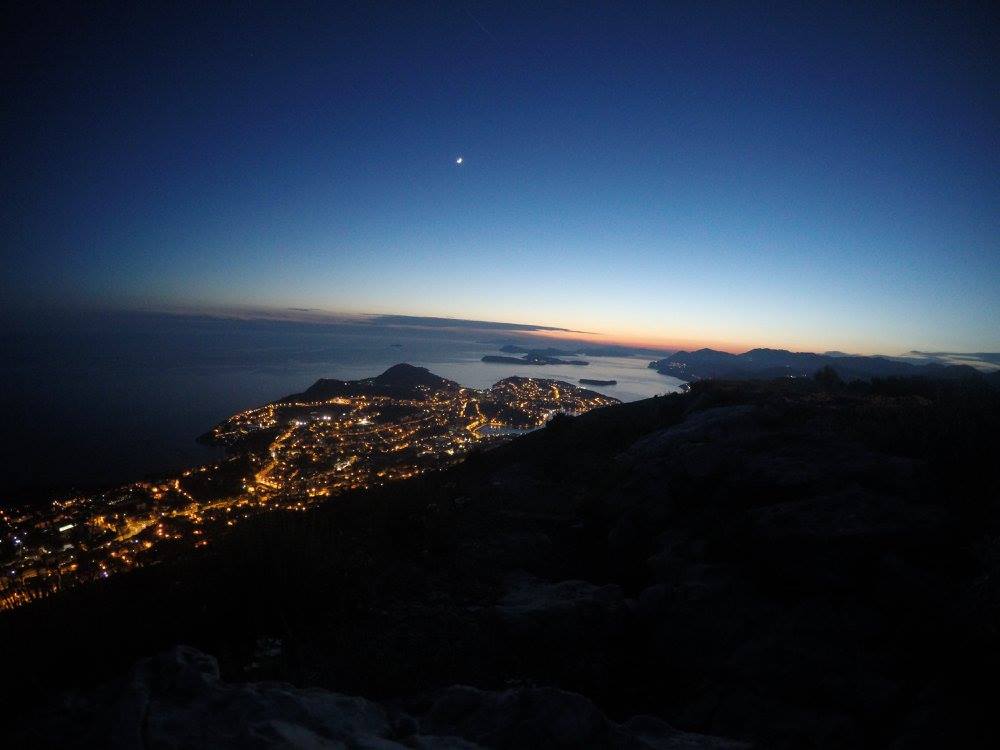
In the late afternoon, off to a viewpoint over the city. I completely miss the marked path but end up finding the trail — a tiring climb, a magnificent view. At the top, an old fort with a museum (paid, so no), then I wander off the beaten track to find a quiet spot to watch the sunset. Bad call: I’m not alone for long. Two people arrive, then two more, then another two… in the end, about twenty people scattered around me. The sunset is still magnificent all the same, and once the “show” is over and everyone has left, I stay a little longer to see Dubrovnik by night — just as beautiful. A hiker shows up with his pack, Robert, a Pole in the middle of a Spain-to-Italy trip. He plans to pitch his tent here for the night; I leave him my water bottles just in case. Down by headlamp, in total darkness — there’s no lighting on the trail.
On the city walls, searching for Game of Thrones sets
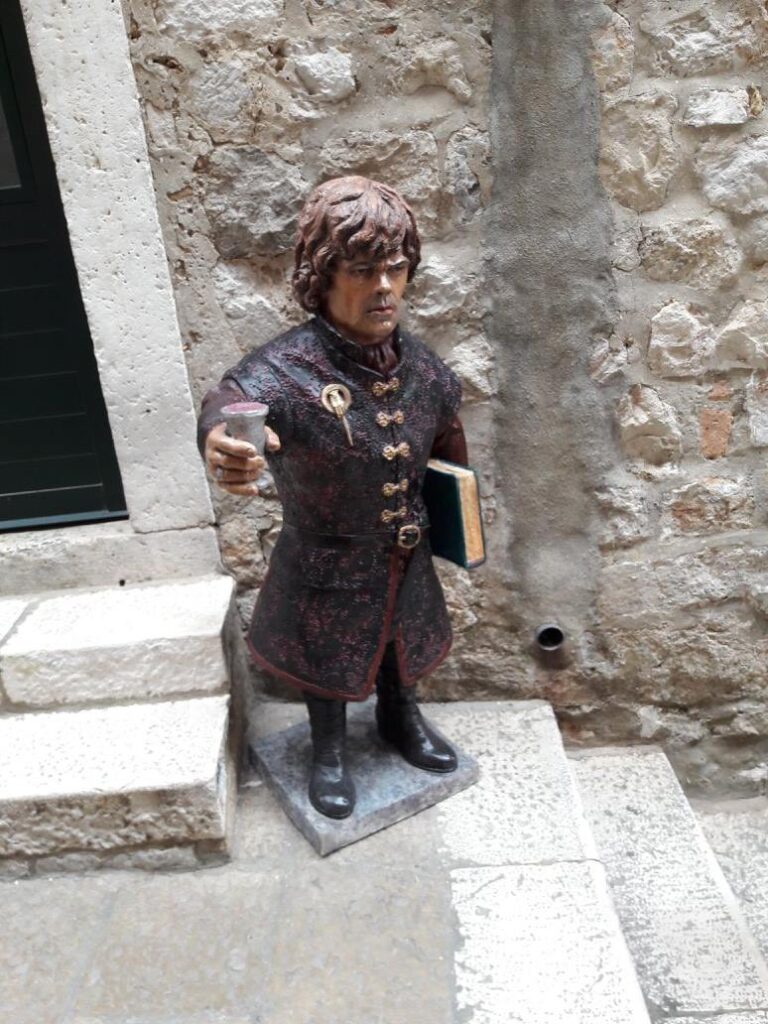
Up at 6 a.m. because of a dorm mate who came to bed at 4 a.m. and snores like a chainsaw — the joys of dorm life. I make the most of it and take my time: breakfast, coffee, a quiet bench near the walls. At 8 a.m., the city walls open (120 kn — they don’t hold back). Few people in the streets at this hour, all the better for spotting the Game of Thrones filming locations. The view, on the sea side as on the city side, is magnificent — I take my time, given the price I paid. Part of the walkway is being restored, scaffolding everywhere; a tourist asks me to let her through, not exactly reassured, and ends up taking my photo in front of the scenery — I have no idea whether my portrait ended up on Instagram or on the cover of Vogue (I strongly doubt it).
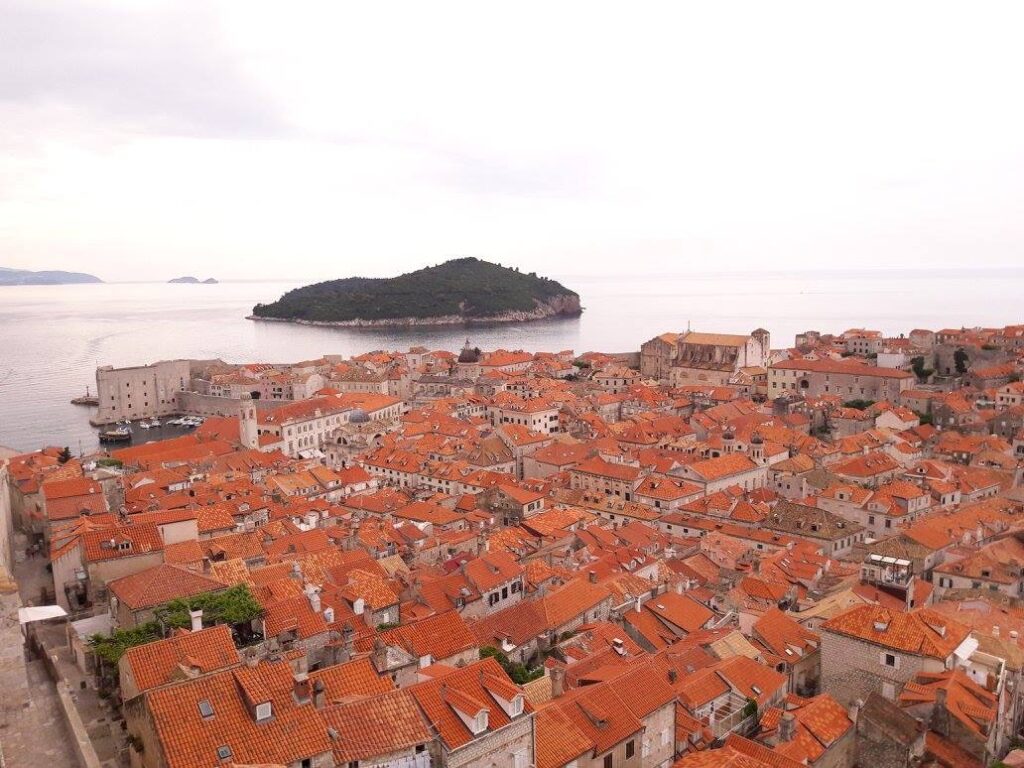
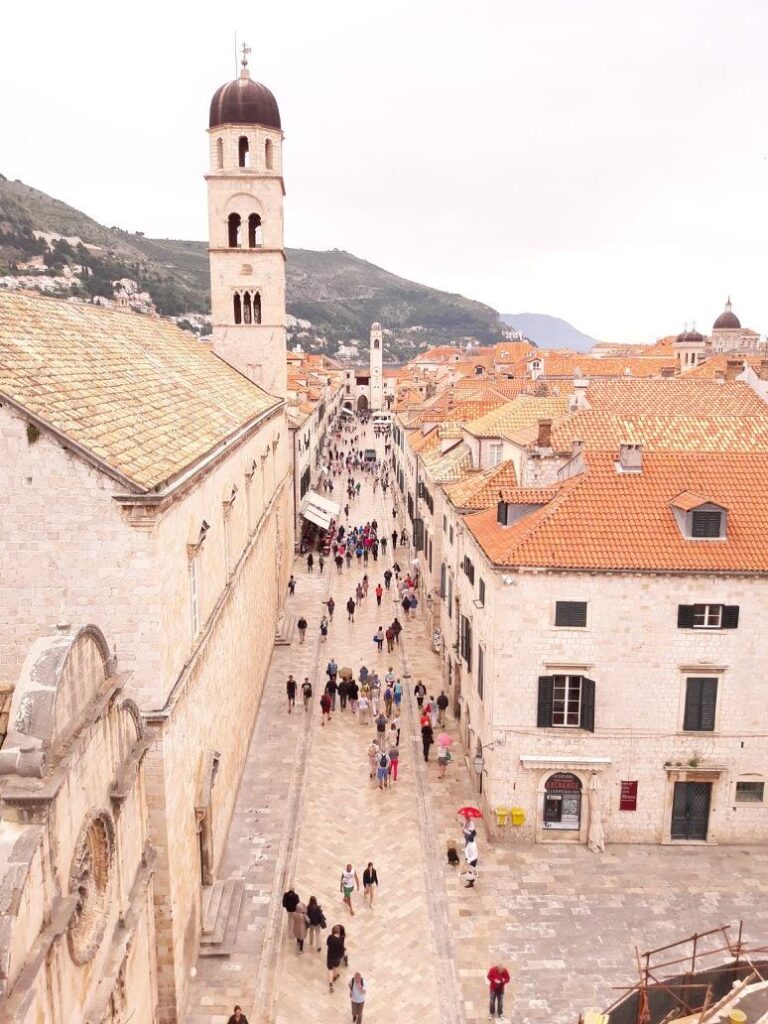
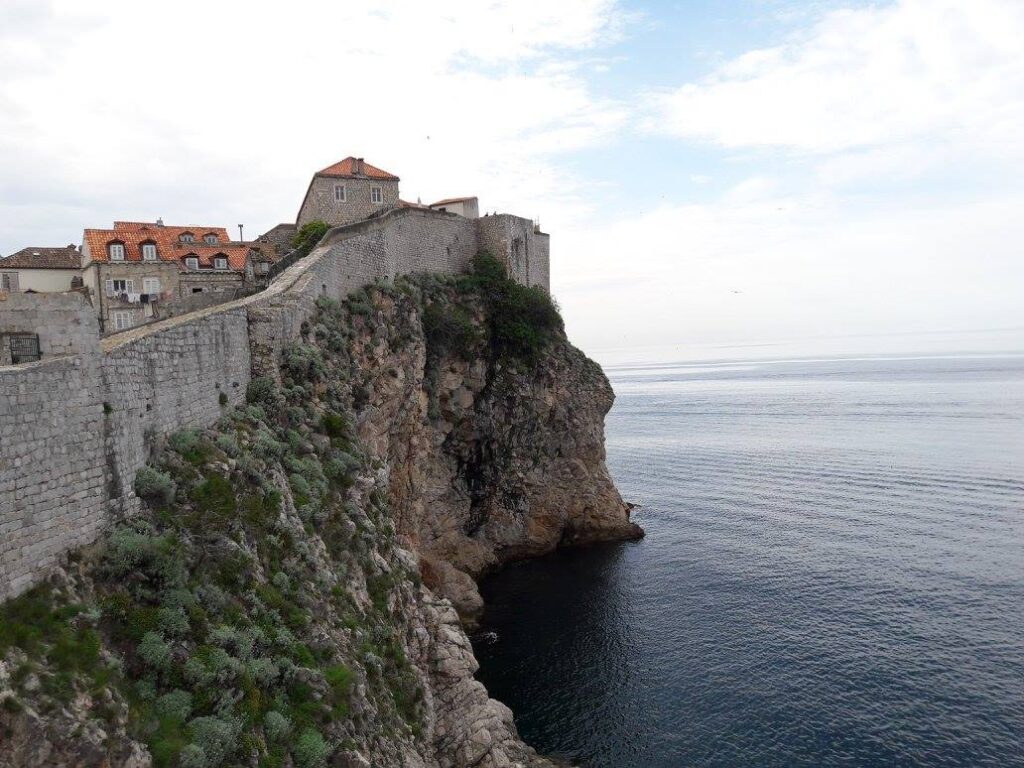
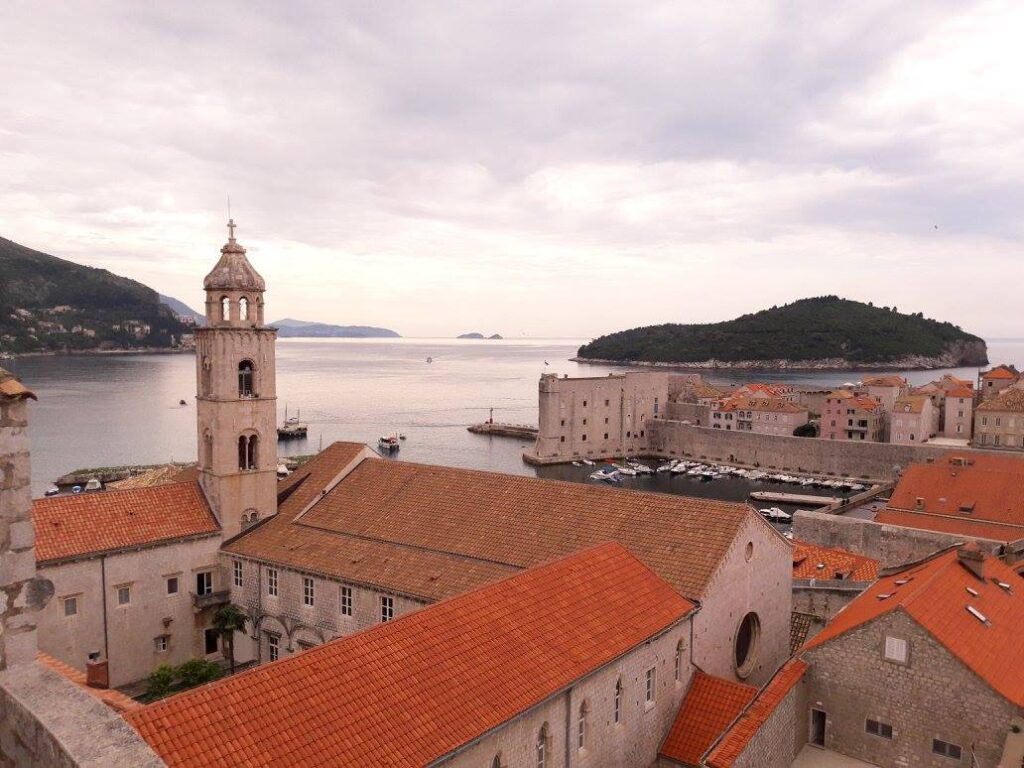
Next I push on to Gradac Park, a little outside the old town, where the scenes of King Joffrey’s wedding — and death — were filmed (spoiler for latecomers). Few people, nothing extraordinary but nice to see. With a view of the outside of the walls.
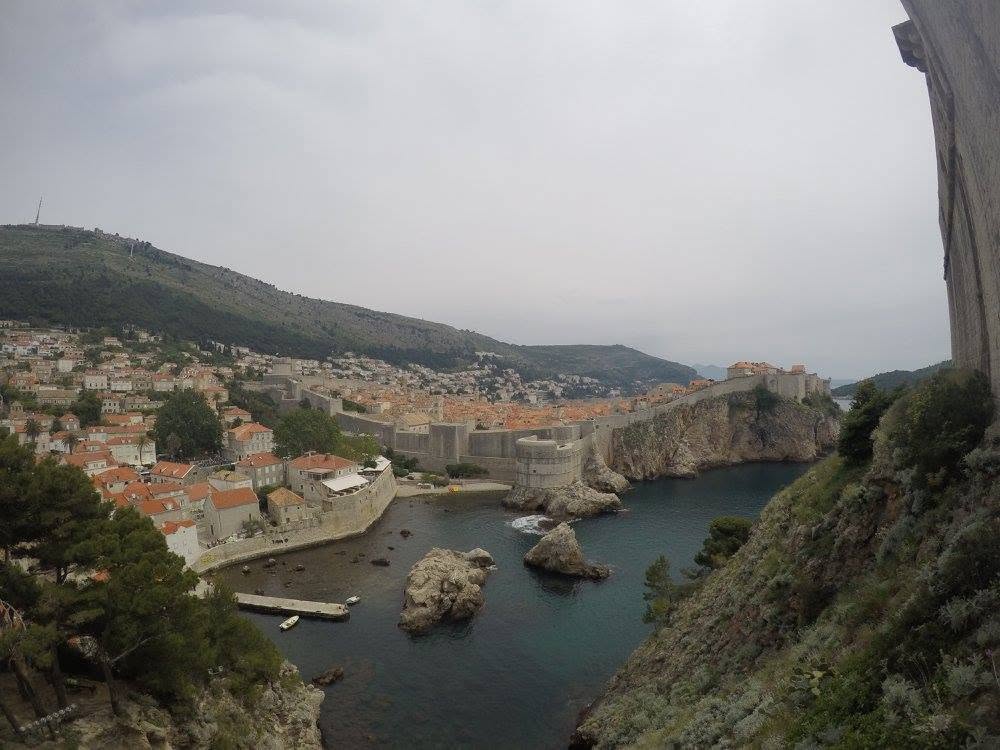
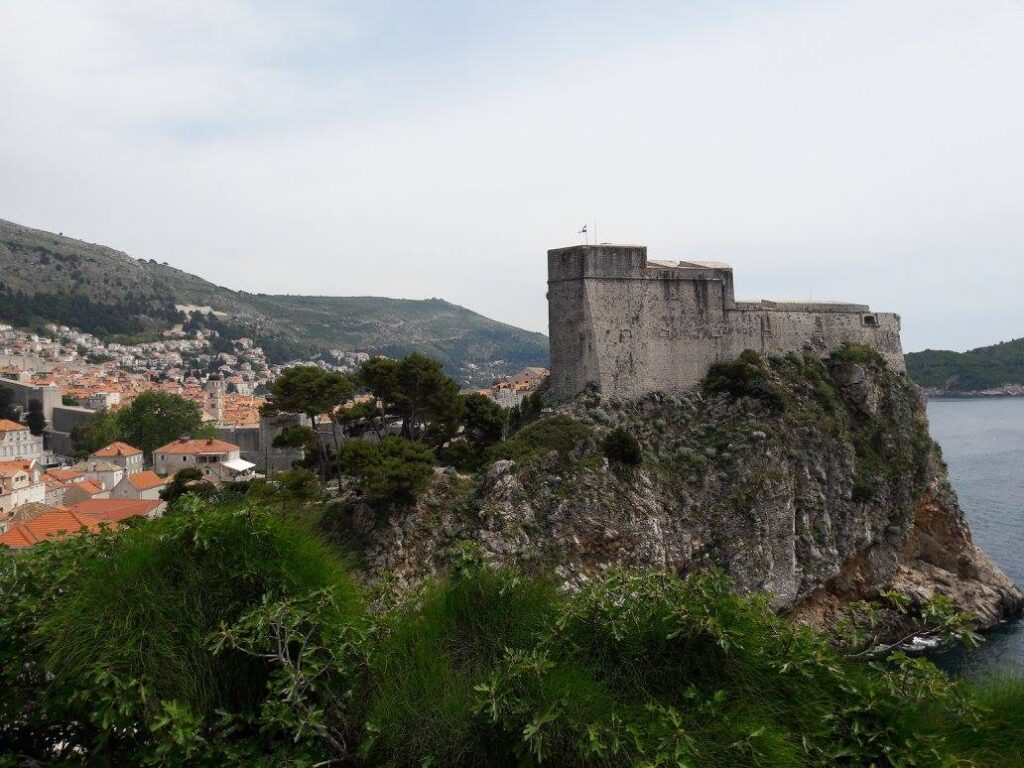
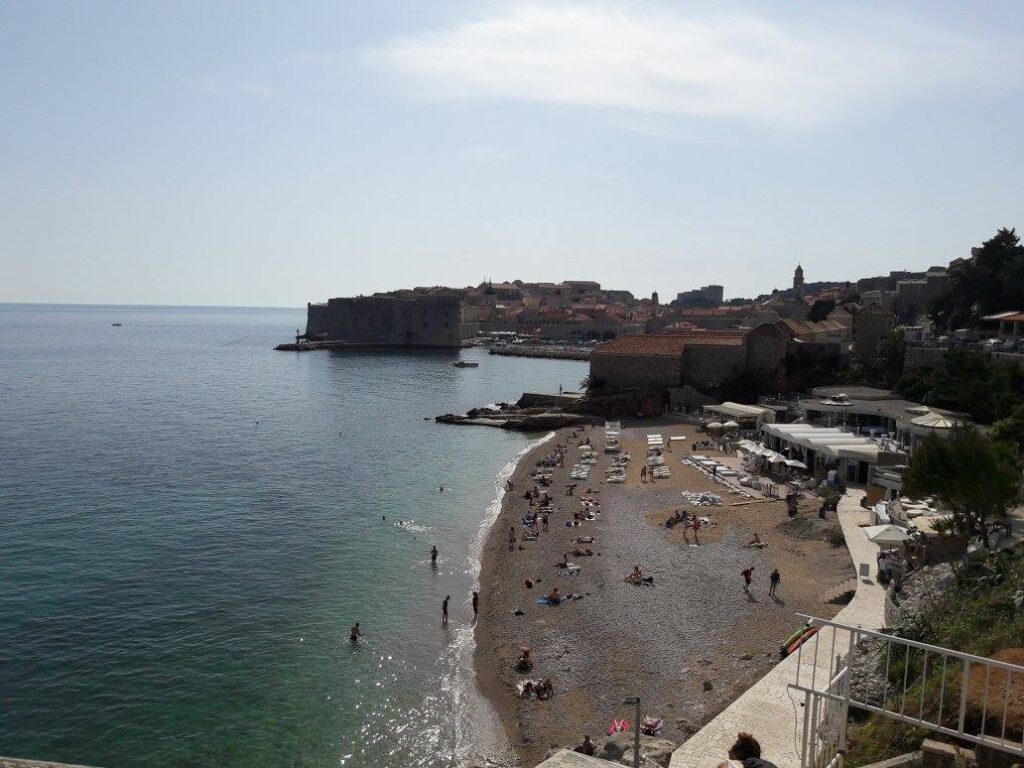
On the way, I run into a guy from the Zagreb hostel by chance, who recognizes me straight away — me, much less so. He wants to visit the walls, so I slip him my ticket, hoping it’ll work. Then off to Buza beach, known for jumping off the rocks: the water looks deep but so clear that it’s hard to judge how deep — I’ll check before jumping, if I go back. A quiet evening at the hostel, a nice atmosphere but 90% English-speaking (Americans, Australians, Canadians) — not always easy to keep up.
Last day in Dubrovnik
Woken up early by the snorer again. I wanted to go cliff jumping today, but the weather isn’t playing along — too much wind, too many waves on the beach I’d spotted the day before. A rather quiet day: I wander around town, nothing much new to see, head back up to the hostel, then come back down later toward what I thought was the right spot.
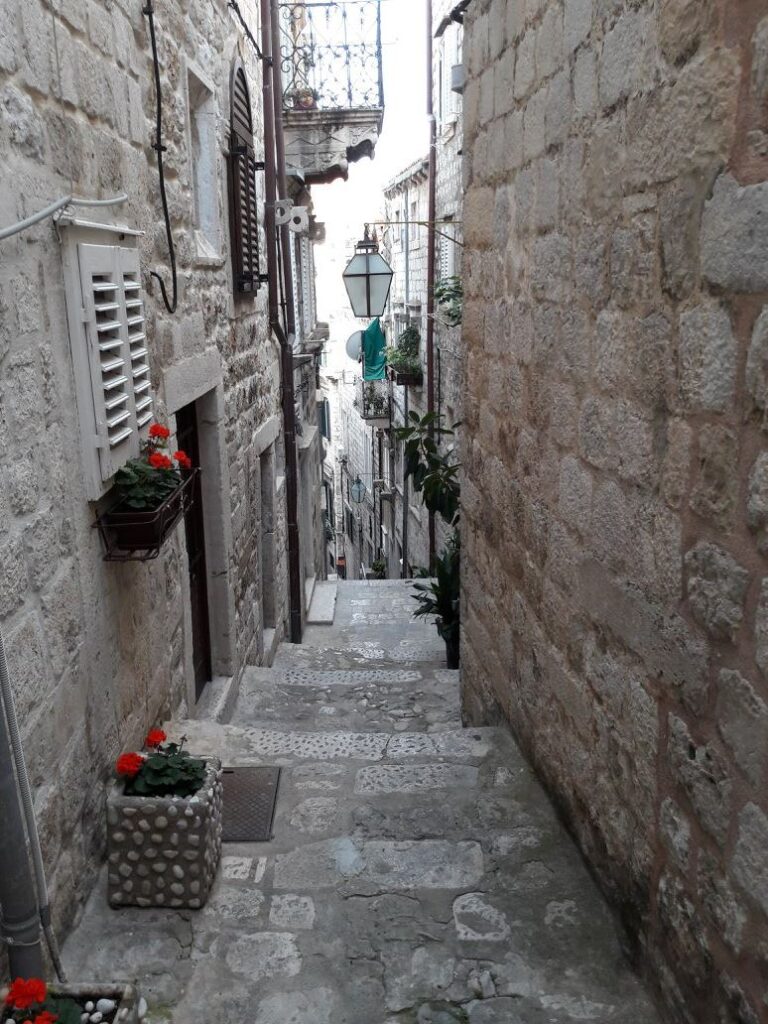
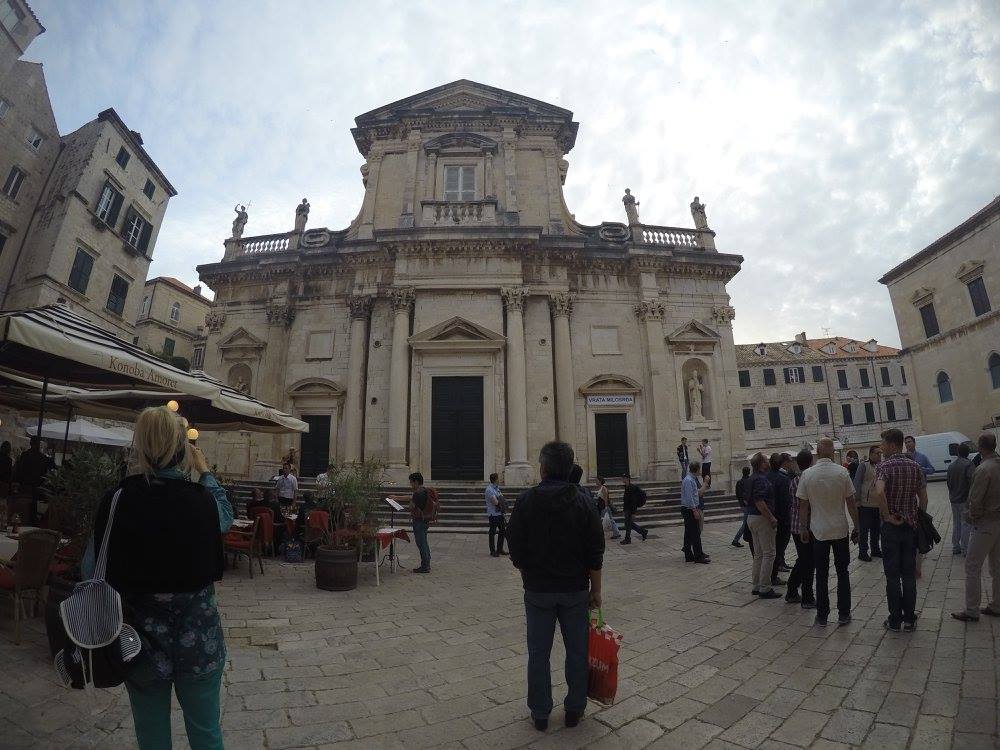
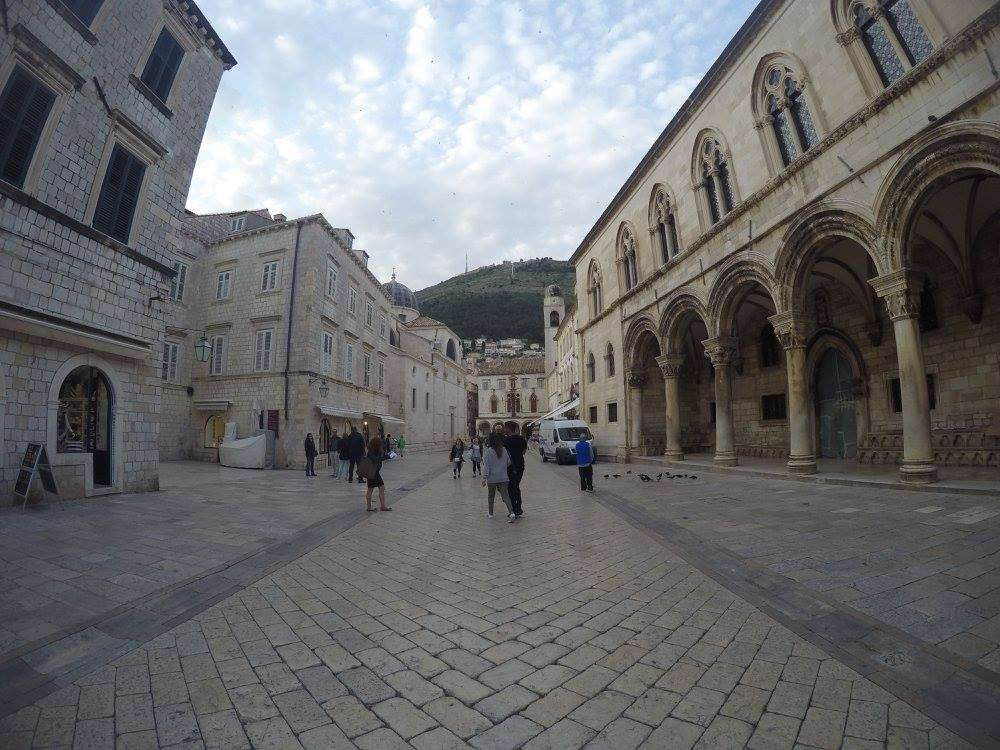
Wrong: the real Buza bar, the one I’d been recommended, is somewhere else — and the sea there is far too rough for jumping, with waves crashing violently on the rocks. I settle in for a beer (16 kn for 33 cl) and simply enjoy the view for a good hour before heading back down into town and then to the hostel.
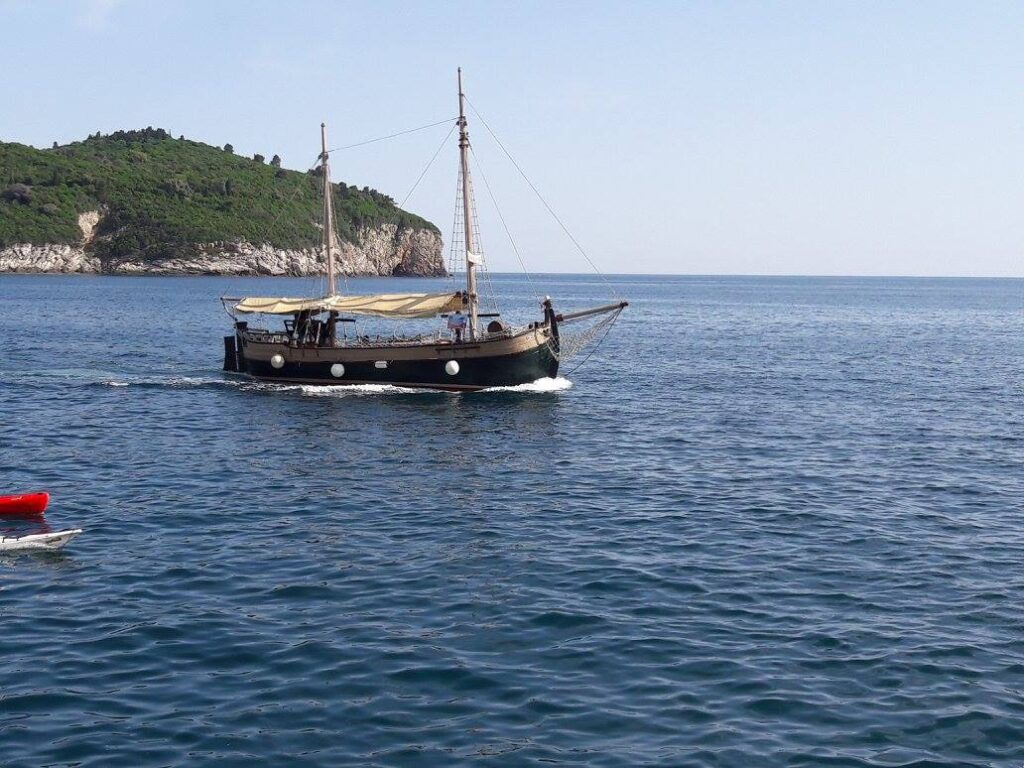
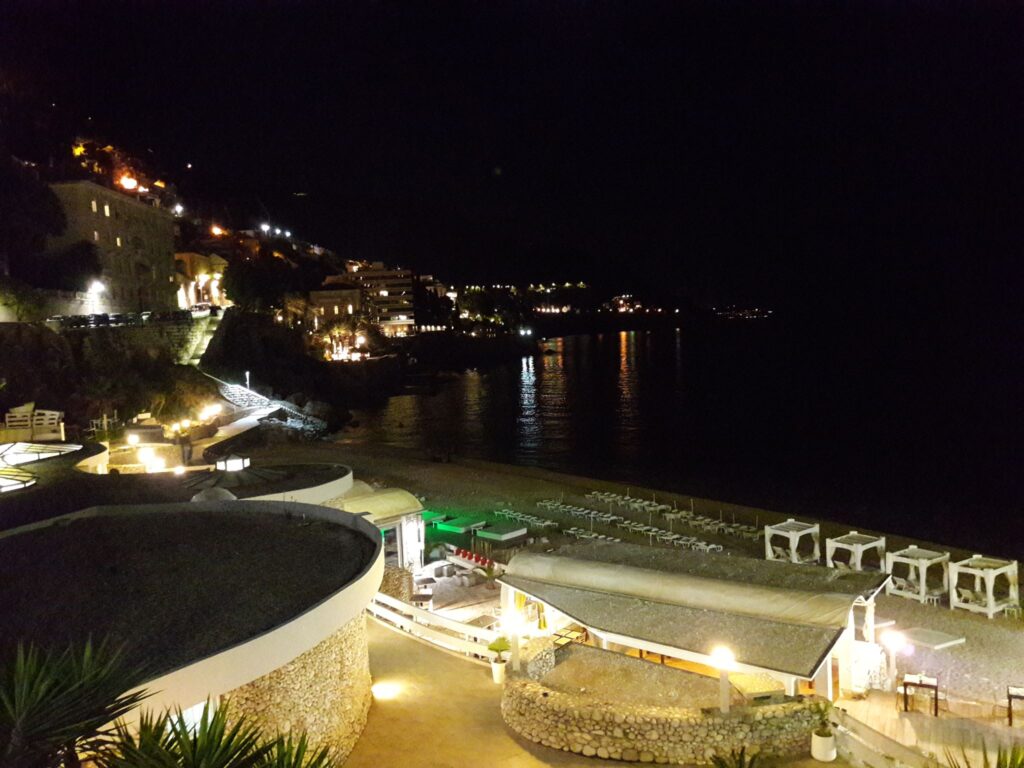
In the evening, a friendly atmosphere with everyone around, including another Frenchman, also called Damien — not always easy to follow all the conversations, but fun all the same. Once the common room closes at 10 p.m., everyone heads into town. We lose Damien along the way, off chatting with the receptionist, and head for the harbor where the rest of the group has gathered. A small mishap: two people ask me to bring them back some drinks, and by the time I get there, they’ve moved to another bar — drinks bought for nothing. One last beer, one last cigarette, and I end up giving the two leftover beers to the hostel receptionists before going to bed.
Looking Back
A truly beautiful country, inexpensive, with a good overall atmosphere, and yet a week is clearly not enough to see everything: the Croatian islands are still to be explored, as is the hinterland — magnificent from what I’ve been told, but harder to reach. Diving fans would also find plenty to enjoy, with quite a few shipwrecks on the seabed.
As for crowds, the high season hadn’t started yet, but Plitvice and, to a lesser extent, Dubrovnik already hinted at what it could be like in the middle of summer. All the same, a week full of great encounters, with travelers and locals alike — and for Game of Thrones fans, plenty of filming locations to visit without breaking the bank.