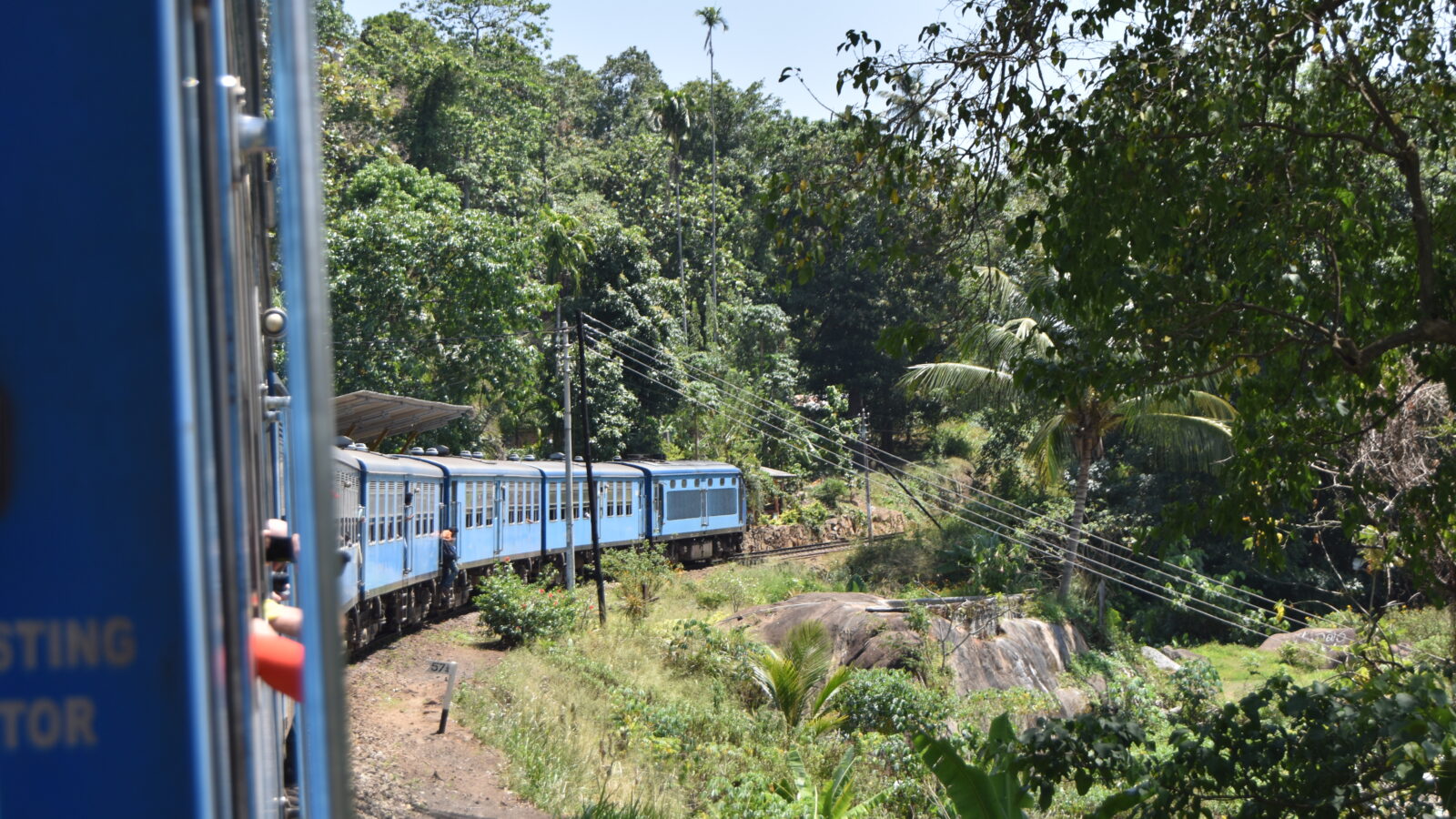
Two weeks to travel down the island and back up again, by train, bus and tuk-tuk. The first week is spent as a pair, with my friend Mathieu. After he leaves, the trip carries on solo toward the deep south and then the central highlands, before coming full circle on the coast.
Leaving Dubai, a first taste of Sri Lankan trains
The first trip I’ve ever taken with someone: leaving Dubai with Mathieu at 11 p.m. He’s not the calmest flyer, but we still manage to sleep a little, an hour and a half to two hours each. Landing in Colombo at 4:50 a.m., then a small administrative hiccup: my ETA (the electronic travel authorization) has a typo in my passport number, so I have to redo the whole thing and pay another $40. That’s sorted, then. Barely out of the airport, we run into a French woman but decide not to travel with her, and head off for Kandy.
A tuk-tuk to Negombo, then a train to Colombo — Mathieu is struck by the poverty you glimpse along the tracks. The train, almost empty when we leave, is packed by the time we arrive. Around Colombo station, total culture shock: we try to work out which train to take while the tuk-tuks swarm us. The tourist stand quotes 500 Rs for a ticket to Kandy; at the regular counter, it’s 190 Rs for exactly the same journey.
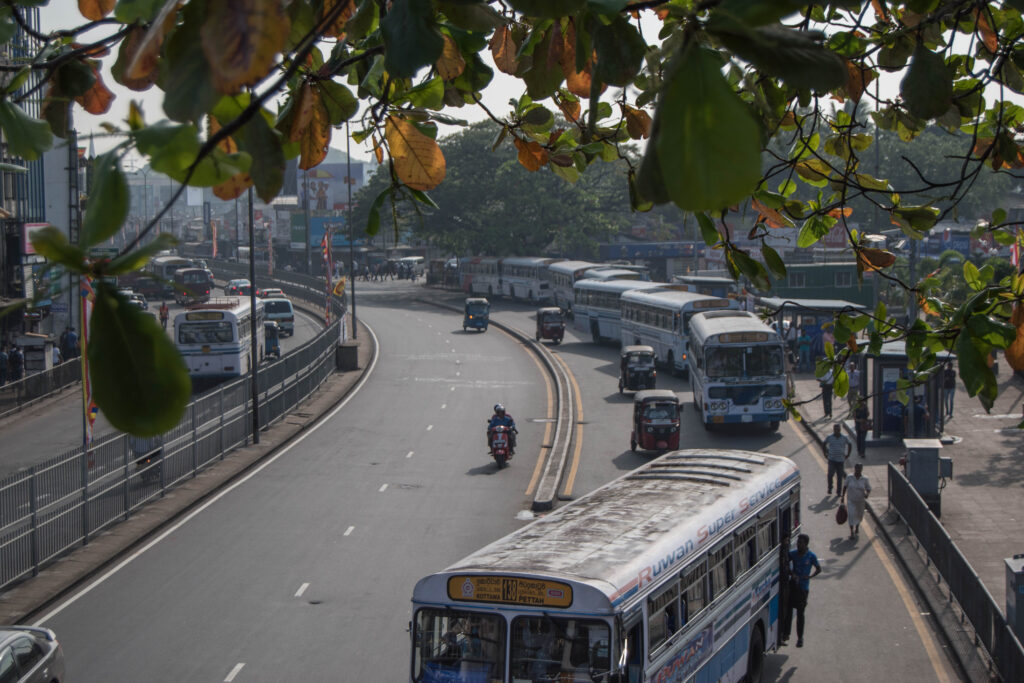
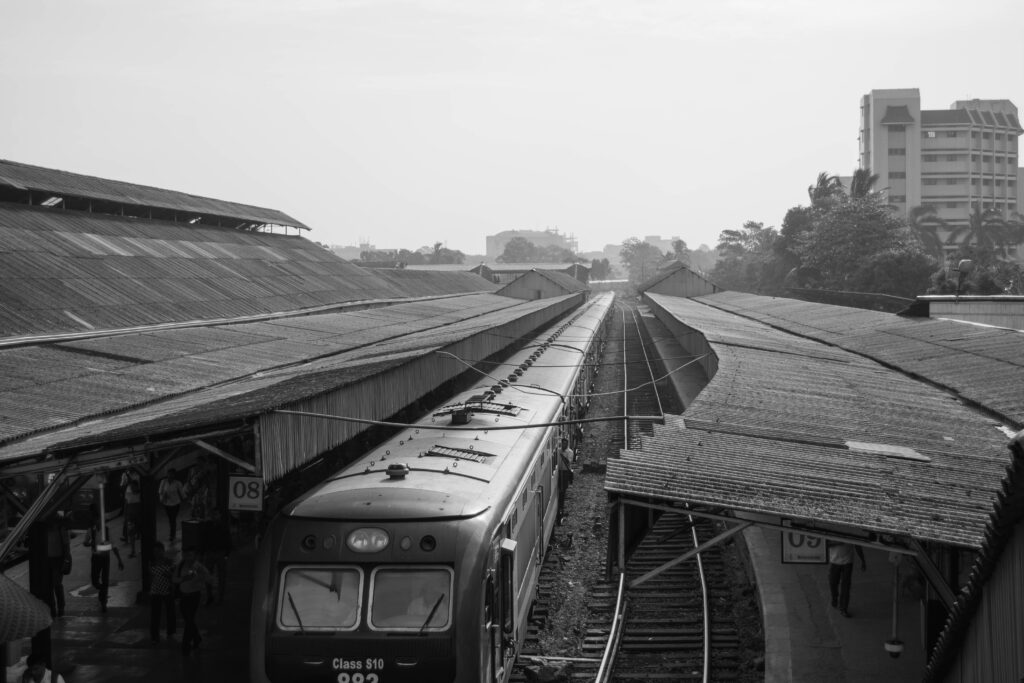
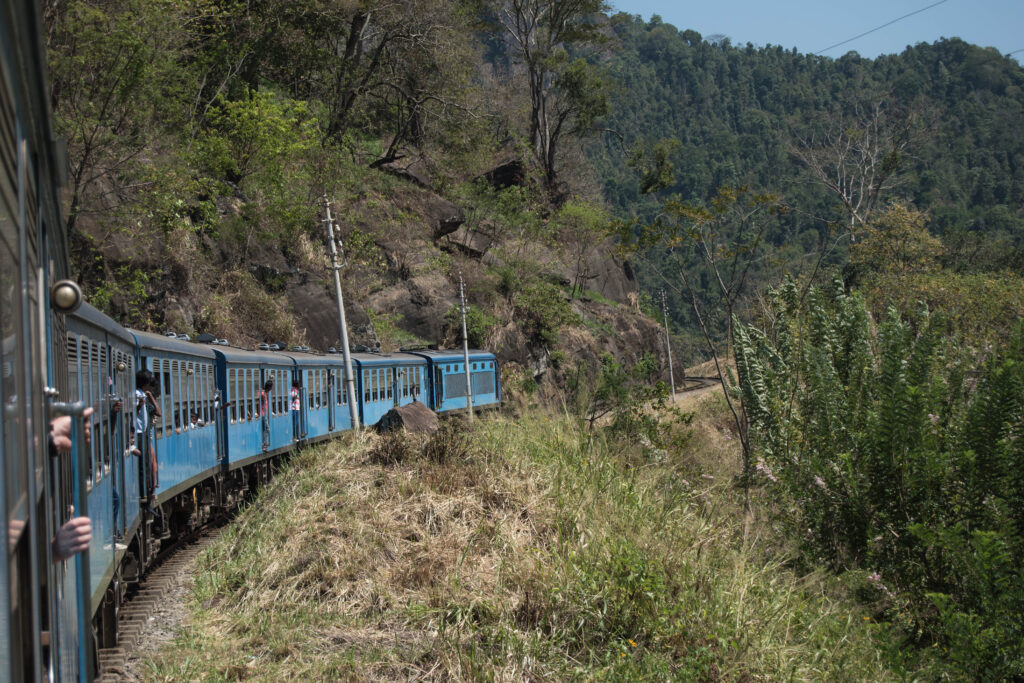
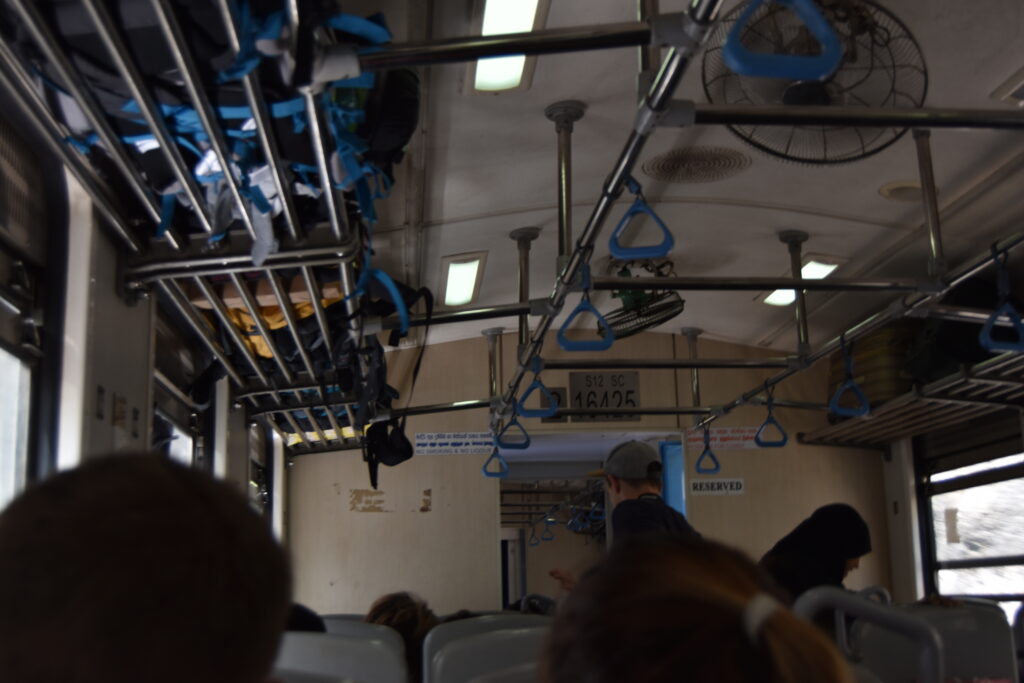
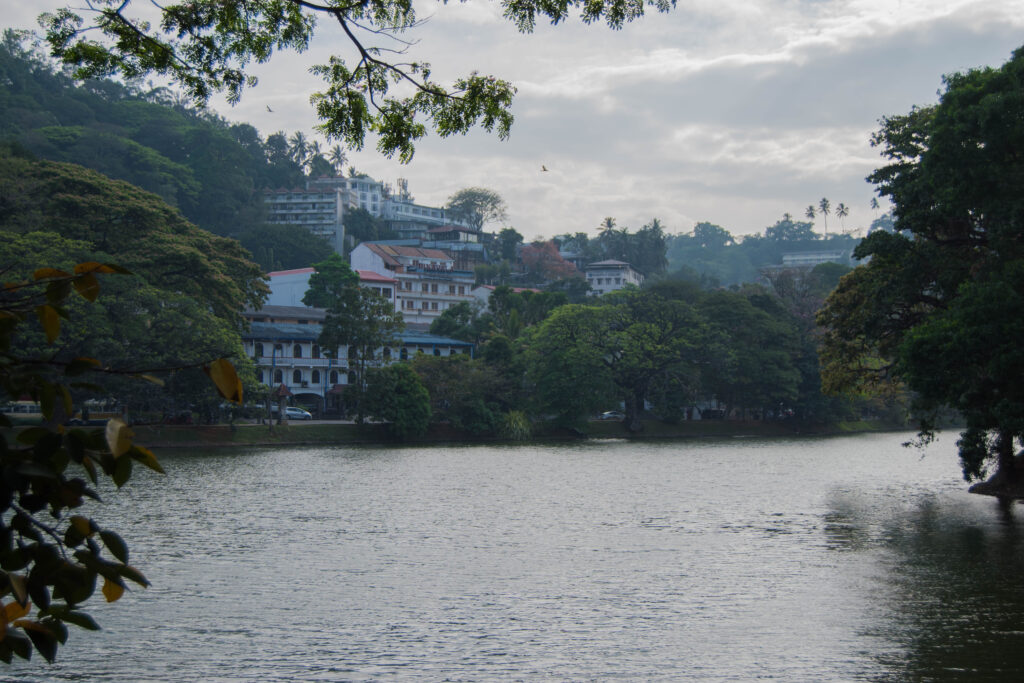
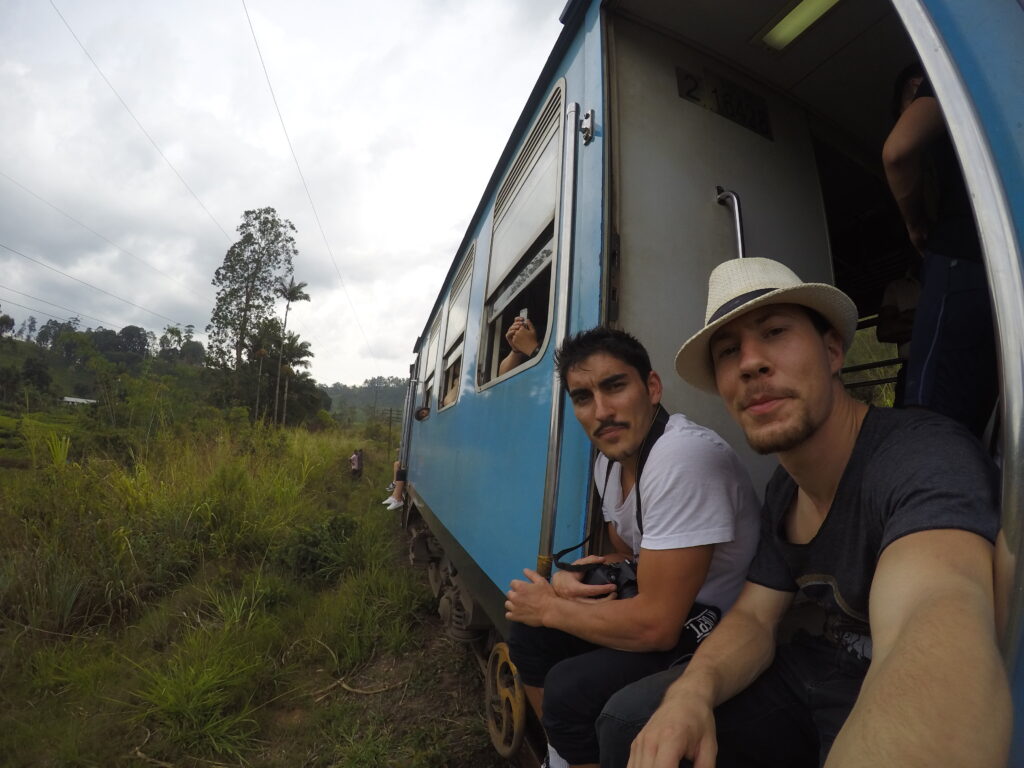
The ride is worth it on its own: windows and doors wide open, I spend my time going back and forth between my seat and the door to take photos while Mathieu rests. The train, never very fast, with heads poking out of every opening and ceiling fans spinning, feels like it could come off the rails at any moment — rustic, but surprisingly pleasant. Arrival in Kandy, where the tuk-tuk hassle starts right away. We end up giving in to one of them for a guesthouse at 4,000 Rs for two — nothing special, but we don’t have the energy to look elsewhere. A short stroll around the town center, rather picturesque, then a nap, dinner and back to the hotel.
The Temple of the Tooth and a very long ride to Ella
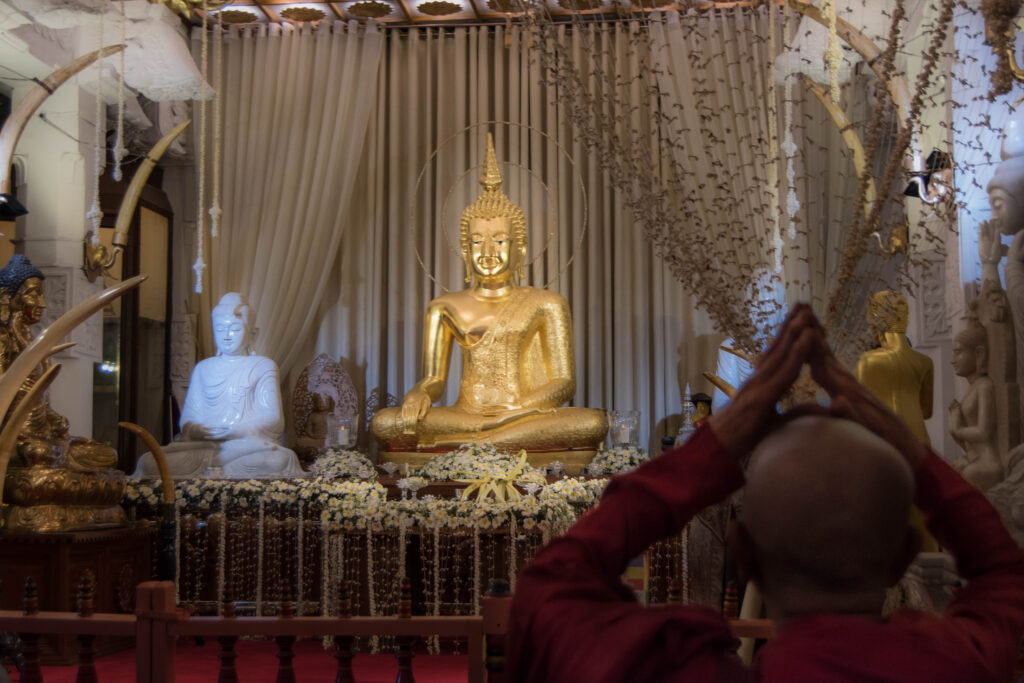
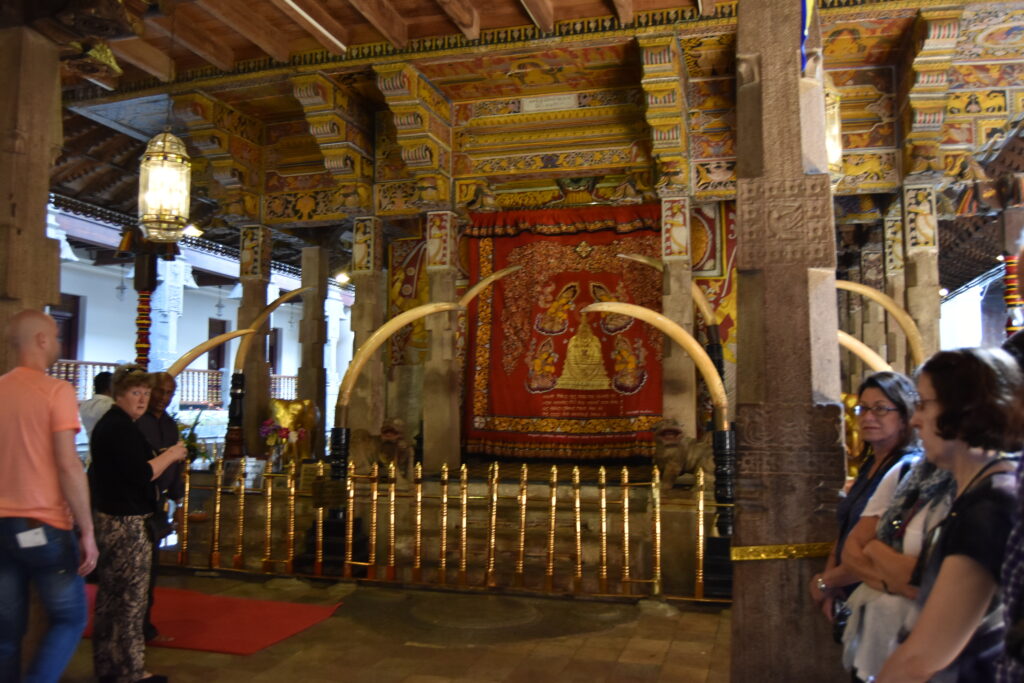
Off to the Temple of the Sacred Tooth Relic — a somewhat special day, it seems, judging by the number of locals coming to leave offerings. 1,500 Rs to get in, and a small disappointment: no explanations in English, so it’s hard to know what the different places and statues are. When the crowd thickens, Sri Lankans don’t hesitate to push a little — not very pleasant, and surprising.
Then a tuk-tuk to the White Buddha (800 Rs round trip): at the top, you have to leave your shoes, and a man asks for a bit of money to watch them — we give in, 100 Rs each. Entry to the site itself costs another 250 Rs. Nothing here is ever entirely free.
Back to the station for the first train to Ella, around 11:45 a.m. The carriage is jam-packed, not a seat to be had, but some young guys start singing and drumming on the walls by the doors — others join in, an impromptu concert guaranteed. After 3.5 to 4 hours, we finally grab a seat right in the doorway, feet dangling over the void as the landscapes roll by. The ride is endless — six hours in all — but the scenery makes you forget how tired you are. Arrival in Ella, a search for a guesthouse, and we find a nice one at 4,000 Rs a night, two rooms, and we don’t move for the rest of the evening.
Hiking Ella Rock, between the rails and the tea plantations
Setting off around 8:30 a.m. for Ella Rock, a very pretty walk that starts along the railway tracks. A few locals ask for money, sometimes bluntly: a woman calls out “Money” to Mathieu, who, not having understood, politely replies “How are you?” — an awkward silence from the lady, and fits of laughter once the explanation sinks in.
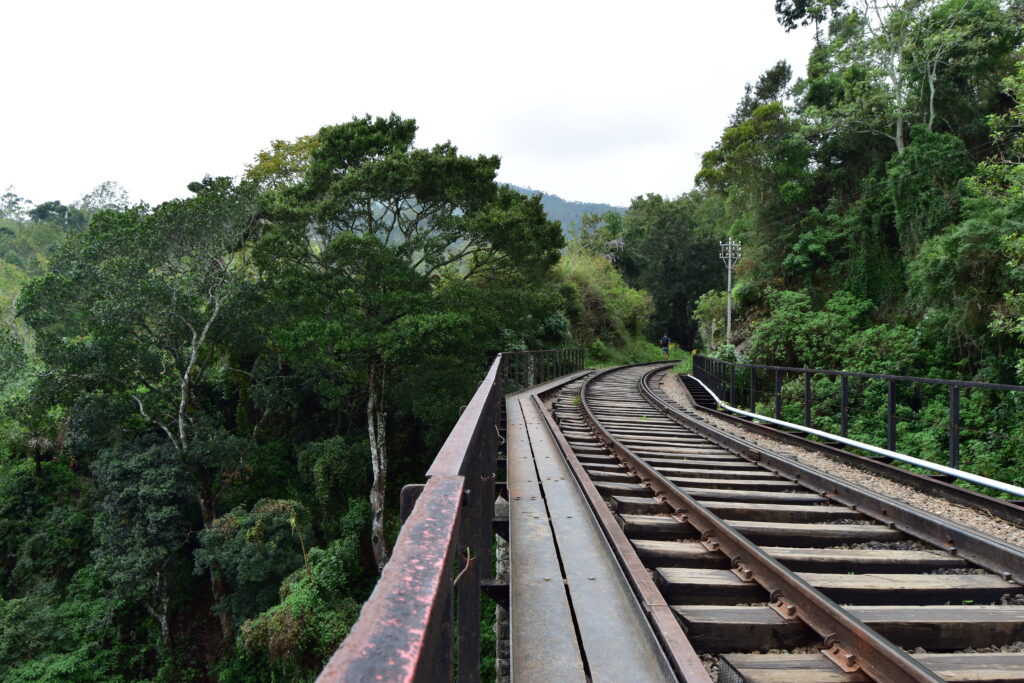
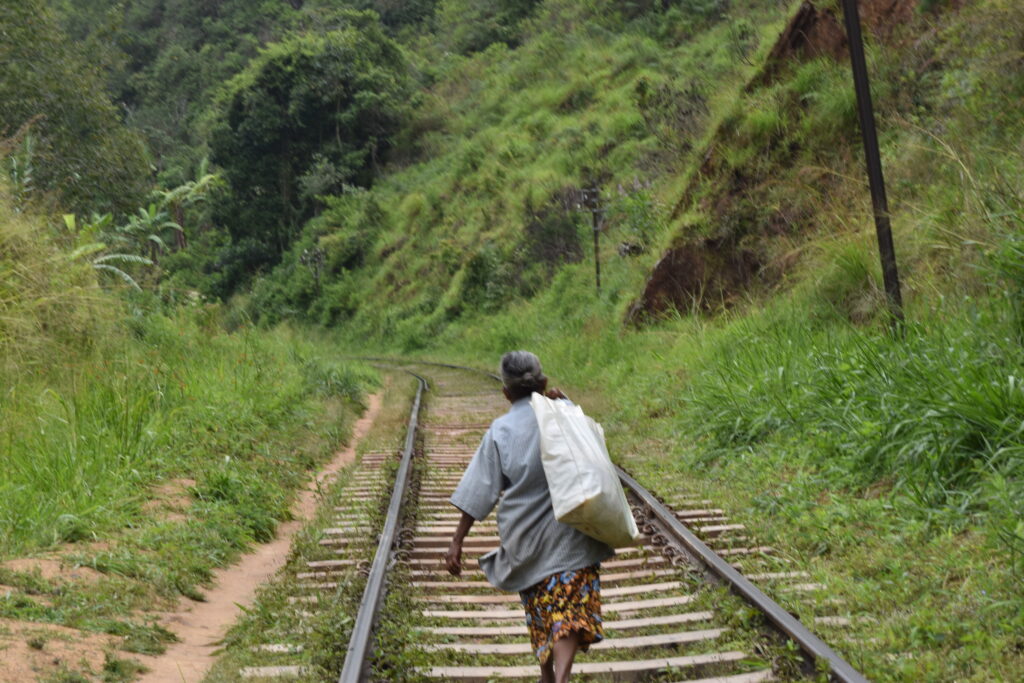
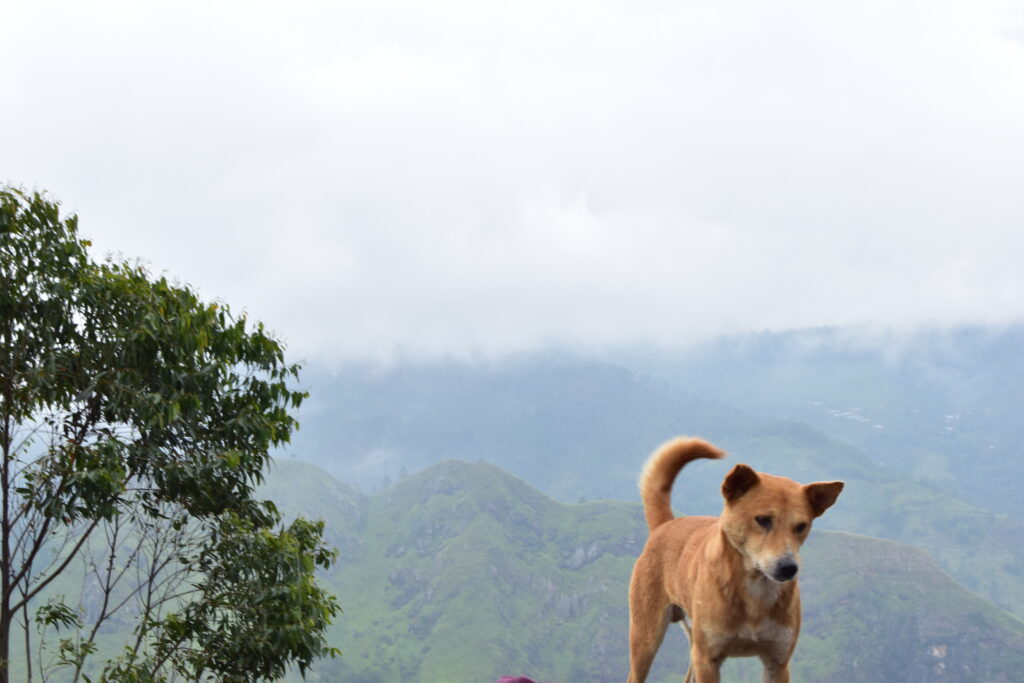
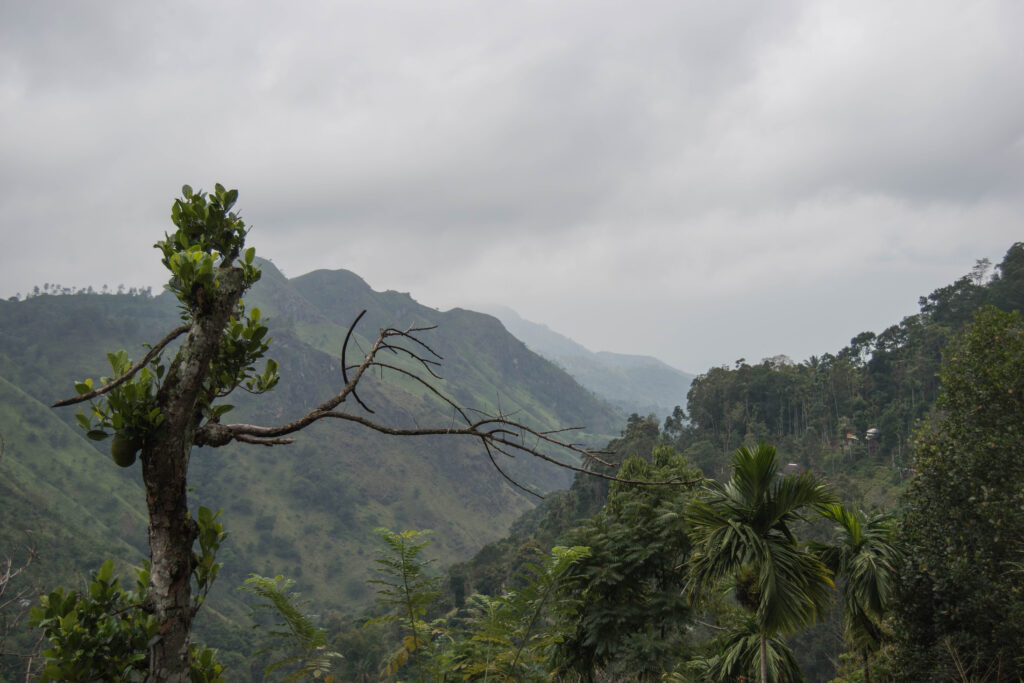
We leave the tracks to cross tea plantations and then forest, with a magnificent view of the mountains despite a rather cloudy sky up high. At Ella Rock, a few tourists, begging dogs and even a makeshift drinks stall. At the next viewpoint, the clouds hide the landscape completely — we wait, and the wind eventually clears a few gaps. The waterfalls farther on unfortunately can’t be reached from this route. Back toward Ella through the tea plantations, with another fit of laughter when a cow wanders across the path.
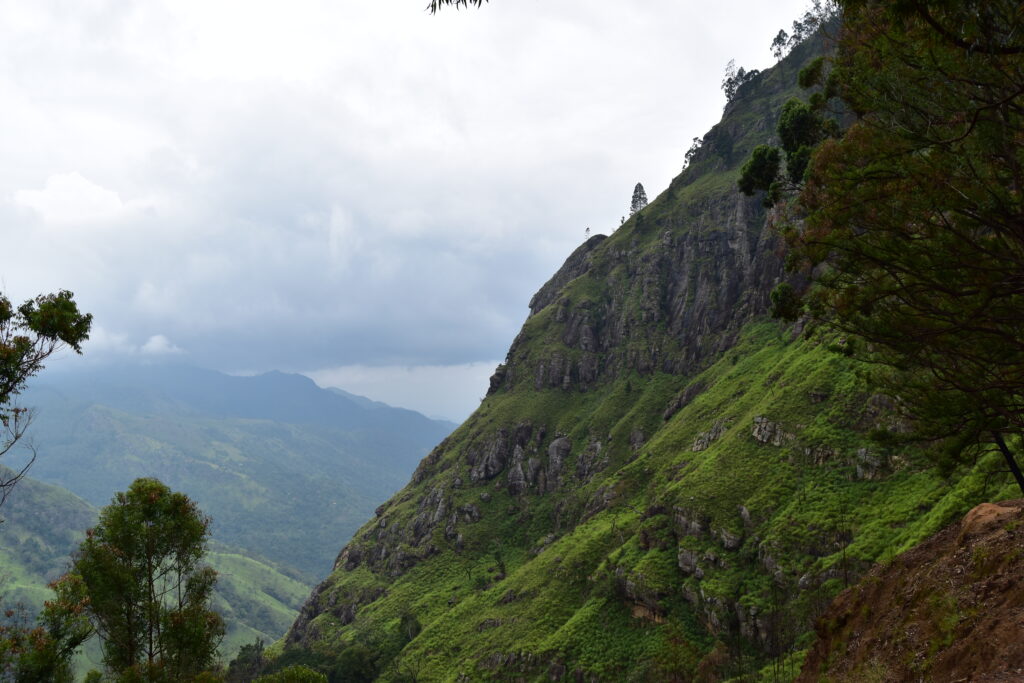
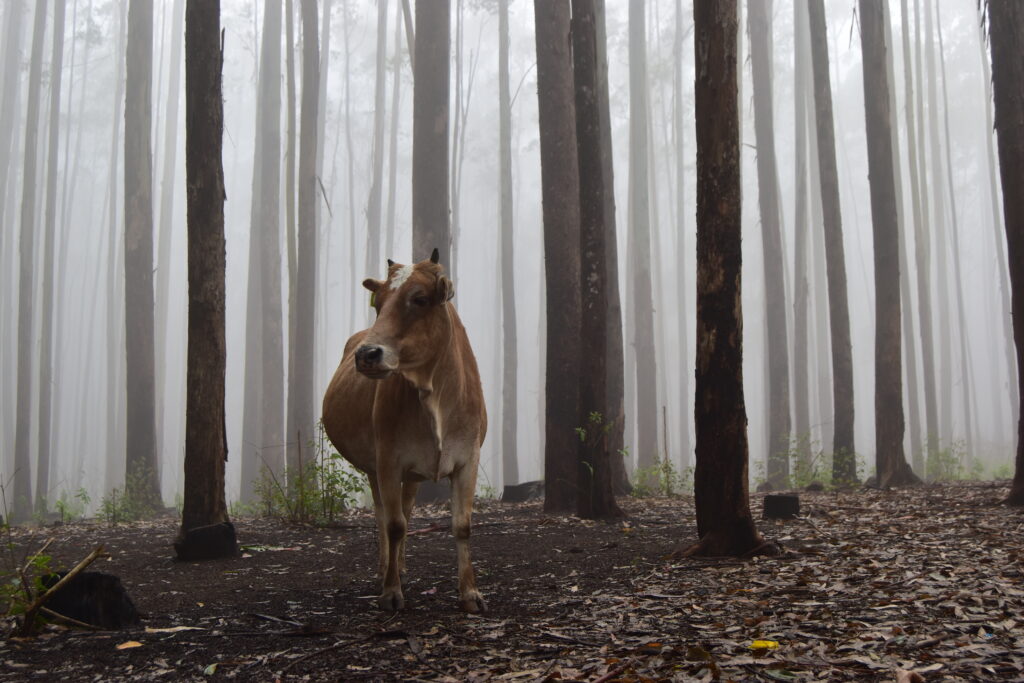
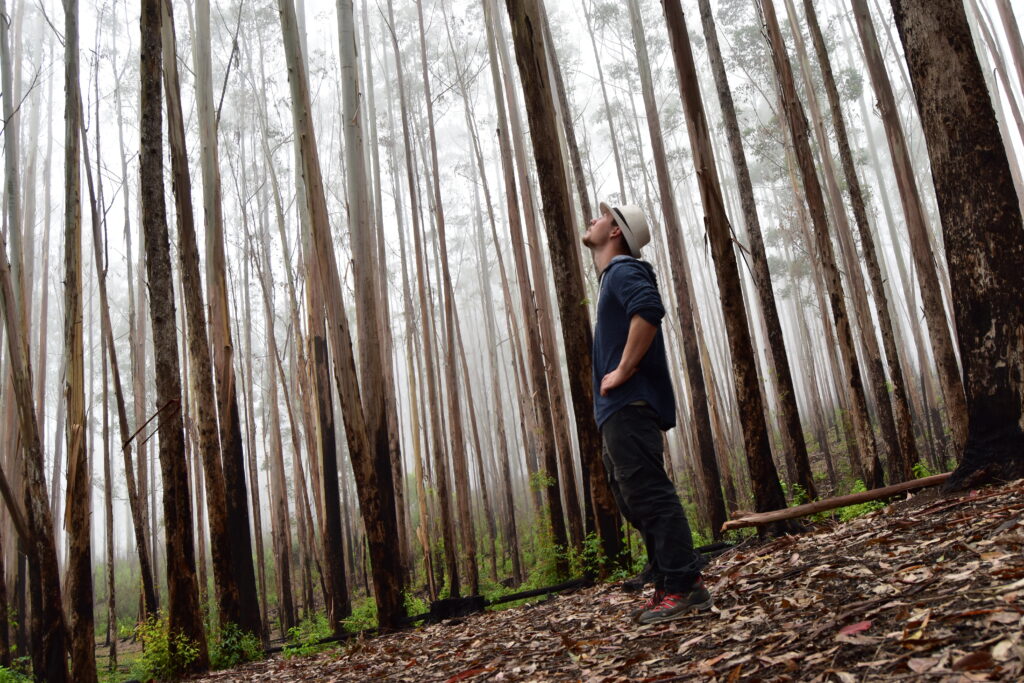
In the evening, some practical thinking: getting around Sri Lanka isn’t that simple — minivans are expensive for two, the train is cheap but slow and doesn’t go everywhere. We figure that a jeep tour in a national park to see elephants, something Mathieu has wanted for a long time, could be a good next step. A quick stop in town to try to change money (no luck), but an unexpected encounter: a little girl asks me for a pen (“School pen”), I give her mine and buy another straight away. A quiet evening, a small impromptu concert at the hotel.
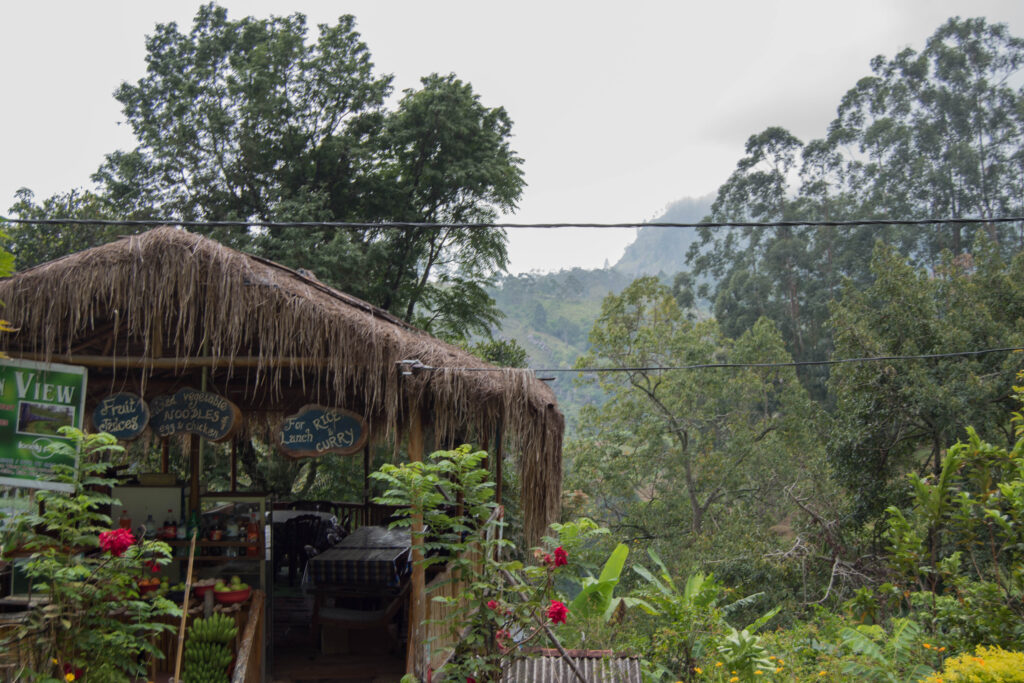
Elephants at Udawalawe, heading for Tangalle
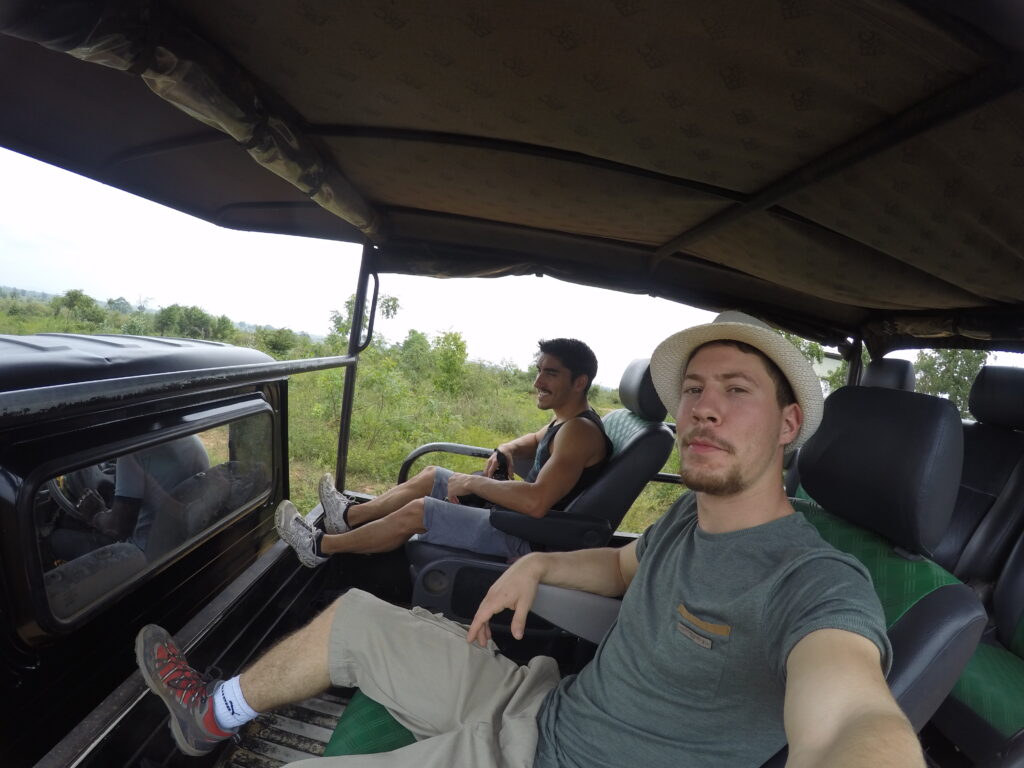
Off to Udawalawe National Park to see elephants — cheaper and less touristy than the other parks, and on the way to Tangalle. A taxi driver talks us into doing the trip directly rather than by bus (4,000 Rs; we get slightly ripped off on the price, but it’s faster, and Mathieu, feeling a bit queasy, isn’t sorry to skip an endless, bumpy bus ride). We share the road with a family from Quebec, a few words exchanged along the way.
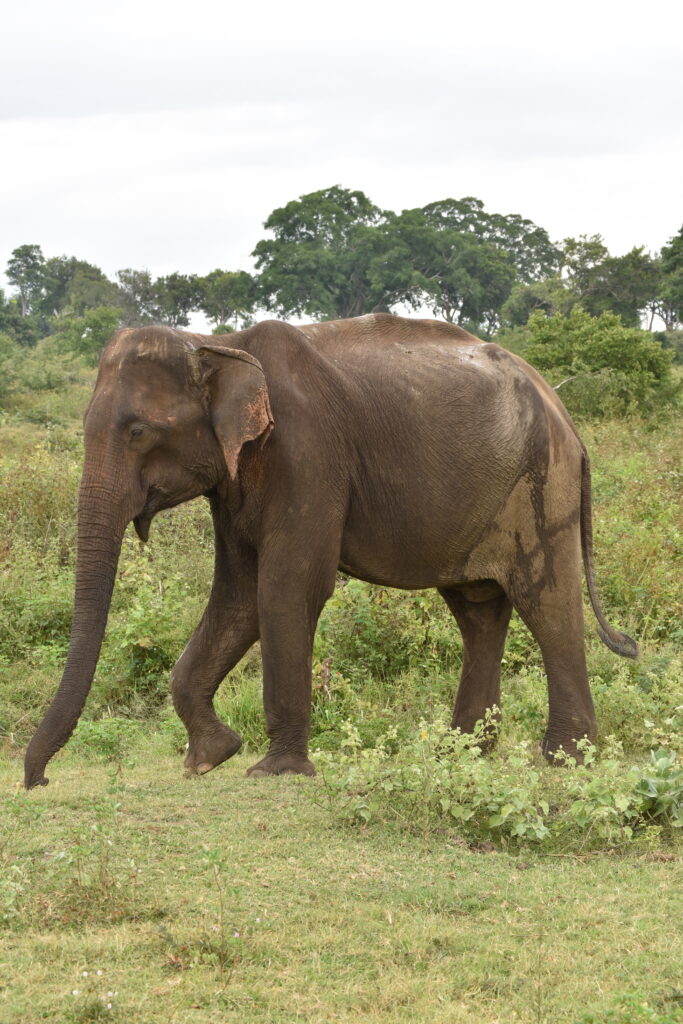
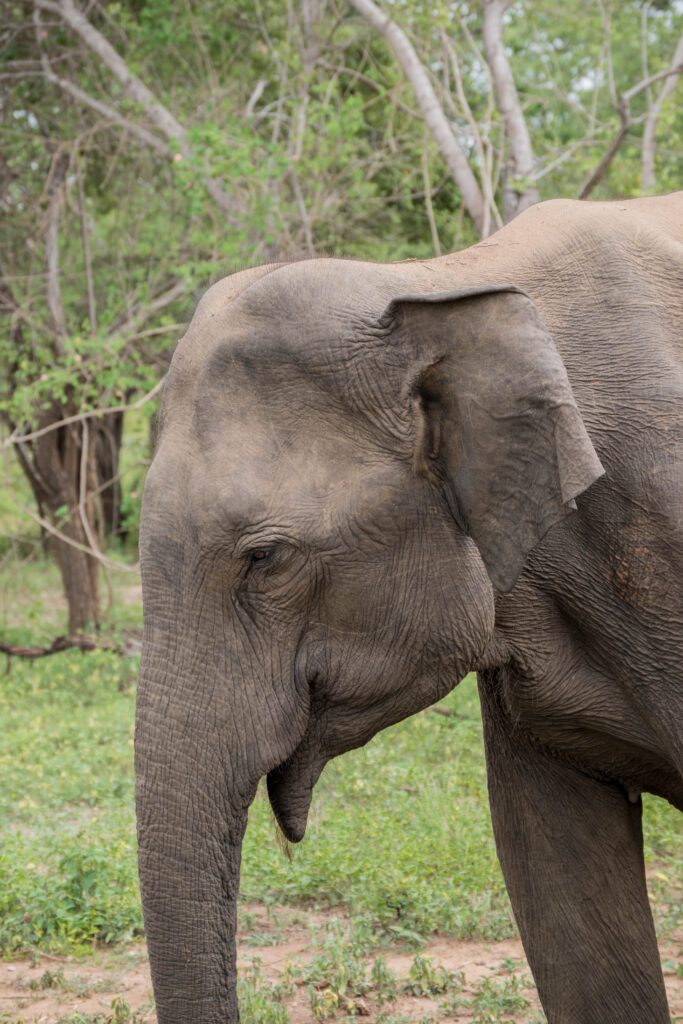
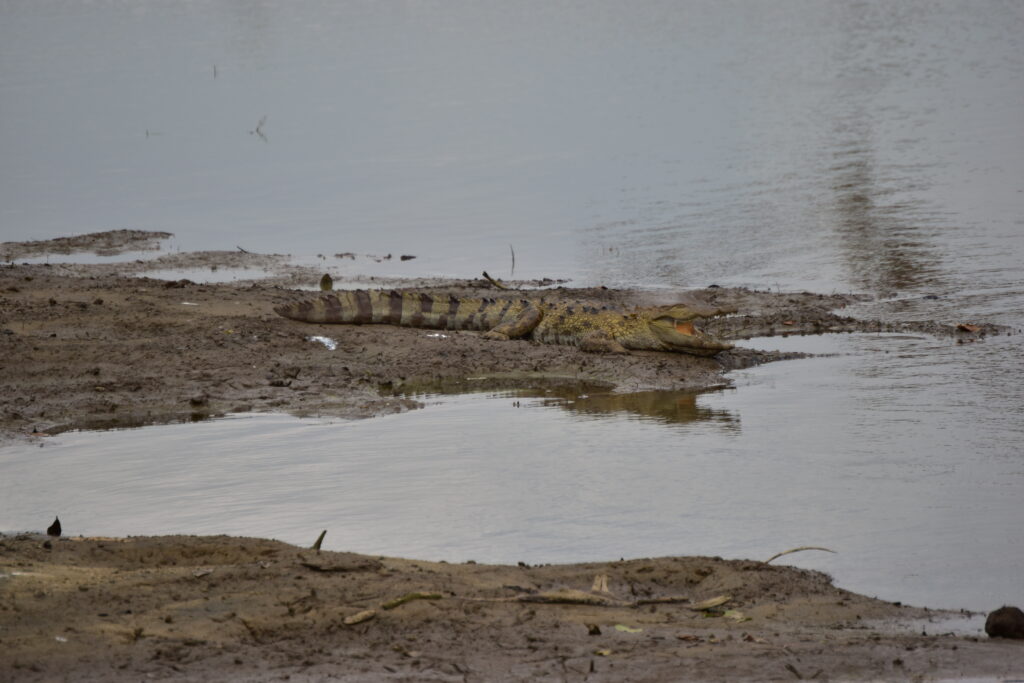
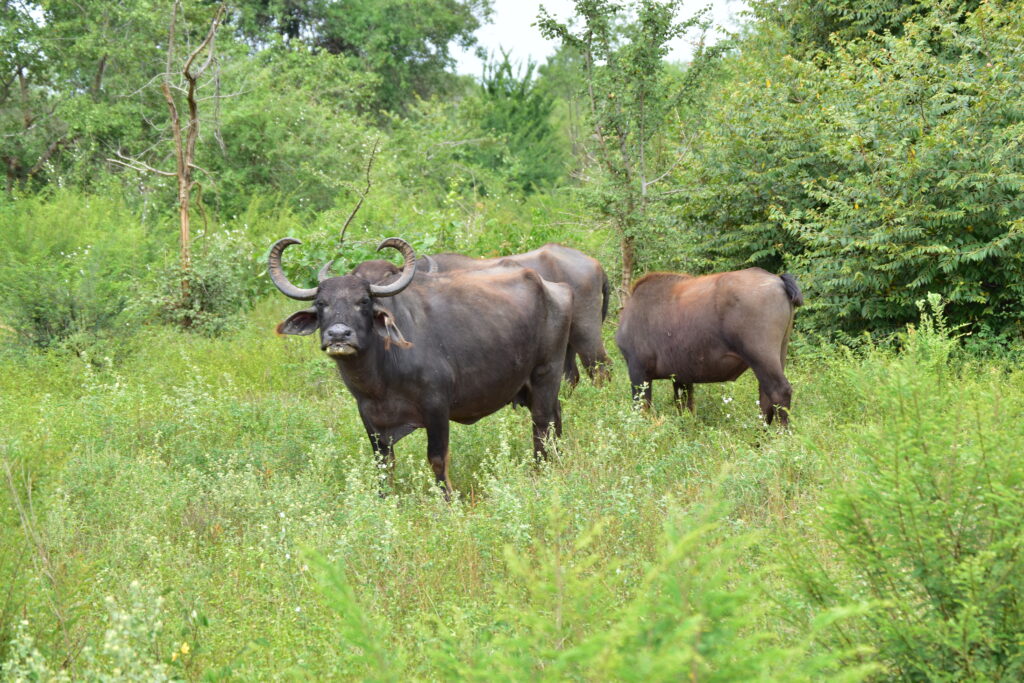
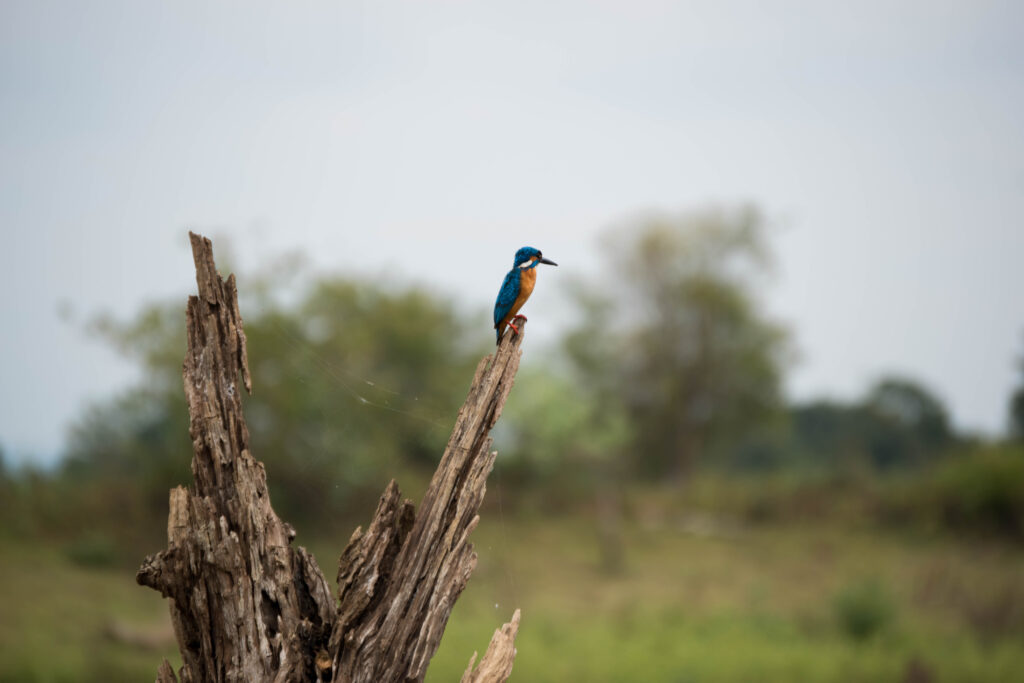
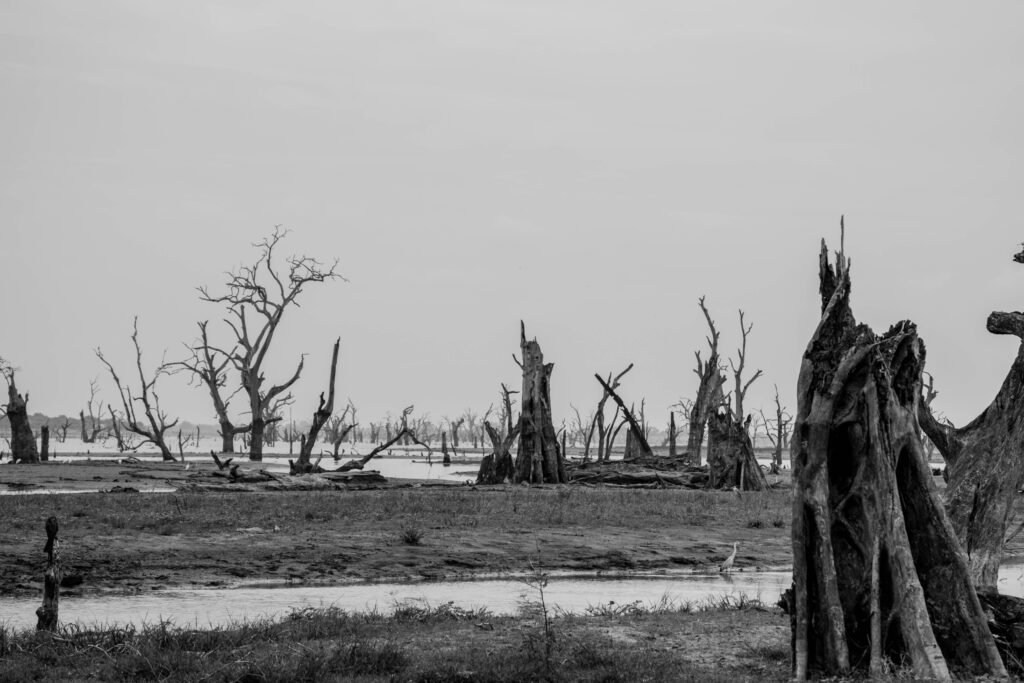
At the park entrance, the jeep drivers pounce, but we take the time to compare: between 5,000 Rs for 2.5 hours and 4,500 Rs for 3 to 3.5 hours, we pick the second option. Park entry is 2,700 Rs for the two of us plus the guide. Within the first few hundred meters: an elephant, then two more farther on, some birds — our guide has a sharp eye and spots the smallest lizard or buffalo. Superb scenery, including a lake ringed with dead trees where a motionless crocodile dozes. Under a big tree — the only place where you’re allowed to get out of the jeep — a large elephant slowly comes closer before disappearing into the trees. Farther on, another one keeps coming toward us, a truly magical moment. A shame not to have come across a herd, but the experience is still excellent.
Udawalawe National Park
Out of the park, off to Tangalle by bus — except no bus goes there directly, and the explanations, in very limited English, don’t clear anything up. On the road, we see yet another elephant, very close, behind the park fences. After several pushy tuk-tuk drivers, we finally give in for a ride of about 70 km — barely more than an hour in the end. Dropped straight at a cheap hotel (2,000 Rs a night) very close to the beach, but the bathroom only has a curtain for a door — better suited to a couple. After checking out five or six places in search of a sea view, we settle for a 2,000 Rs room with a partial view and two separate beds. A quick look around town (banks closed, a local market), then a quiet evening, restaurant and beer.
Turtles at Polhena
Renting a scooter at the hotel (1,000 Rs for the day) to head for Mirissa, with a few beach stops along the way. The first stop is disappointing: we’ve barely set foot on the sand when kids shout “Money…” at us and then throw stones — a cultural thing, no doubt, but still annoying. Back on the road as far as Polhena, a quieter little beach where locals and tourists mix. A vendor offers us a mask, fins and snorkel for 600 Rs; Mathieu lets himself be talked into snorkeling with me, not exactly thrilled at the idea of putting a rented snorkel in his mouth — nor am I, to be honest, but the urge to see what’s underwater wins out.
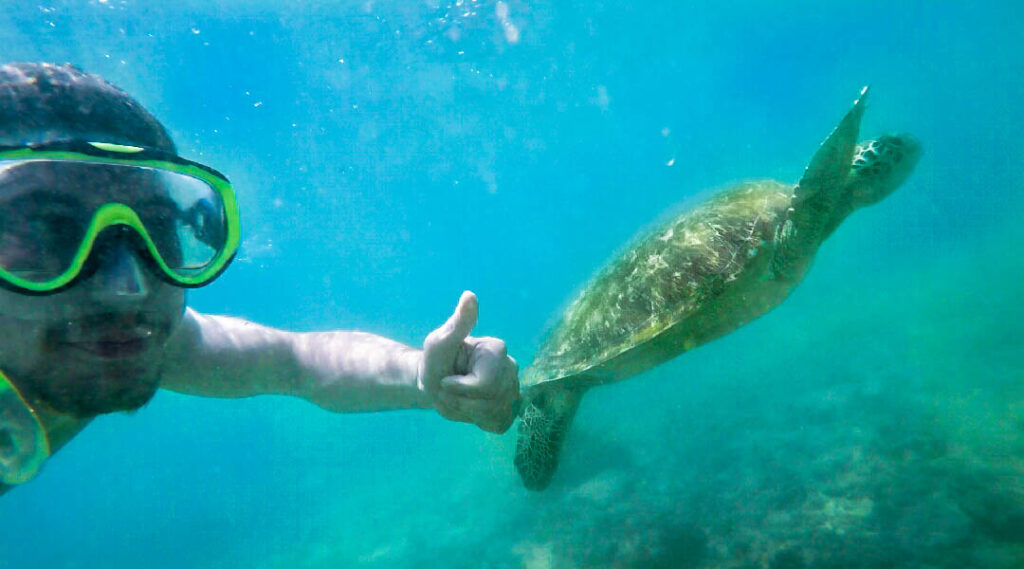
The seabed is nothing special — mostly dead coral — but barely ten minutes after getting in the water, we come across a huge turtle, not shy at all. We watch it for almost an hour, joined by two or three locals, one of whom gives me a kind of seaweed to feed it. A second turtle, more timid, won’t let us get close, and neither will the ones we come across on a second attempt in rougher water. A great experience all the same — for better conditions, you’d probably need to go farther out, toward the small coral reef.
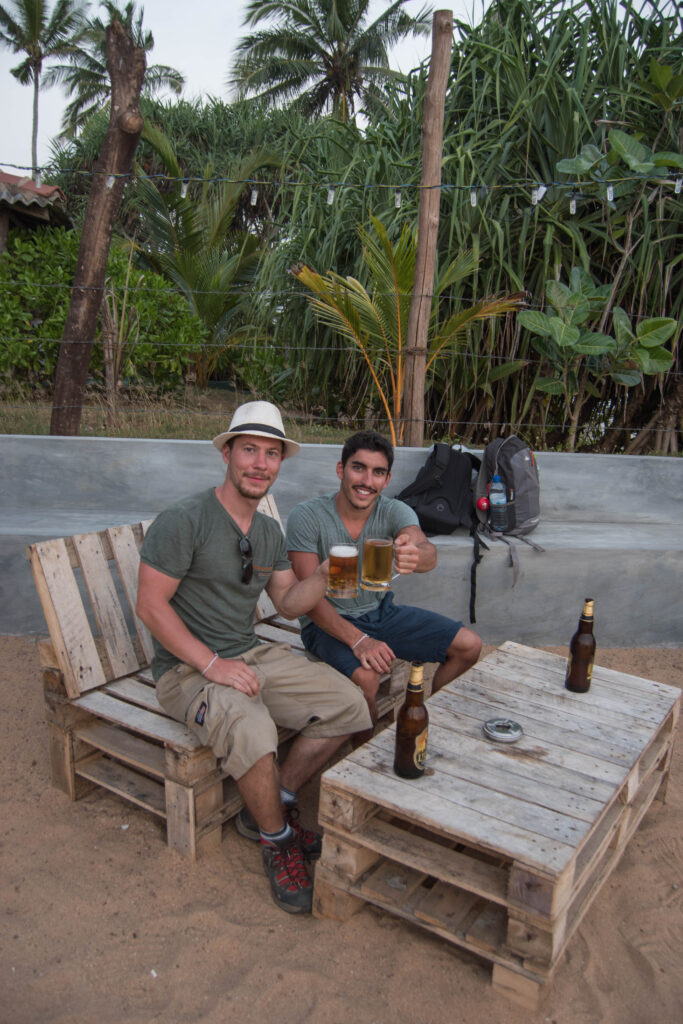
Back toward Tangalle, spotting along the way a bar a colleague had recommended. That evening, we head there by tuk-tuk: as soon as we mention our colleague’s name to the owner, Ingrid, the welcome turns instantly warm — she even shows us a video of a little impromptu show our colleague and her partner put on during an earlier visit. A lively end to the evening: Ingrid treats us to a mojito, and a tuk-tuk takes us back to the hotel.
Rock Temple and lazing around in Tangalle
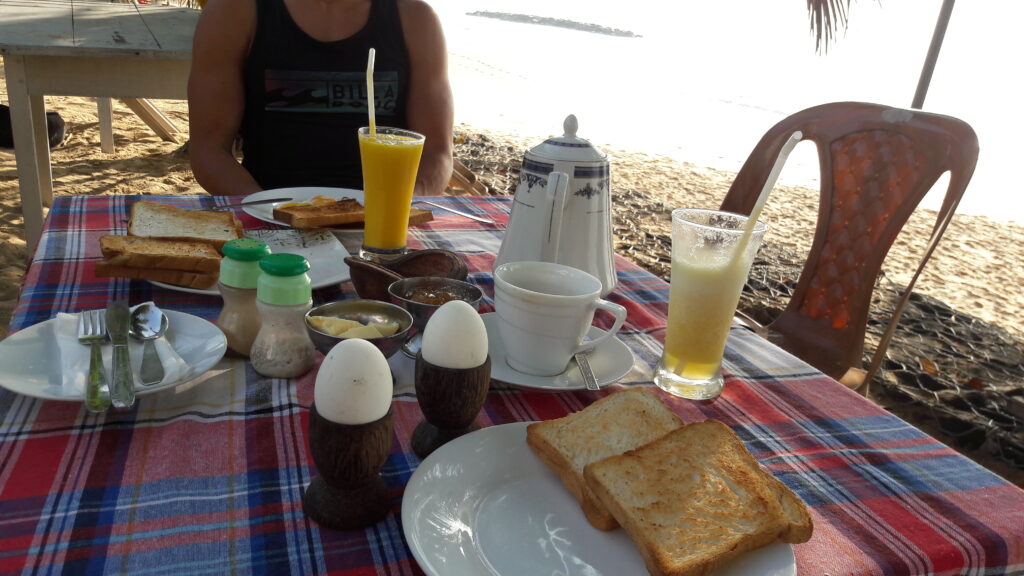
We stay one more night in Tangalle and rent the scooter again for the day. Breakfast with our feet in the sand, then off in search of the “Rock Temple.”
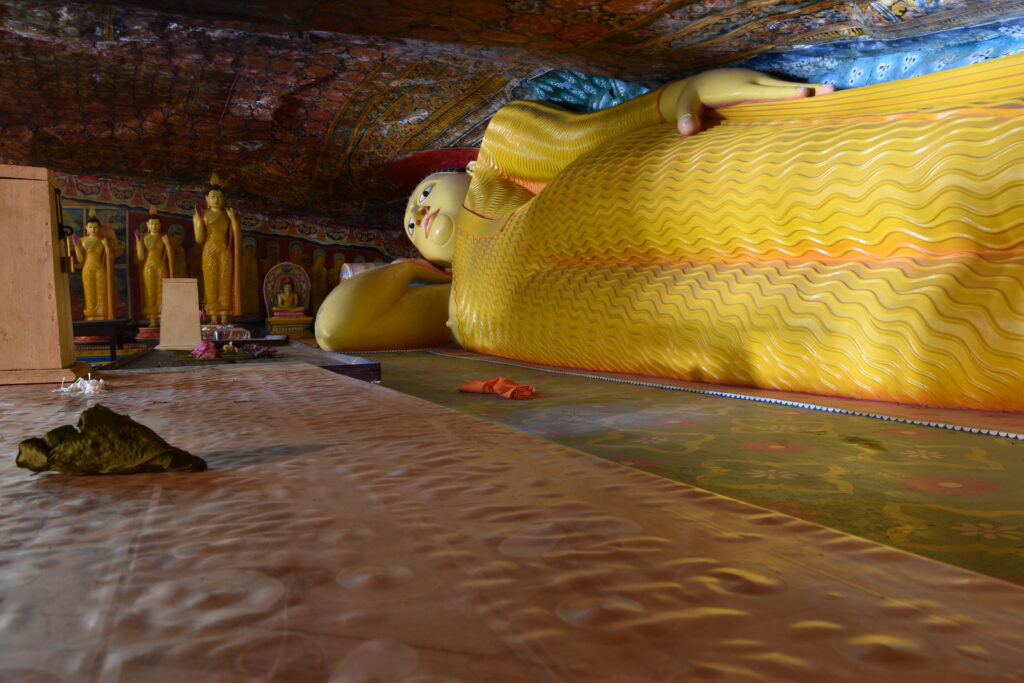
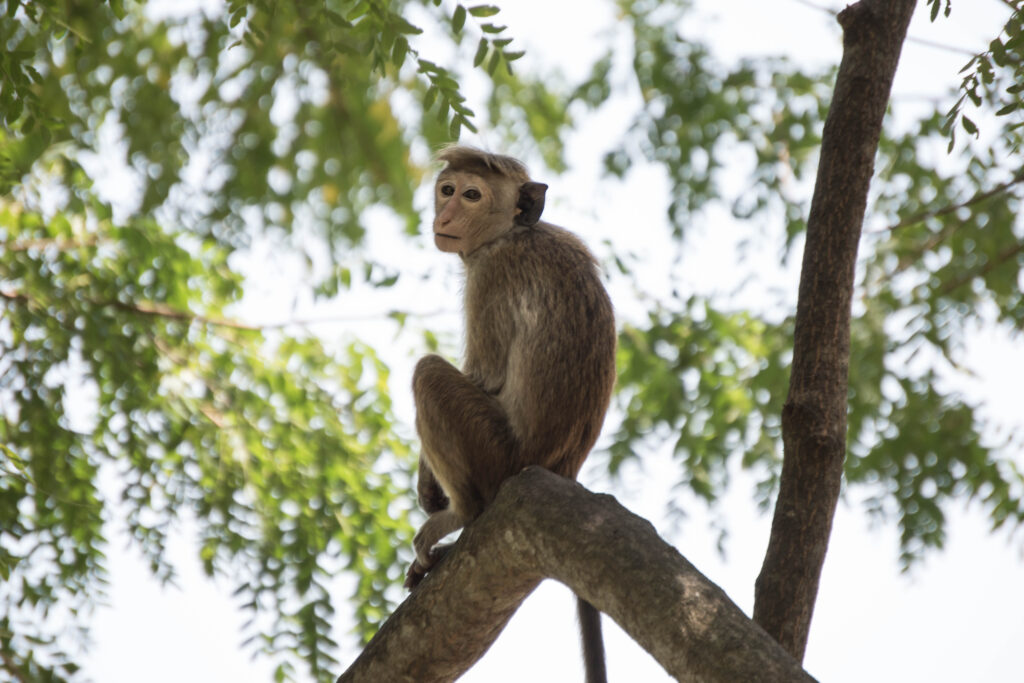
Not easy to find, two false leads before we get there. 500 Rs entry for what turns out to be Buddha statues tucked into caves on the cliffside. We pass some monkeys on the way. A small museum next door offers a braided Buddha bracelet along with a prayer — followed by a barely veiled request for an offering (1,000 Rs notes casually left in plain sight during the ceremony). 500 Rs later, the keeper vanishes as quickly as he appeared.
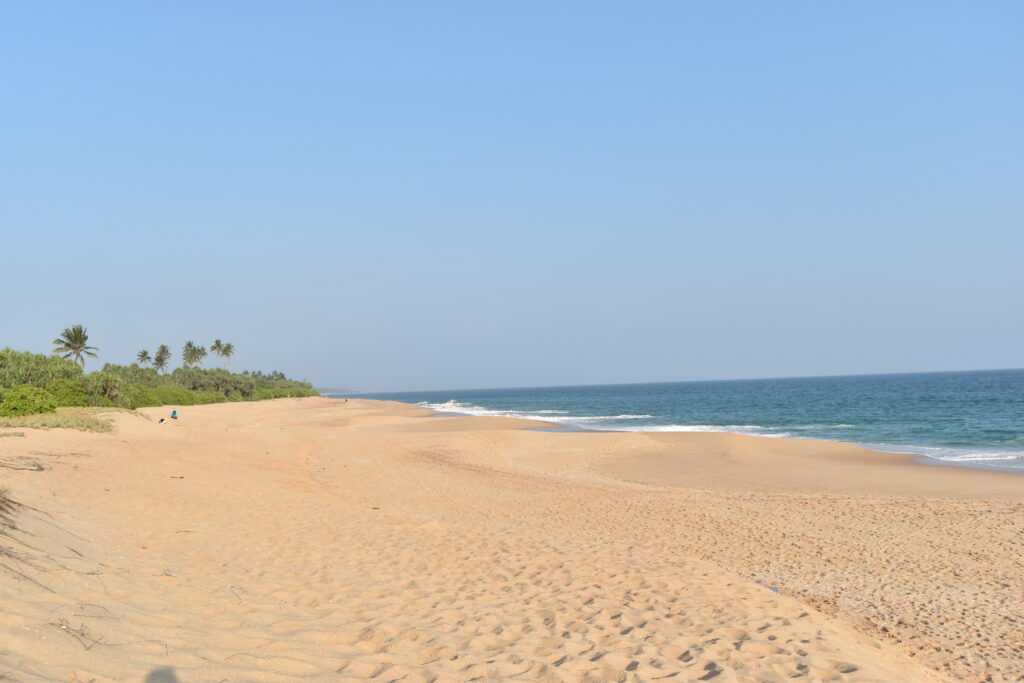
Next, off to Rekawa Lagoon, not easy to find either, before we stumble on a small beach restaurant nestled among bungalows. Total calm: no tuk-tuks, no horns, no engines — just the sound of the waves. The waitress asks for our Facebook, oddly enough. A walk along the huge, almost deserted beach, where a very friendly Sri Lankan shows us his handmade bracelets made from shells collected on the spot — Mathieu falls for one of them (500 Rs).
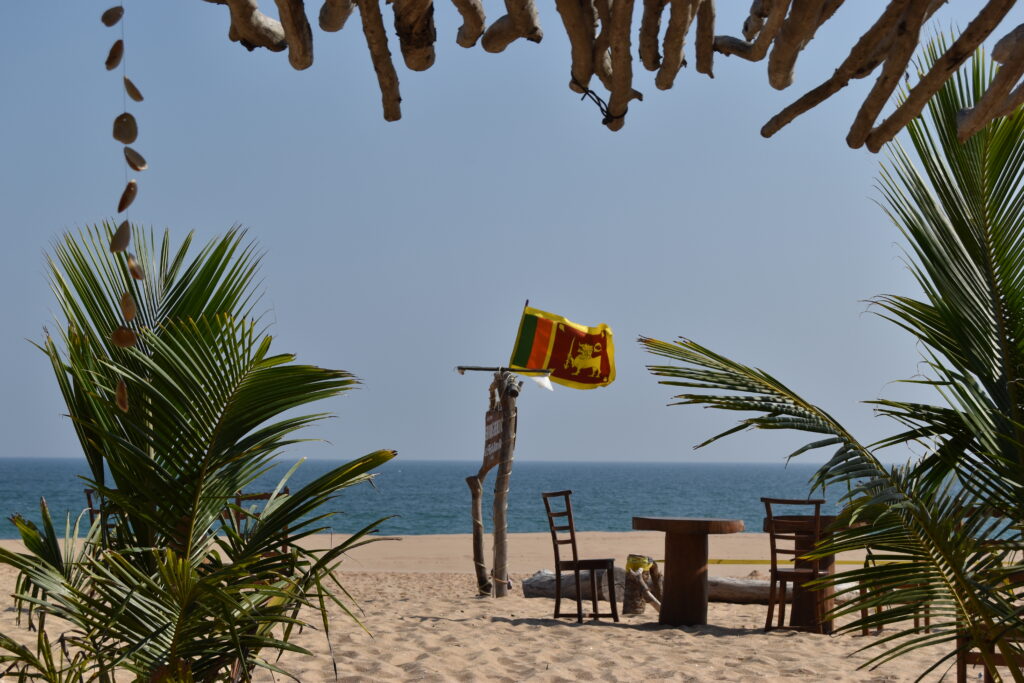
A quick detour into town before returning the scooter so Mathieu can find a few souvenirs: the shop owners are lovely, and the woman knows a few words of French and teaches me in return how to say thank you in Sinhala. In the evening, back to the Lounge — it faces due south, so you’ll never see the sunset there, but the atmosphere and the company are worth the trip. A last quiet evening with Ingrid and her team, feet in the sand, looking back on the first part of the trip.
Goodbye Mathieu, heading alone to Deniyaya
Departure day for Mathieu. A relaxed breakfast, then a tuk-tuk to the bus station, where we find an air-conditioned express bus to Colombo (2.5 hours, perfect for his connection). We say goodbye, and the trip continues solo.
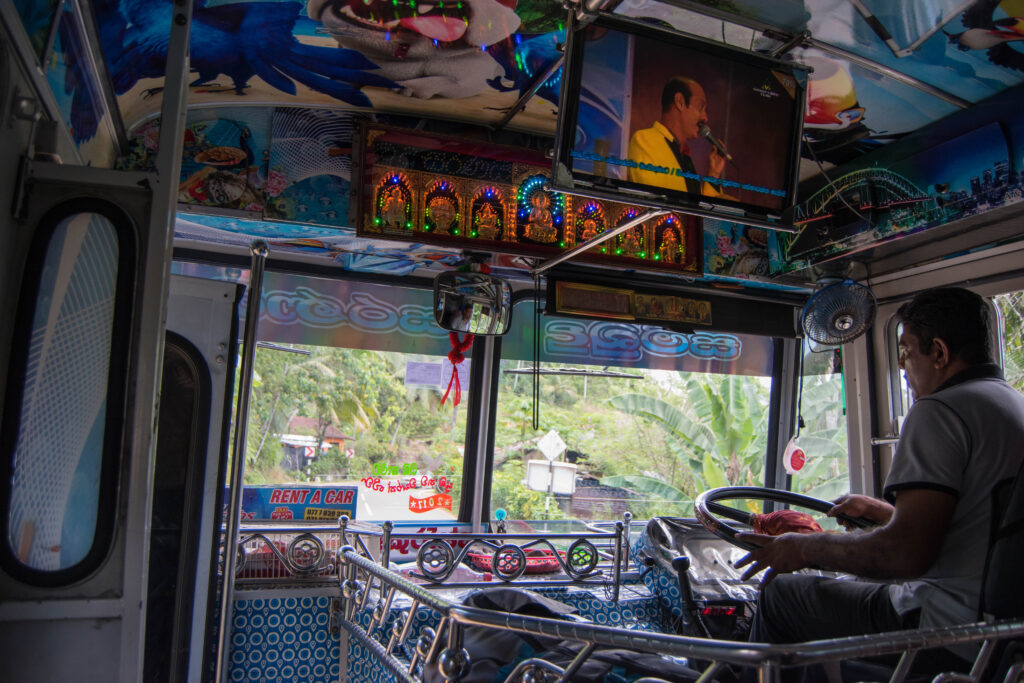
After some searching, I find a direct bus to Deniyaya with no change (105 Rs). Empty when it leaves, it fills up quickly — I’m the only foreigner on board, and my presence at the window draws plenty of smiles, waves and amused little whispers between neighbors, especially from the kids; the woman next to me even ends up falling asleep on my shoulder. Nothing mean about it, rather touching in fact: people seem more welcoming in this part of the island, less used to tourists. When I get off, nobody hassles me for a tuk-tuk — a real relief.
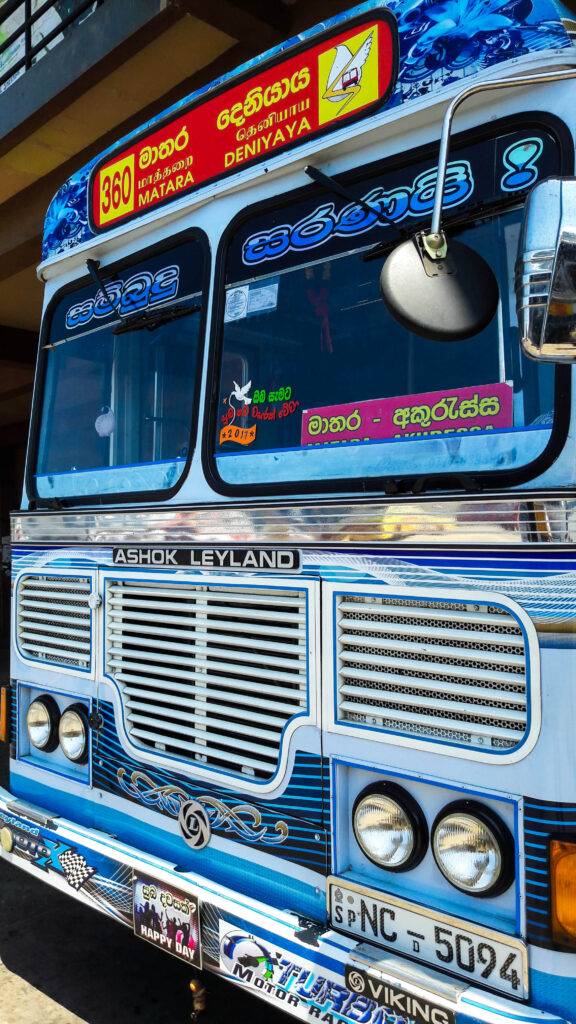
I eventually find a hostel, “Rural Jungle Forest” — the name doesn’t lie: an outdoor shower, a four-bed dorm closed off by a simple curtain, but 900 Rs a night and an atmosphere that suits me just fine. I catch up on my travel journal, then head out for a walk around town — smiling welcomes everywhere. Back at the hostel, I get to know my roommate, an Australian, and we plan to share a guide the next day for Sinharaja Forest. A late dinner, so quite a few restaurants are closed; I keep wandering until a man stops on his scooter, spontaneously takes me to a small canteen, and invites me to drop by his fruit shop the next day to exchange a few words of English. A somewhat restless night between the chanting from the nearby temple and the conversations in the common room.
Sinharaja Forest and Chandana’s generosity
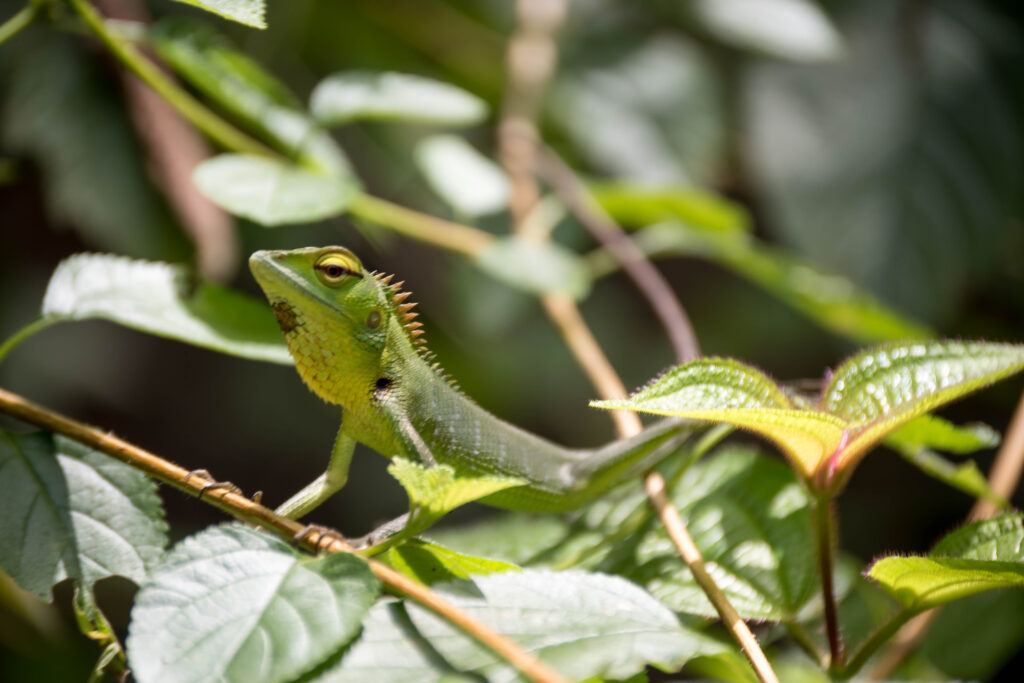
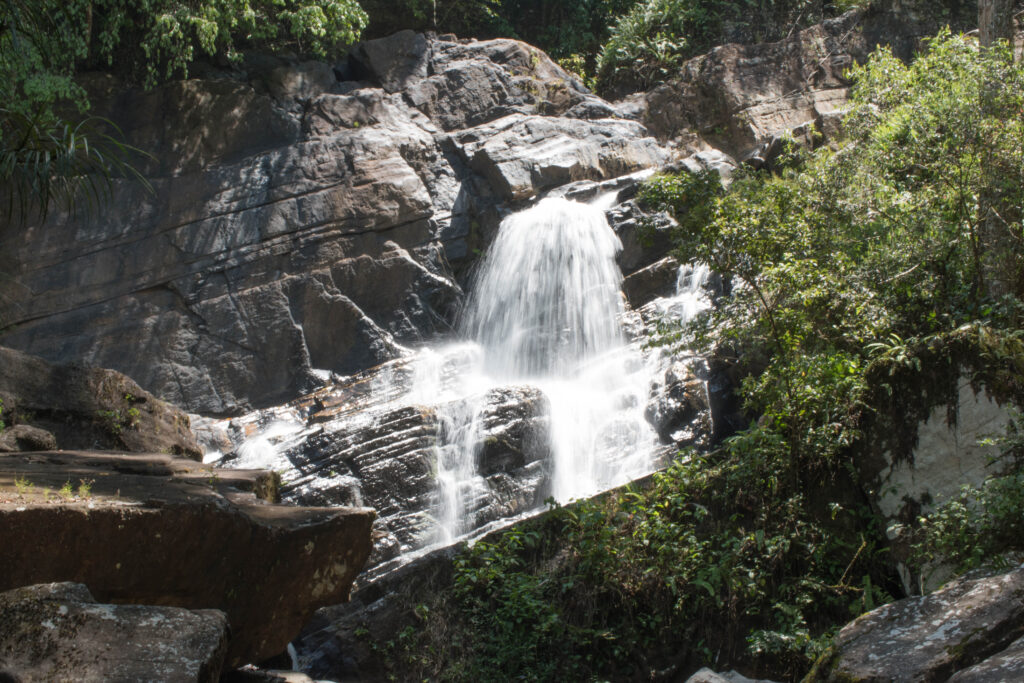
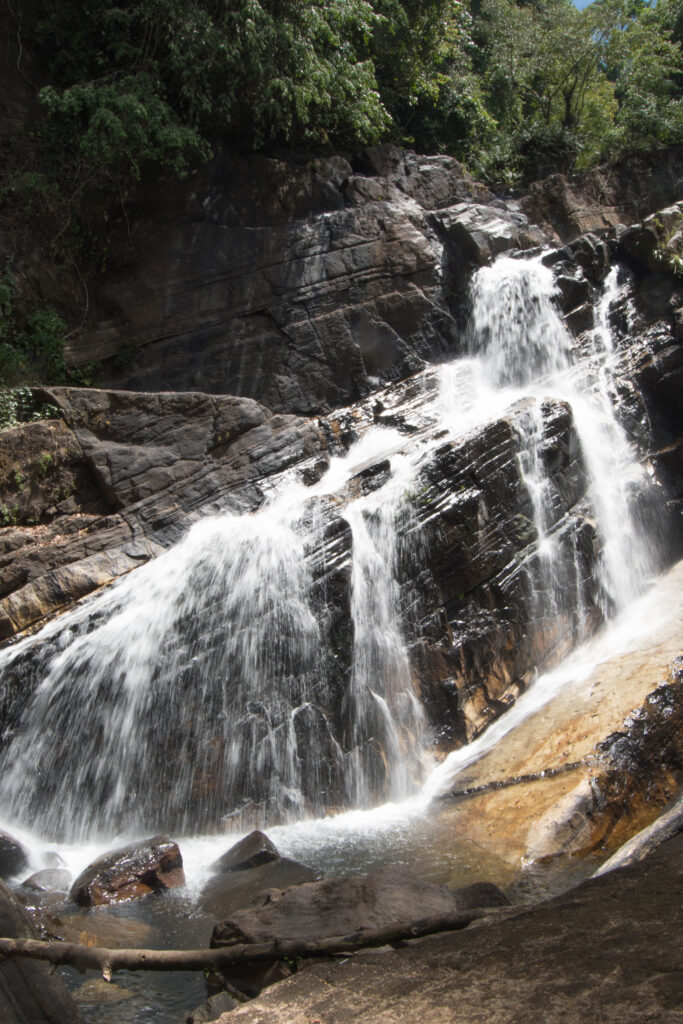
A rude awakening at 6 a.m. from the metal door of the bakery next door slamming over and over, then a cold outdoor shower to really wake up. Off by tuk-tuk to Sinharaja rainforest with my roommate and a rather friendly guide, who spots every animal and knows a whole range of medicinal plants. On the menu: lizards, millipedes, monkeys, macaques, and an impressive snake — a good two-meter viper crossed on the way back. A lunch stop at the first waterfall; the guide then offers an extra excursion for 3,000 Rs to another waterfall, which I politely decline. A second waterfall, a few tourists and locals jumping off the rocks — I should have brought a swimsuit and a towel. On the way back, we pass quite a few motorbikes: the guide explains that an isolated village in the forest has only this path as its access. A pleasant walk in the end, even if I struggle to understand why a guide is mandatory on trails that are fairly easy overall — 3,000 Rs all in for the morning.
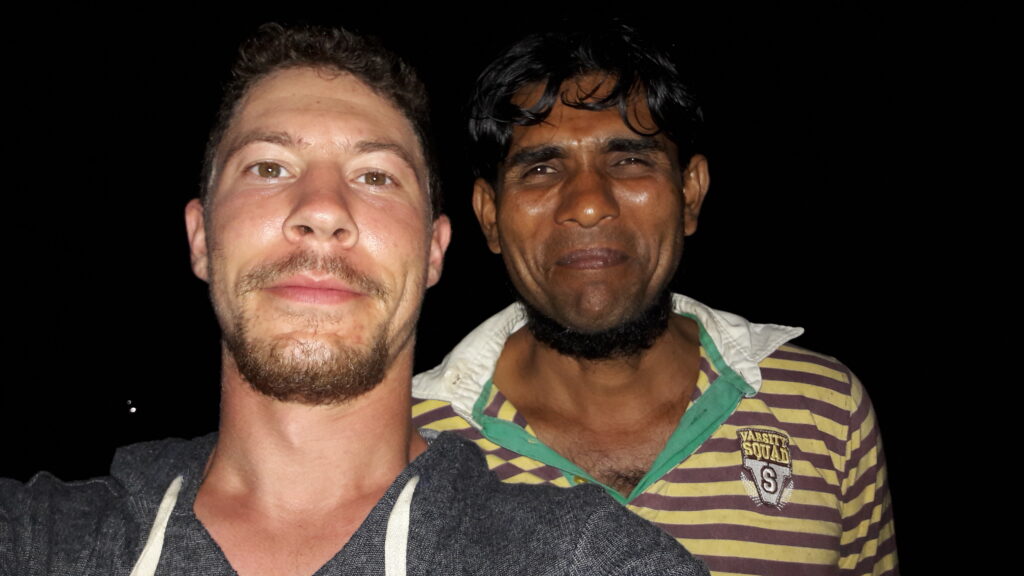
In the afternoon, off to the Samangala waterfalls and viewpoint by bicycle (600 Rs rental), with a detour first to see Chandana, whom I’d met the day before. His wife and two children welcome me while waiting for him to come back; I juggle with fruit and vegetables from the stall to entertain the little family, and his son has a go himself. Chandana arrives, visibly delighted to see me, and the little group grows — tea shared, conversation. My cigarette, whose butt I put away in a small bag rather than throw it on the ground, comes as a big surprise to Chandana and his wife (who, for their part, toss theirs without a second thought).
Off to Samangala despite the time ticking by — the climb starts hard, and almost everyone I pass on the way stares at me, half amused, half worried, before finally smiling or waving. The rain sets in, then night falls before I even reach the top — I give up on the sunset, thighs burning, and head slowly back down by the light of my headlamp alone. Two men on a motorbike stop, thinking something’s wrong; a little farther on, another insists on lighting the way for me with his headlights all the way to the next village, before riding off with a warm “take care!” — local kindness, again and again.
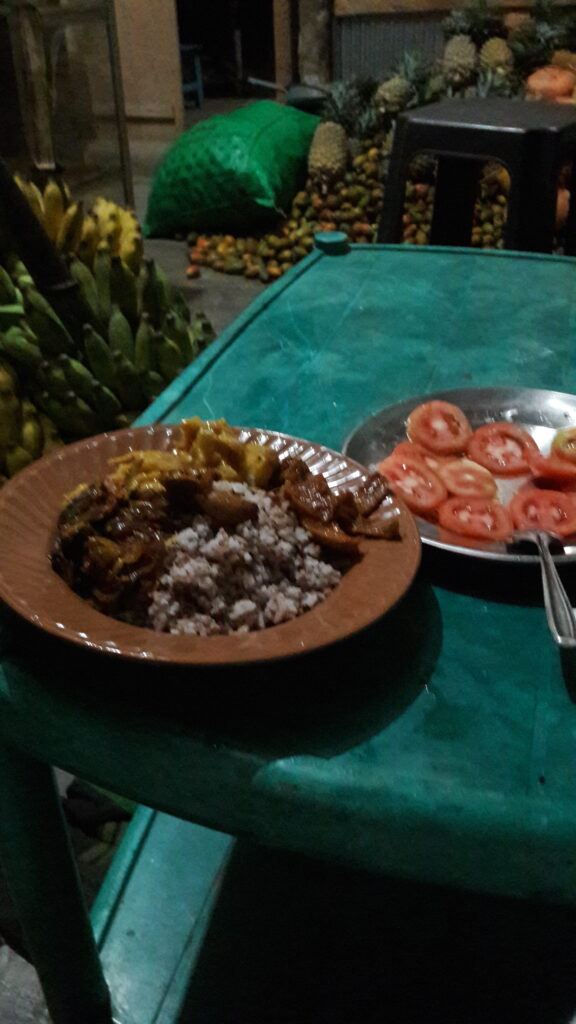
Back at the hostel in one piece around 7:30 p.m., a quick shower, then back to Chandana’s on foot: a welcome all smiles, drinks in the garden (local liquor for him, beer for me), and a conversation about his wish to find work in Dubai. His wife then cooks us a generous meal — rice and curry, fish, potatoes — and I go to bed with my head full of new flavors discovered during the day: bananas, unfamiliar fruit, grilled fish and local liquor. A lovely evening.
A whole day on buses
A mostly logistical day, heading for Nuwara Eliya via several hit-or-miss connections — no direct bus, directions that contradict each other from one stop to the next, very limited English on the locals’ side. After several changes (Embilipitiya, Thanamalwila), I realize I’ll have to go through Wellawaya after all, but there’s no bus until the next day. I give in to an offer from a hotel a little pricier than usual (2,500 Rs) — the cleanest since the start of the trip — rather than keep searching. Nothing worth noting for the rest of the day, but that’s part of the game when you travel by local bus.
Nuwara Eliya in the rain
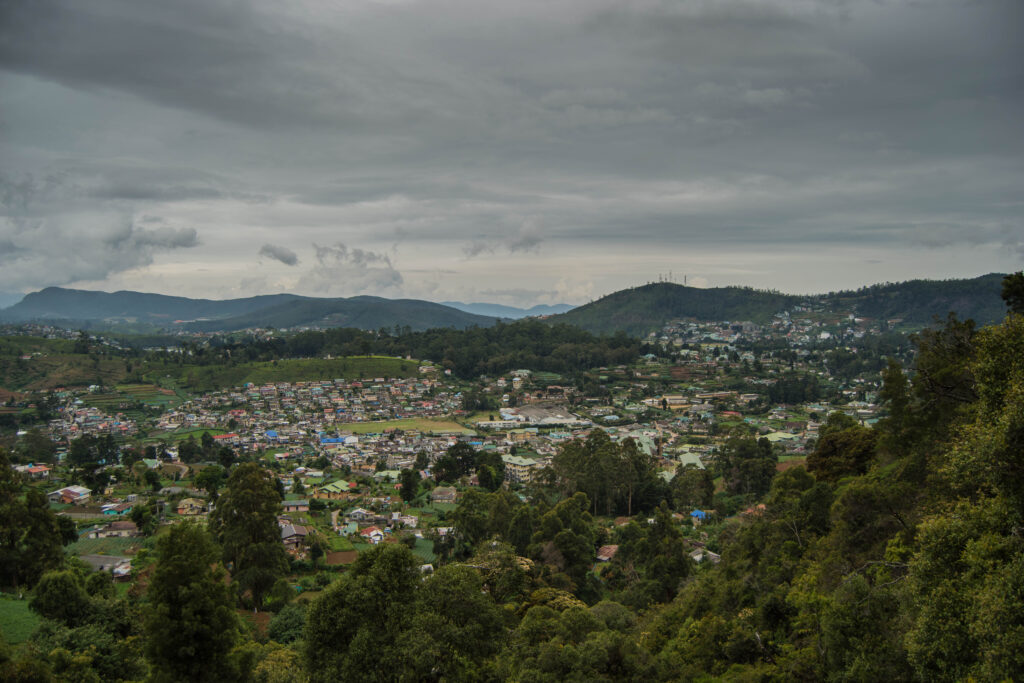
Up at 3:45 a.m. for the 6:30 a.m. bus — and as expected, nobody at reception to give me back my passport before opening time. Frustration guaranteed: I miss my bus and take the next one, at 7:30. Arrival in Nuwara Eliya around 10:30 a.m., a warm welcome at the Hi Lanka Hostel even though the room isn’t ready yet. Over a cup of tea, I get to know the other travelers — lots of Germans that day.
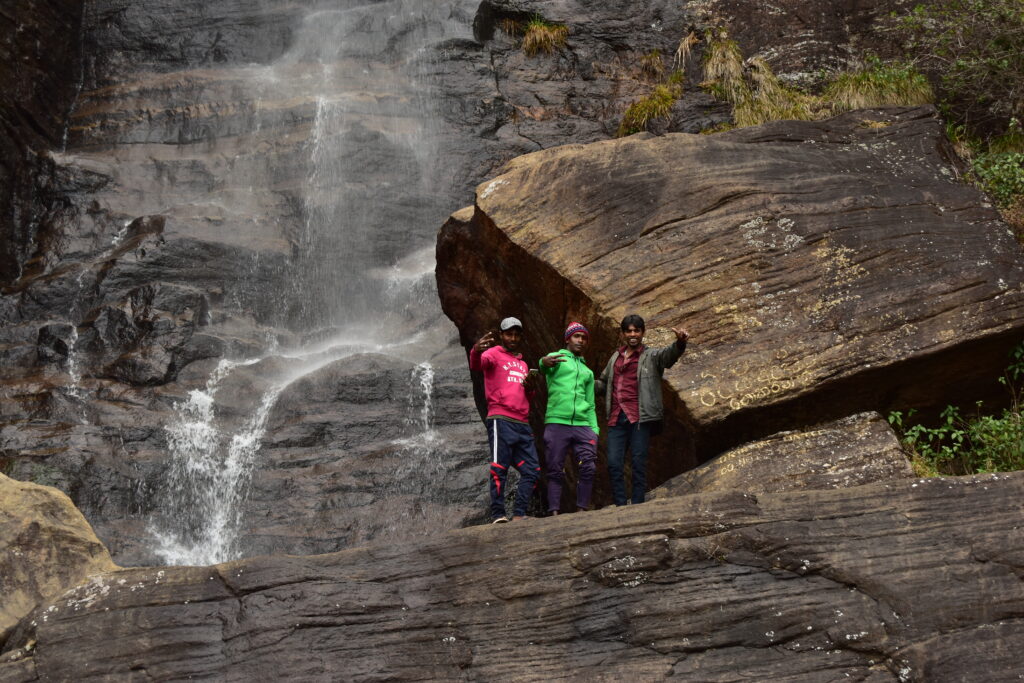
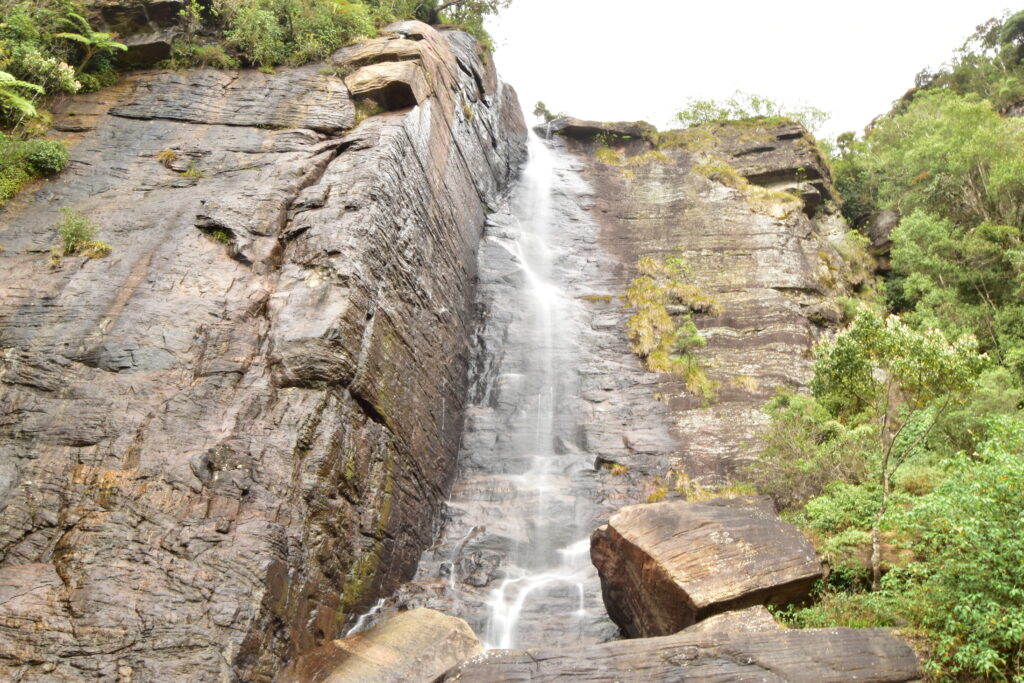
In the afternoon, off to a waterfall along a fairly steep path — nice, but in the rain. It seems possible to climb to the top of the falls, by a passage that’s almost rock climbing, slippery in the rain. I go up, the view is superb, but I don’t hang around too long as the downpour gets heavier. The descent, even trickier, ends without a hitch — rewarded with a good hot shower at the hostel. A group dinner with everyone, a friendly atmosphere, then a few beers with the owner at the end of the evening before heading to bed — departure planned for 5 a.m. the next day for Horton Plains.
Horton Plains and World’s End
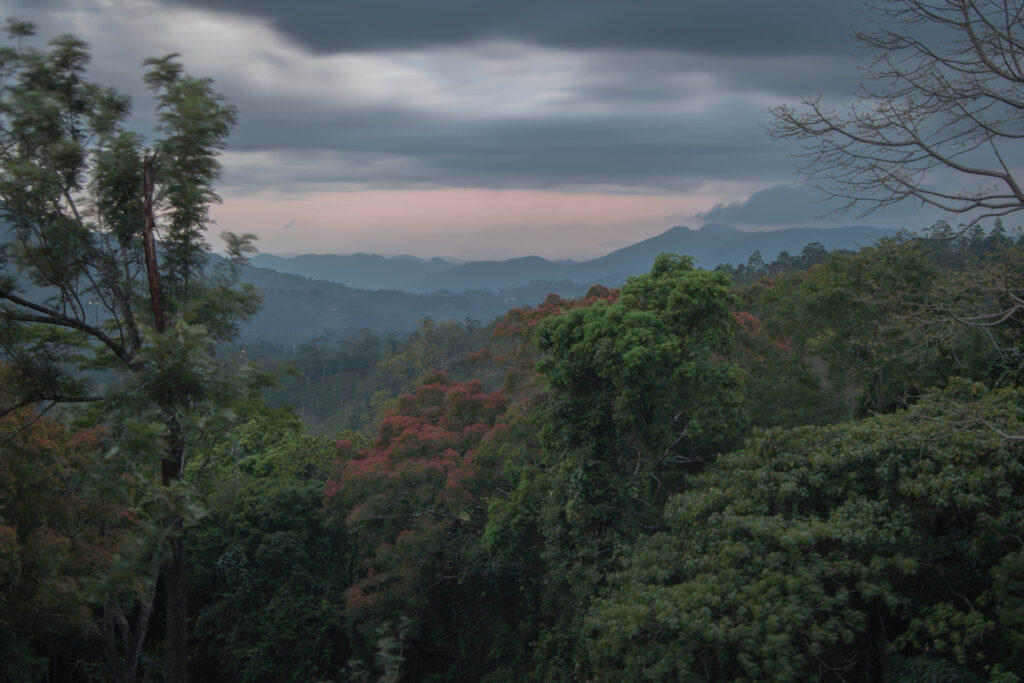
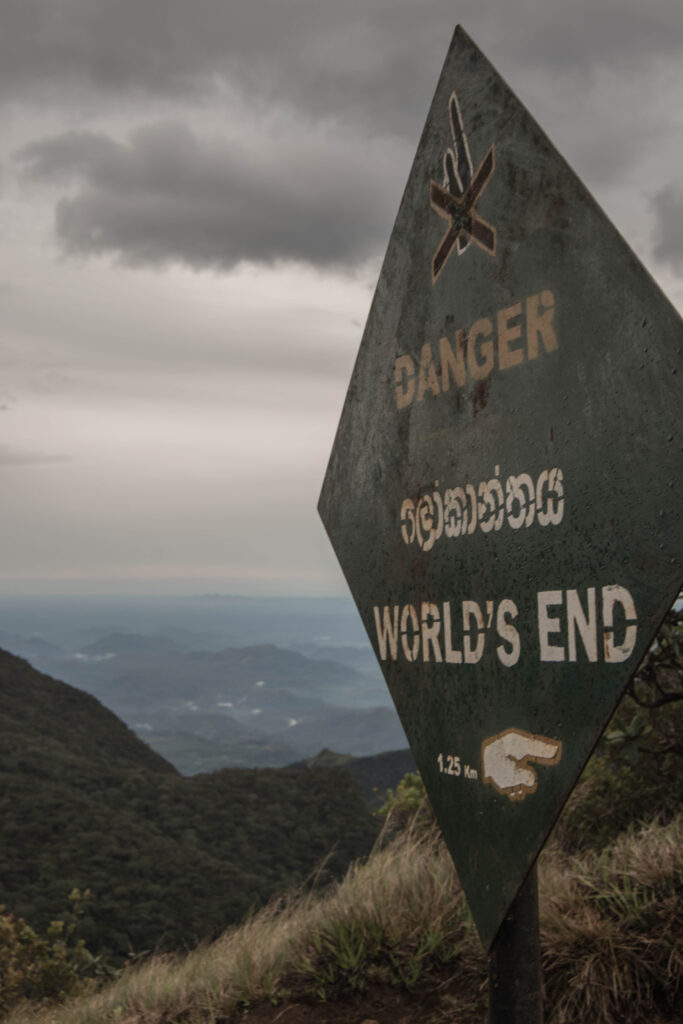
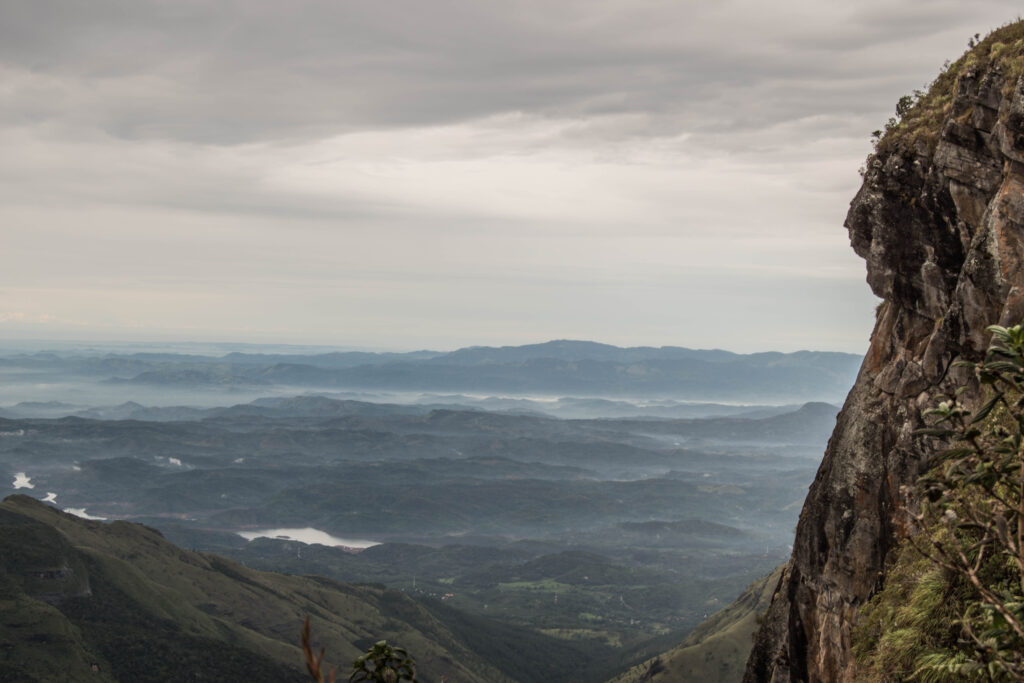
Up at dawn (4:30 a.m.) for Horton Plains with about ten other travelers from the hostel, all still half asleep in the minivan. The walk is easy: the first stop is Mini World’s End, and the view over the clouds below is already superb. I venture a little onto side trails before rejoining the group at World’s End itself, even higher up, just as spectacular — mountains as far as the eye can see and a few houses perched far below. Then on to Baker’s Falls with the rest of the group: an easy walk, chatting along the way, a nice enough waterfall without being breathtaking, surrounded by hills of tall grass.
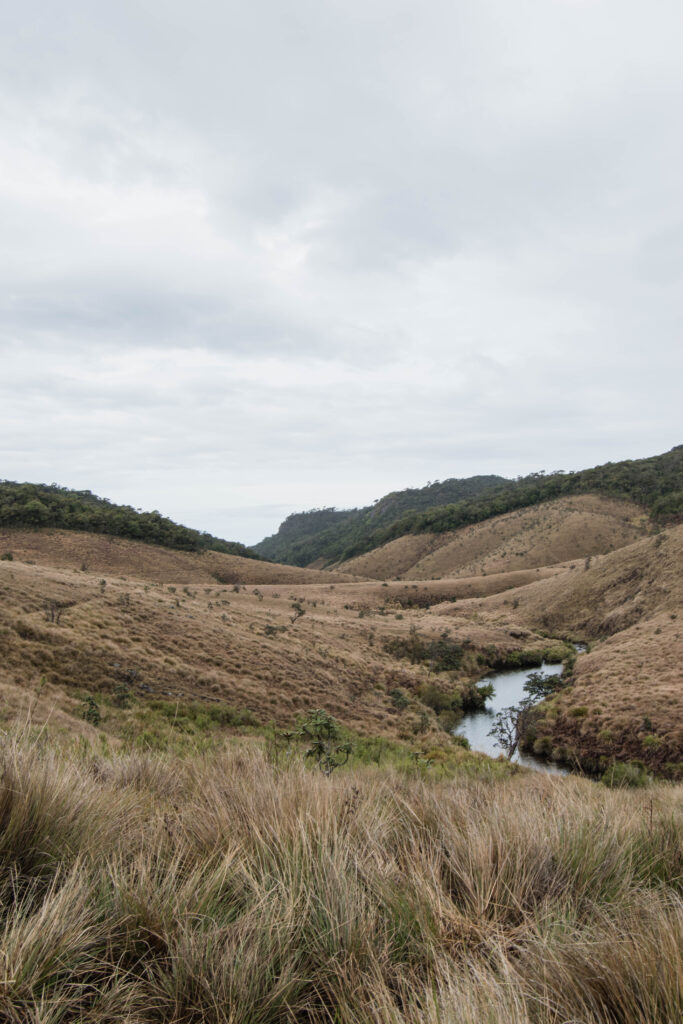
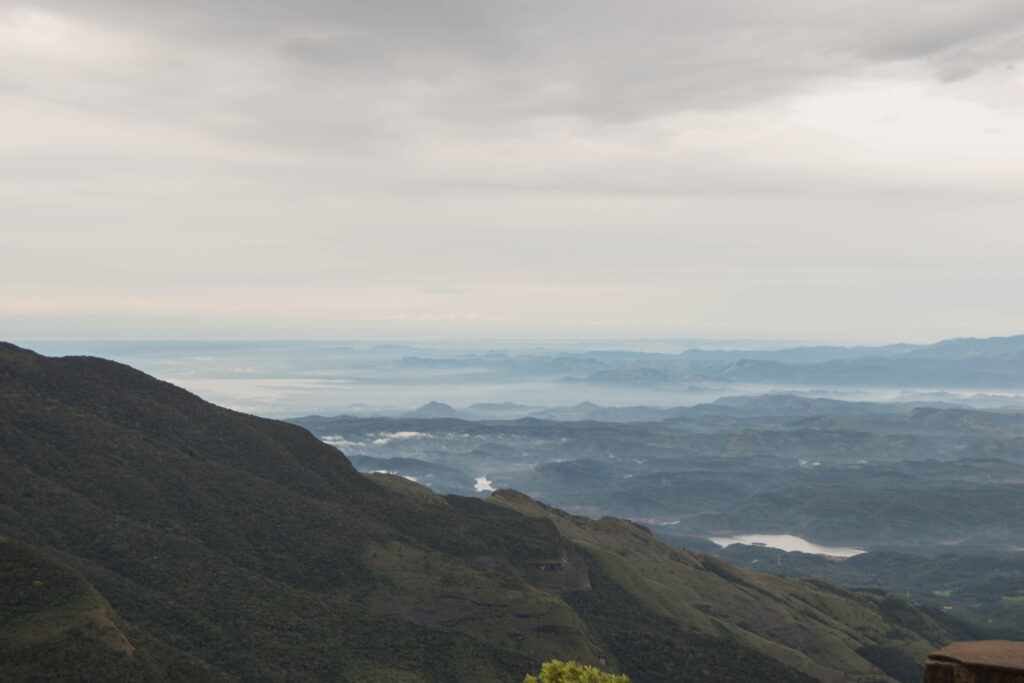
Everyone was frozen early in the morning for tea and breakfast (a bit light on the hotel’s part, but kind of them to get up at 4 a.m. to make it); in the end it wasn’t as cold as we’d feared. A relaxed return to the hostel, then a walk around town to change money and stretch my legs. The group puts together a little impromptu party at the hostel in the evening — a great time, conversations, plenty of laughs, until tiredness takes over.
Back toward the coast, heading for Negombo
A quiet morning at the hostel before hitting the road with an Israeli traveler I’d met there — him toward Kandy, me toward Negombo. Six hours of bus, with its usual ebb and flow of passengers, but always those superb landscapes to make the time go by. In Colombo, a godsend of a tuk-tuk drops me at the station (200 Rs); a pushy driver tries to change my mind about the train fare by discreetly steering me aside, without success — I end up getting my ticket for 70 Rs, though not without a good dose of firmness.
The train is packed, no seats, but a Sri Lankan strikes up a conversation without asking for anything in return — the ride goes by pleasantly. Arrival in Negombo at nightfall, off to the beach to find somewhere to sleep — there’s no shortage of choice. I finally settle into a hotel at 3,000 Rs with a beachfront restaurant, despite temperamental Wi-Fi and a hot shower that’s barely lukewarm.
Negombo, an easy last stop
A relaxed breakfast, then a search for a better guesthouse — I finally find a spot in one that was full the night before, with a small sea view and a calm atmosphere. A walk around town and along the beach: not exactly clean, but nothing compared with the section used by the local fishermen, strewn with bottles and plastic.
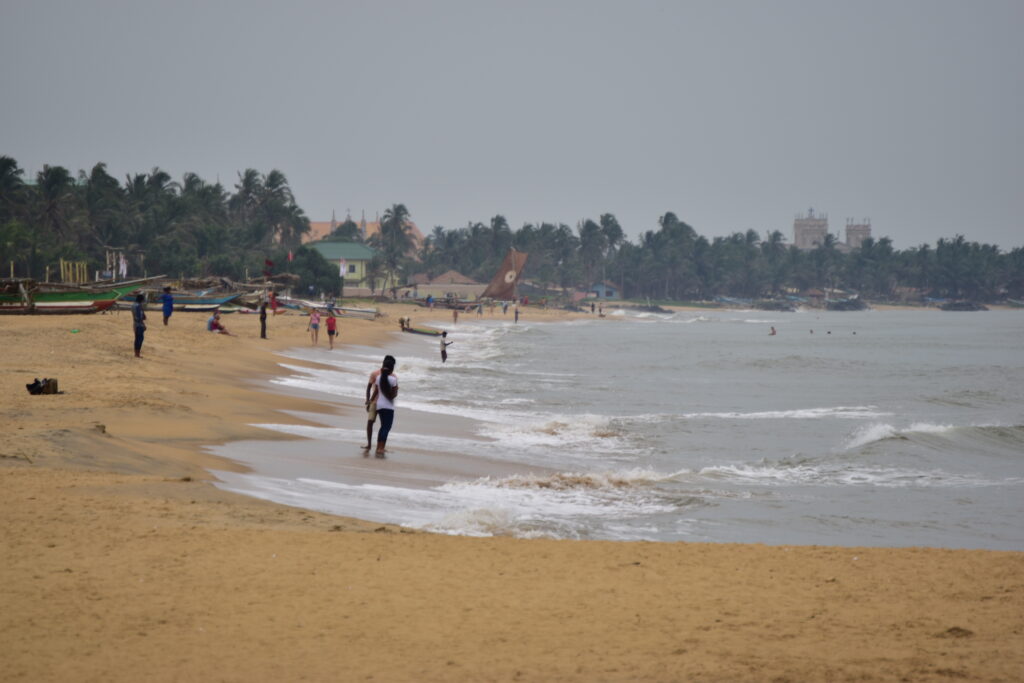
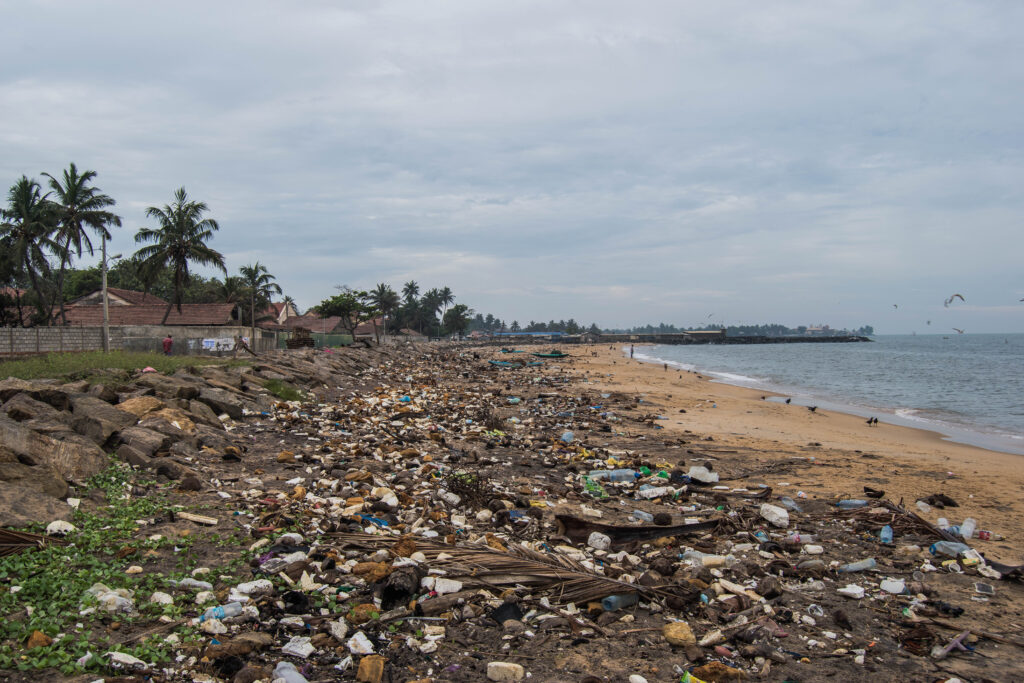
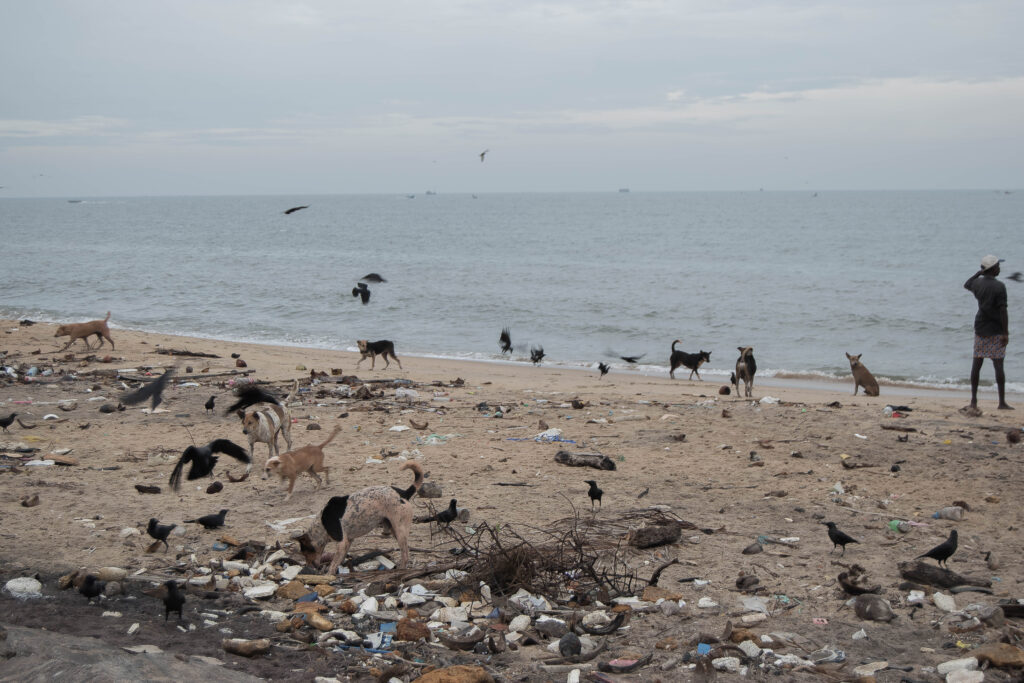
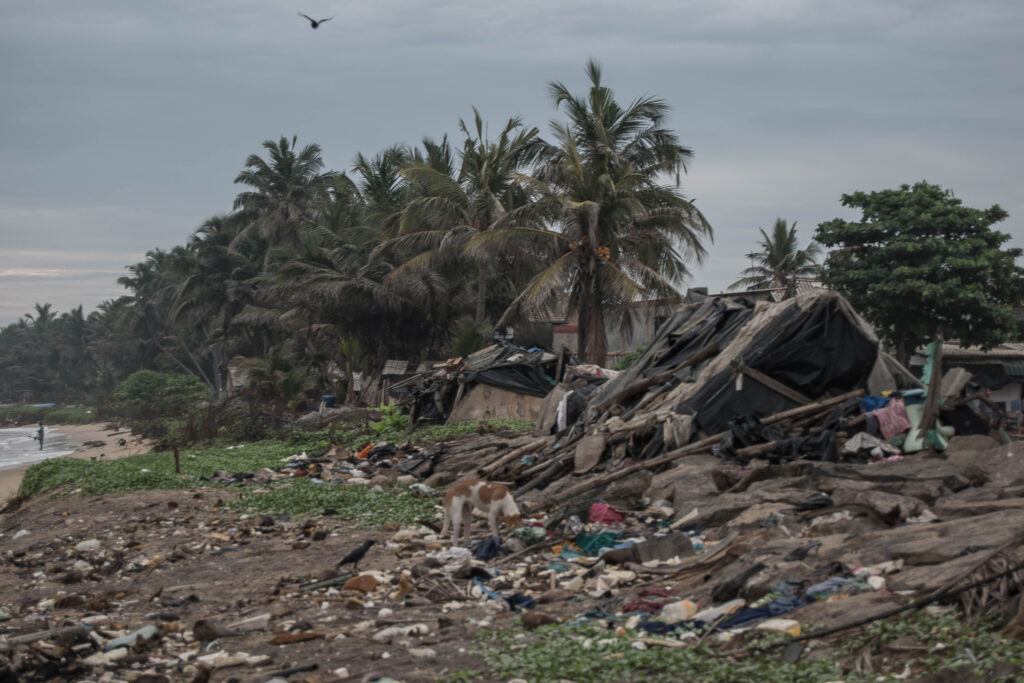
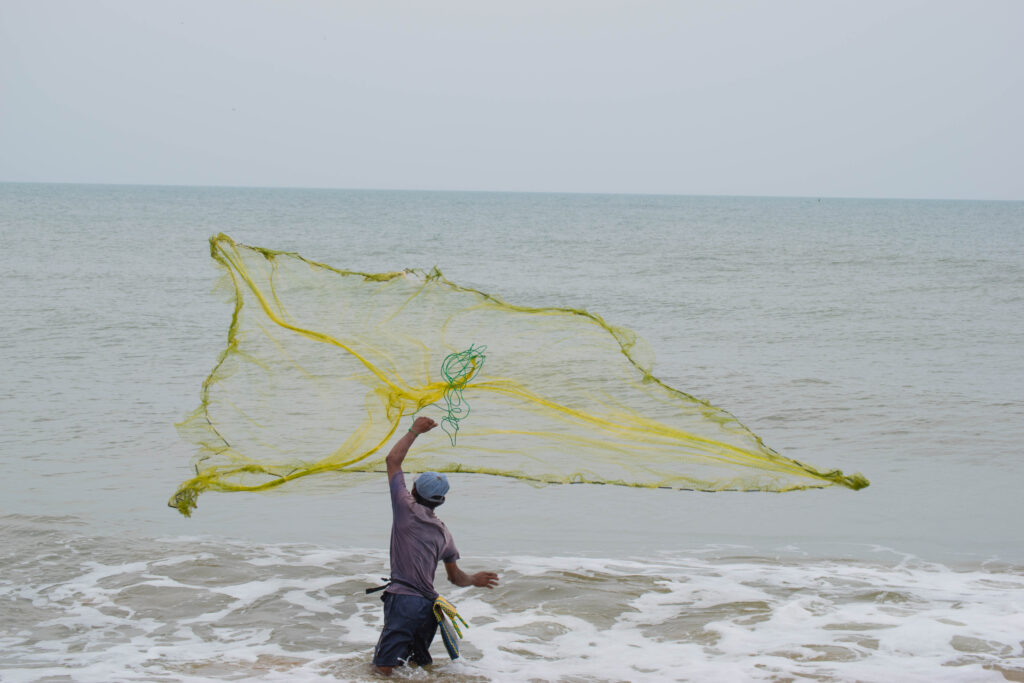
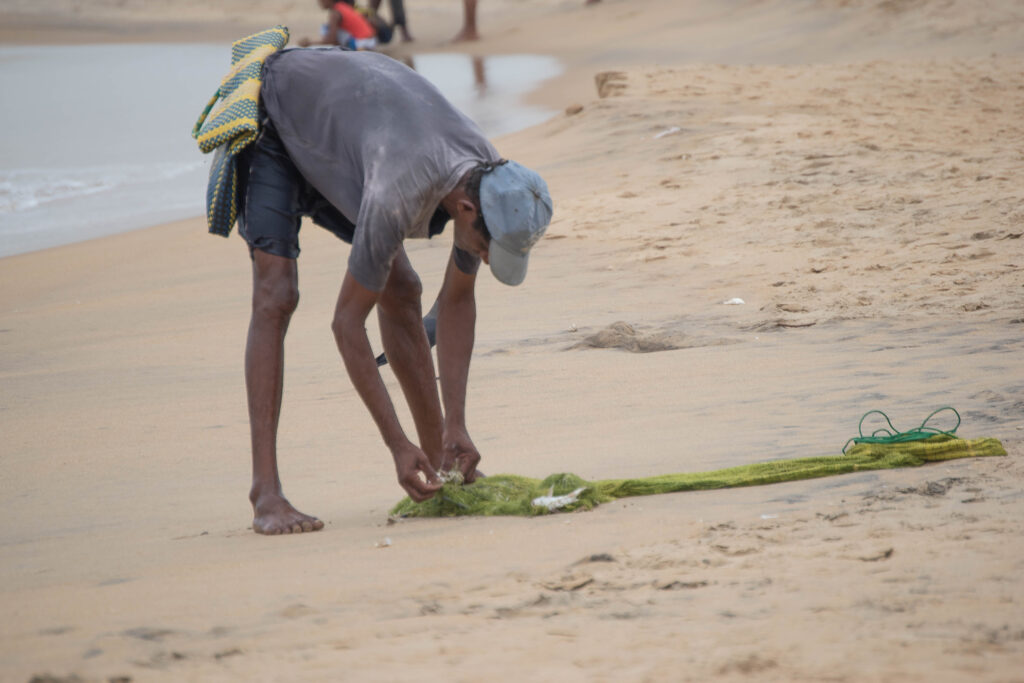
I spend a long time watching a fisherman casting his net a few meters from the shore, sometimes landing a crab or a fish, often coming up empty. A deliberately quiet day — Negombo is mostly for catching your breath before heading home.
The fish market and a last sunset
Up early (6 a.m.) to walk to the fish market — too late, though, for the early-morning bustle. On the way, the acrid smell of fish and rubbish mixed together, makeshift shacks set up along the beach. I learn there’s a second market two kilometers away, known for its bigger fish — the one I’d been told about. On the way there, a bridge where lots of locals are fishing with rods, with far more impressive catches. Too late in the day to see the best of the action (you’d have to be there at the crack of dawn), but the atmosphere is worth the detour.
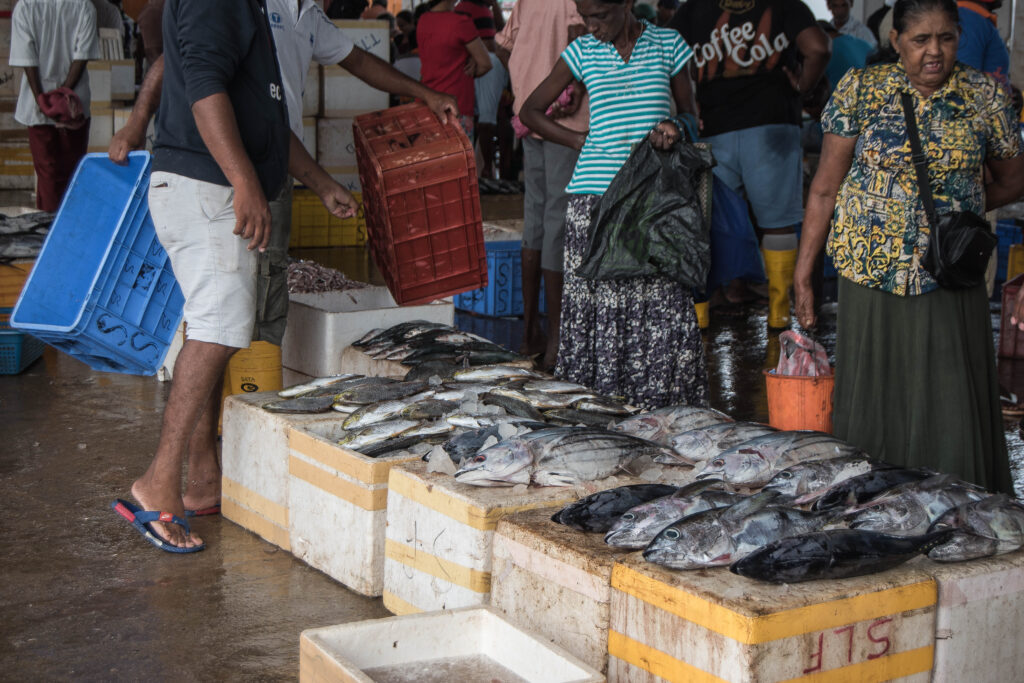
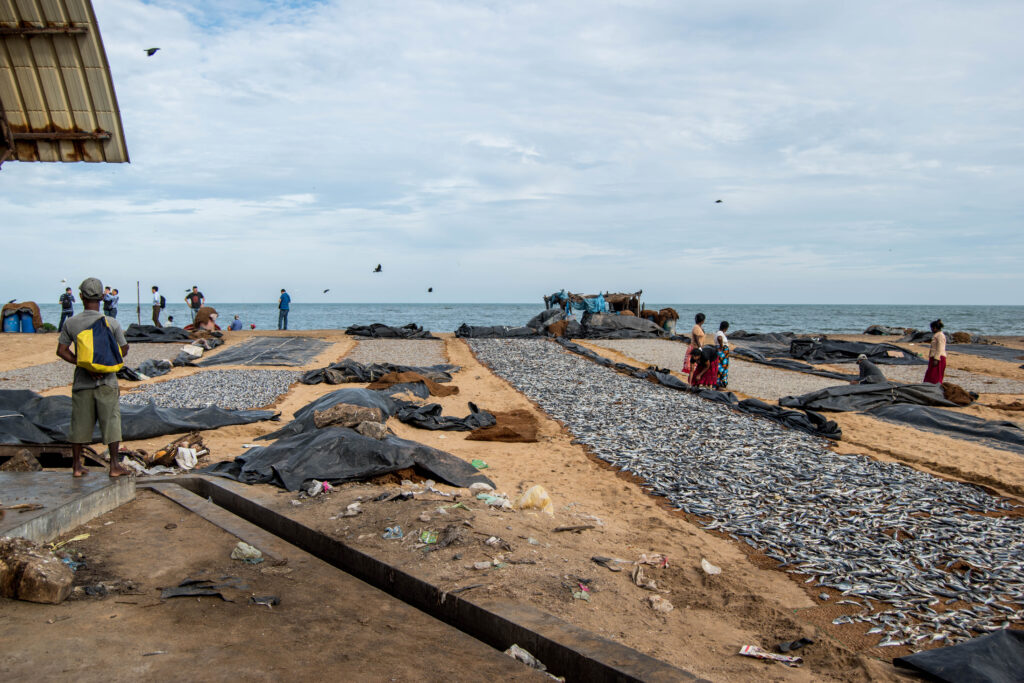
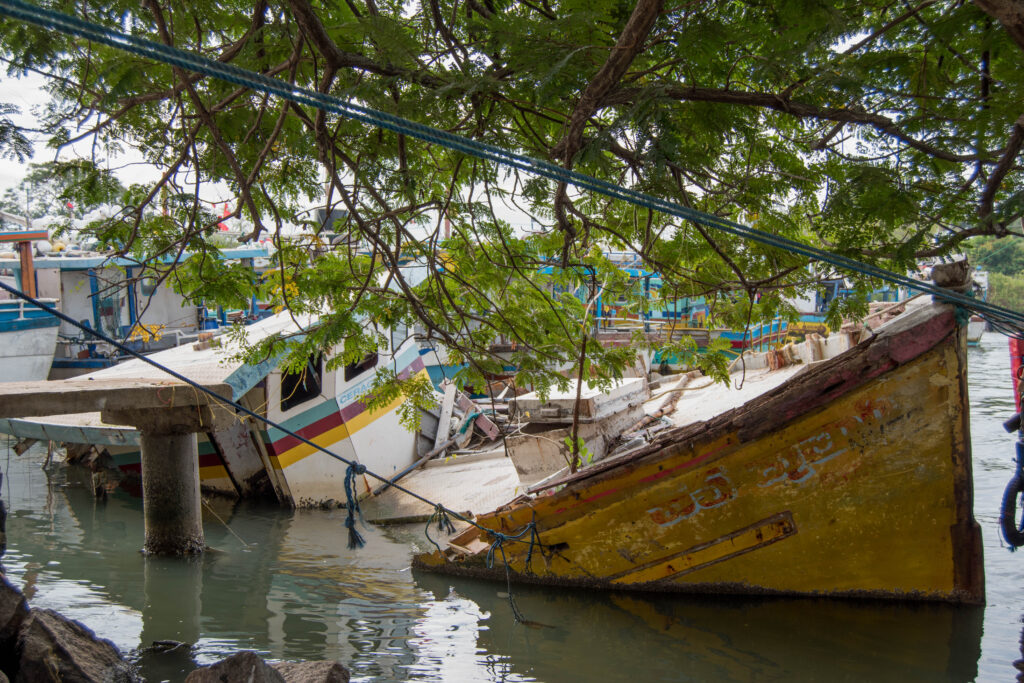
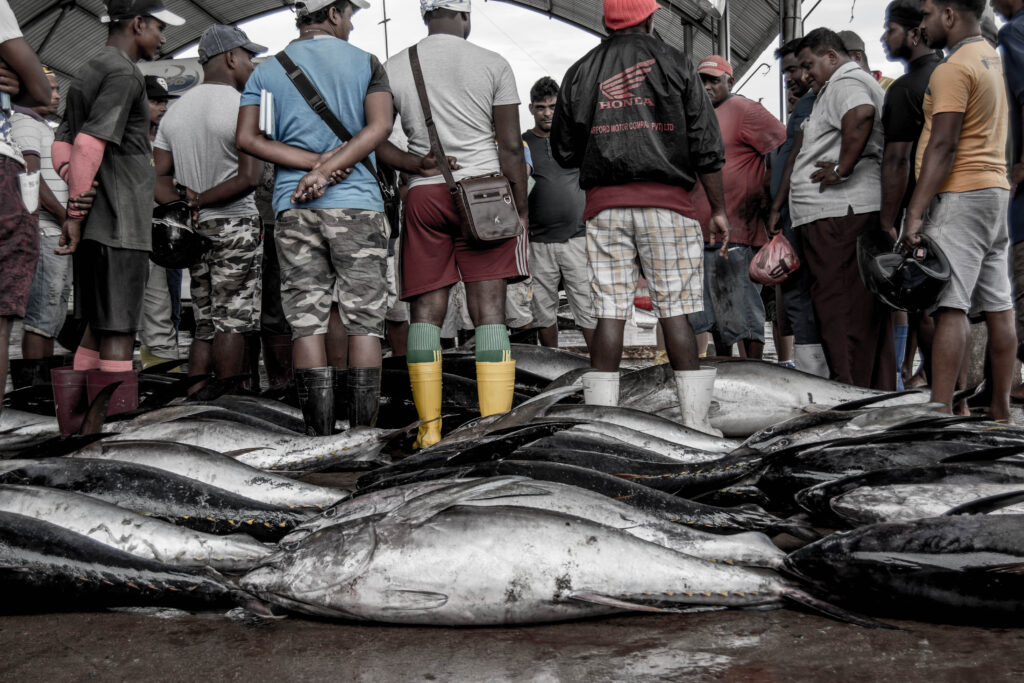
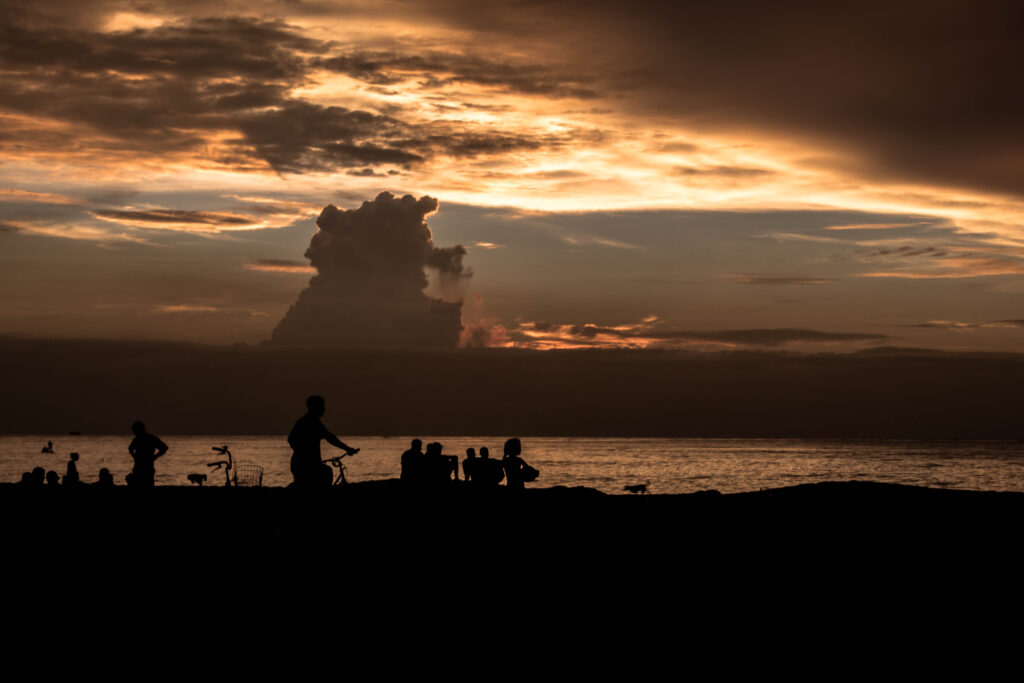
A quiet afternoon reading on the beach, in crushing heat after a gray day yesterday. A decent meal in a small restaurant (520 Rs for rice, vegetables and water), then the sunset photographed from the beach, under the curious eye of a hotel employee firing off questions every thirty seconds — more amusing than annoying. A last quiet evening in town, a beer on a terrace, and off to bed.
Departure day
A slow wake-up, breakfast at the hotel, then one last session of packing my bag before the flight home. End of the trip.
Looking Back
A trip with two faces: the first week, sociable and a little chaotic, discovering the island’s classics as a pair (temples, packed trains, elephants, beaches in the south); the second, slower and more solitary, carried by improvised encounters — Chandana and his family, the hostel in Nuwara Eliya, the strangers on the road who stop without being asked. A country where you travel slowly, where nothing is ever entirely free, but where the welcome more than makes up for the small hassles of everyday life.